 MOHAMMAD ABUBAKR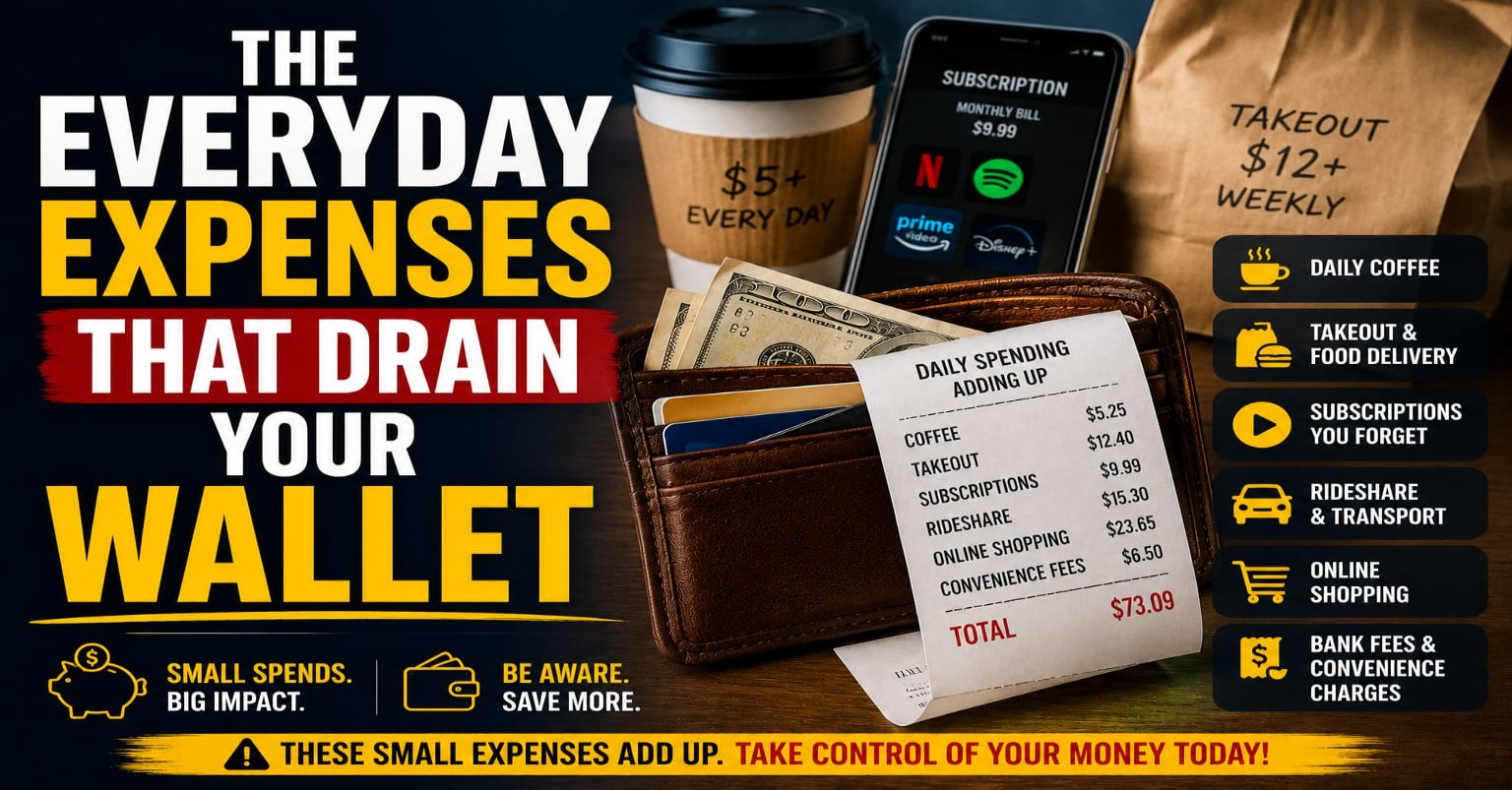
Introduction
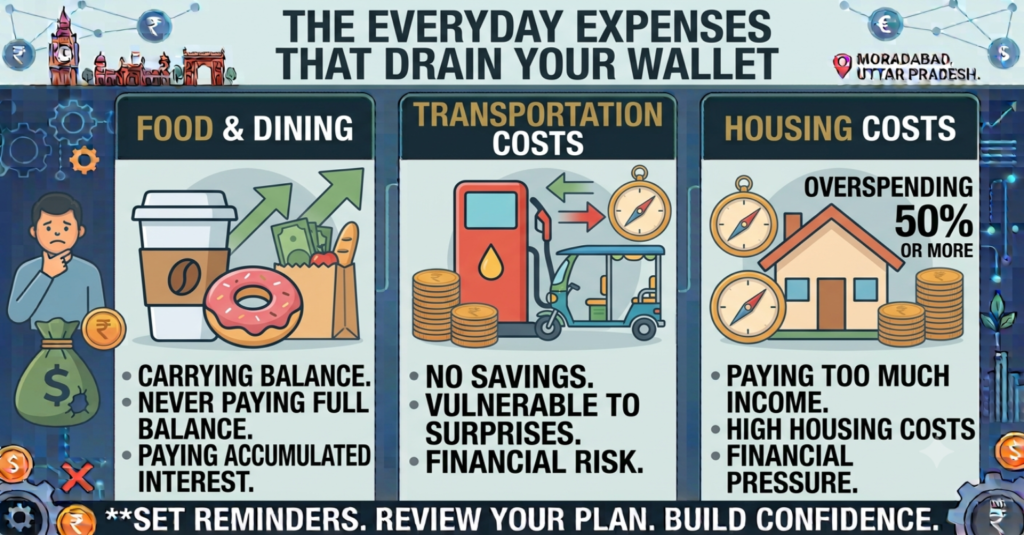
Many people believe that only major purchases affect their finances.
In reality, it’s often the small, everyday expenses that quietly reduce your ability to save and build wealth.
A daily coffee, multiple subscription services, food delivery, convenience purchases, and impulse shopping may not seem expensive on their own.
However, when these expenses happen repeatedly, they can take a significant bite out of your monthly budget.
The good news is that you don’t have to stop enjoying life to improve your finances.
By recognizing where your money goes, you can make smarter spending decisions while still enjoying the things that matter most.
In this guide, you’ll discover the everyday expenses that commonly drain wallets and practical ways to take back control of your money.
Why Small Expenses Matter
Large financial goals are often influenced by small daily habits.
Reducing just a few unnecessary expenses can help you:
- Increase savings.
- Reduce financial stress.
- Build an emergency fund.
- Invest more consistently.
- Reach long-term financial goals faster.
Small changes made consistently often produce the biggest results over time.
1. Food Delivery and Takeout
Ordering food is convenient, but frequent delivery can become expensive.
Costs often include:
- Delivery fees.
- Service charges.
- Tips.
- Higher menu prices.
Preparing more meals at home—even a few times each week—can significantly reduce monthly spending.
2. Subscription Services
Many households pay for multiple recurring subscriptions without using all of them regularly.
Examples include:
- Video streaming platforms.
- Music services.
- Cloud storage.
- Fitness apps.
- Premium software.
Reviewing subscriptions every few months can help eliminate unnecessary expenses.
Recurring subscriptions are one reason many household costs continue to rise. Read our Why Your Monthly Bills Keep Going Up guide to understand how recurring expenses affect your monthly budget.
3. Daily Coffee and Snacks
An occasional coffee or snack isn’t a financial problem.
However, purchasing them every day can add up over time.
Finding a balance between convenience and cost can free up money for more important financial goals.
4. Impulse Online Shopping
Online shopping has made buying products easier than ever.
Unfortunately, it’s also made impulse spending more common.
Before making an unplanned purchase, consider waiting 24 hours to decide whether you still need it.
5. Convenience Purchases
Paying extra for convenience is common.
Examples include:
- Bottled water.
- Convenience store items.
- Last-minute purchases.
- Rush delivery fees.
Although each purchase may seem small, together they can noticeably increase monthly expenses.
6. Unused Memberships
Gym memberships, warehouse clubs, software subscriptions, and other recurring memberships can quietly drain your budget if you rarely use them.
Review each membership and ask whether it still provides enough value.
Every Dollar Has a Purpose
Small financial decisions shape your long-term financial future.
Being intentional with everyday spending helps ensure more of your money goes toward your goals instead of unnecessary expenses.
7. Bank Fees You Rarely Notice
Small banking charges can quietly reduce your available cash.
Examples may include:
- Monthly maintenance fees.
- ATM fees.
- Overdraft charges.
- Foreign transaction fees.
- Paper statement fees.
Review your bank statements regularly to identify charges you may be able to avoid.
8. Higher Utility Usage Than Necessary
Electricity, water, and gas bills often increase because of everyday habits.
Simple changes can help reduce monthly costs, such as:
- Turning off unused lights.
- Adjusting your thermostat.
- Fixing water leaks.
- Using energy-efficient appliances.
- Running full loads of laundry and dishes.
Even modest reductions in utility usage can lead to noticeable annual savings.
9. Buying Without Comparing Prices
Making purchases without comparing prices can increase your overall spending.
Before buying, consider checking:
- Multiple retailers.
- Online discounts.
- Cashback offers.
- Store promotions.
- Generic alternatives.
Taking a few extra minutes before making a purchase may help you save money.
10. Forgetting About Automatic Renewals
Automatic renewals make subscriptions convenient, but they can also lead to paying for services you no longer use.
Review recurring charges regularly and ask yourself:
- Do I still use this service?
- Is there a lower-cost plan?
- Can I cancel it entirely?
Regular reviews help prevent unnecessary spending.
Common Spending Mistakes to Avoid
Many people unknowingly waste money through small financial habits.
Avoid these common mistakes:
- Ignoring recurring subscriptions.
- Making impulse purchases.
- Paying unnecessary bank fees.
- Buying for convenience instead of value.
- Never reviewing monthly expenses.
- Shopping without a budget.
- Forgetting to cancel free trials before they renew.
Small improvements in these areas can make a meaningful difference over time.
The Consumer Financial Protection Bureau (CFPB) offers free educational resources on budgeting, managing monthly expenses, reducing debt, and improving everyday money habits. These tools can help you make smarter financial decisions and keep more of your hard-earned money.
Frequently Asked Questions
Do small daily expenses really affect my finances?
Yes.
Although each purchase may seem minor, repeated daily expenses can add up to hundreds or even thousands of dollars over the course of a year.
Should I stop spending on things I enjoy?
Not necessarily.
The goal is to spend intentionally and prioritize purchases that provide genuine value while reducing unnecessary expenses.
How often should I review my monthly expenses?
Reviewing your spending at least once a month can help you identify unnecessary expenses and stay aligned with your financial goals.
What is the easiest way to reduce everyday expenses?
Start by tracking your spending, canceling unused subscriptions, planning purchases in advance, comparing prices, and following a realistic monthly budget.
Final Thoughts
Everyday expenses may seem small on their own, but together they can have a significant impact on your financial future.
By becoming more aware of where your money goes, you can reduce unnecessary spending without sacrificing the things you truly enjoy.
Simple habits such as reviewing subscriptions, comparing prices, planning purchases, and following a budget can help you save more, reduce financial stress, and build long-term wealth.
Small financial decisions made consistently today can lead to meaningful financial freedom tomorrow.