
 MOHAMMAD ABUBAKR
Getting your first 100 customers is one of the biggest milestones for any new business. It proves that people are willing to pay for your product or service and gives you valuable feedback to improve your business. However, attracting those first customers can feel challenging, especially if you have a limited budget and little brand recognition.
The good news is that you do not need a massive advertising budget to succeed. Many successful businesses reached their first 100 customers by focusing on relationships, solving real problems, and consistently promoting their brand.
If you’re launching a startup or small business in the United States, this guide will show you how to get your first 100 customers using practical, low-cost marketing strategies.
Why Your First 100 Customers Matter
Your first customers provide more than revenue.
They also help you:
- Validate your business idea.
- Build credibility.
- Generate customer reviews.
- Create referrals.
- Improve your products or services.
- Develop long-term marketing strategies.
Every satisfied customer becomes an opportunity for future growth.
Smart Financial Habits for Business Owners
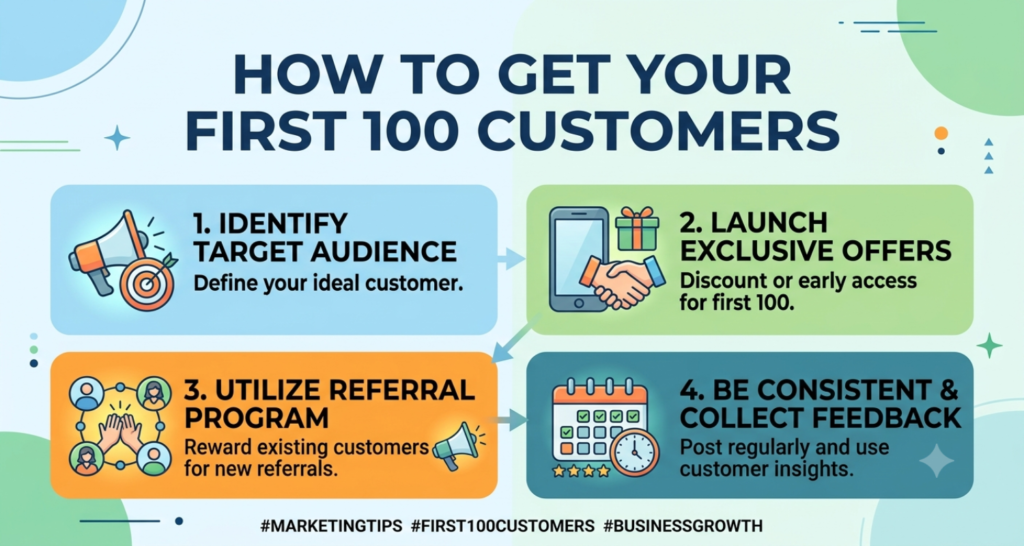
1. Clearly Define Your Ideal Customer
Trying to sell to everyone usually leads to poor results.
Instead, identify your ideal customer by asking:
- Who benefits most from my product?
- What problem does my business solve?
- What age group am I targeting?
- Where do my customers spend time online?
- What motivates them to buy?
Knowing your audience helps you create more effective marketing messages.
2. Build a Professional Website
Your website is often the first impression potential customers have of your business.
Make sure it includes:
- A clear value proposition.
- Easy navigation.
- Mobile-friendly design.
- Fast loading speed.
- Contact information.
- Customer testimonials.
- Strong calls to action.
A professional website builds trust and increases conversions.
3. Optimize for Search Engines (SEO)
Many customers search Google before making a purchase.
Improve your visibility by:
- Using relevant keywords.
- Writing helpful blog articles.
- Optimizing title tags and meta descriptions.
- Improving website speed.
- Building quality backlinks.
SEO may take time, but it can generate consistent, free traffic.
4. Leverage Social Media
Choose one or two platforms where your audience is most active.
Share:
- Educational content.
- Product demonstrations.
- Customer success stories.
- Behind-the-scenes updates.
- Industry tips.
- Short videos.
Consistency is more important than posting on every platform.
5. Ask Friends and Family for Support
Your personal network can help you gain momentum.
Ask them to:
- Share your business.
- Leave honest reviews.
- Recommend your services.
- Introduce you to potential customers.
Word-of-mouth marketing remains one of the most powerful ways to grow.
6. Offer a Limited-Time Promotion
People are more likely to try a new business when there is an incentive.
Examples include:
- First-time customer discounts.
- Free consultations.
- Free shipping.
- Buy one, get one offers.
- Bonus products.
Make sure your promotion has a clear expiration date to encourage action.
7. Collect Customer Reviews Early
Positive reviews build trust.
After every successful sale, politely ask customers to leave reviews on:
- Google Business Profile.
- Yelp.
- Facebook.
- Industry-specific review sites.
Respond professionally to every review to demonstrate excellent customer service.
8. Build an Email List
Email marketing allows you to stay connected with potential customers.
Offer something valuable in exchange for an email address, such as:
- A free guide.
- A discount code.
- Exclusive tips.
- Early access to new products.
Send helpful emails regularly instead of only promotional messages.
9. Network in Your Community
Attend:
- Business networking events.
- Local trade shows.
- Chamber of Commerce meetings.
- Industry conferences.
- Community events.
Face-to-face relationships often lead to valuable referrals and partnerships.
10. Create Helpful Content
People trust businesses that educate rather than constantly sell.
Publish:
- Blog posts.
- FAQs.
- How-to guides.
- Videos.
- Case studies.
Helpful content positions your business as a trusted expert.
11. Encourage Customer Referrals
Happy customers can help you reach your next 100 customers.
Create a referral program by offering:
- Discounts.
- Store credit.
- Gift cards.
- Exclusive rewards.
Recommendations from satisfied customers often convert better than advertisements.
12. Use Paid Advertising Carefully
Paid advertising can accelerate growth when used strategically.
Popular options include:
- Google Ads.
- Facebook Ads.
- Instagram Ads.
- LinkedIn Ads (for B2B businesses).
Start with a small budget, test different campaigns, and monitor your return on investment.
13. Partner With Other Local Businesses
Look for businesses that serve a similar audience without competing directly.
For example:
- A fitness trainer can partner with a nutrition coach.
- A photographer can partner with an event planner.
- A web designer can partner with a digital marketing agency.
Partnerships expand your reach while sharing marketing efforts.
14. Deliver Outstanding Customer Service
Exceptional customer service creates repeat buyers and referrals.
Focus on:
- Fast responses.
- Honest communication.
- Reliable service.
- Quick problem resolution.
- Personalized experiences.
Customers who feel valued are more likely to recommend your business.
Common Mistakes to Avoid
Many new businesses struggle because they:
- Try to target everyone.
- Ignore customer feedback.
- Give up too early.
- Spend too much on advertising.
- Neglect SEO.
- Fail to follow up with leads.
- Forget to ask for reviews.
Avoiding these mistakes can help you reach your first 100 customers faster.
Practical Tips for Faster Growth
Use these habits consistently:
- Set weekly customer acquisition goals.
- Track marketing performance.
- Improve your website regularly.
- Build relationships with customers.
- Stay active on social media.
- Follow up with potential buyers.
- Continue learning about marketing.
- Focus on solving customer problems.
Small improvements each week often produce significant long-term growth.
Why Consistency Wins
Many businesses expect overnight success.
In reality, building a loyal customer base takes time.
Consistent marketing, excellent customer service, and valuable content create trust. Over time, trust turns into sales, referrals, and repeat business.
Instead of looking for quick wins, focus on building lasting relationships with your audience.
Final Thoughts
Getting your first 100 customers is one of the most important steps in growing a successful business. It requires patience, persistence, and a customer-first mindset. By defining your target audience, improving your online presence, creating valuable content, collecting reviews, and providing exceptional service, you can build momentum without spending a fortune on advertising.
Remember, every successful company started with its first customer. Stay consistent, listen to feedback, and keep improving your marketing efforts. Those first 100 customers can become the foundation for thousands more in the future.
SCORE – Free Business Mentoring:
Frequently Asked Questions
How long does it take to get the first 100 customers?
The timeline varies depending on your industry, marketing efforts, and target audience. Some businesses reach this milestone in a few months, while others take longer.
What is the cheapest way to get customers?
SEO, content marketing, referrals, email marketing, and networking are among the most cost-effective ways to attract customers.
Should a new business use paid advertising?
Yes, but start with a small budget and measure results carefully before increasing your spending.
Why are customer reviews important?
Reviews build trust, improve local search rankings, and influence purchasing decisions.