
 MOHAMMAD ABUBAKR
Marketing is one of the biggest drivers of business growth. However, many business owners spend money on advertising without seeing meaningful results. They chase every new trend, post randomly on social media, or invest in expensive campaigns that fail to generate sales.
The truth is that successful marketing is not about doing everything. Instead, it is about using the right strategies consistently. Businesses that understand their audience, create valuable content, and measure their results often outperform competitors with much larger marketing budgets.
Whether you own a startup, local business, or growing online company in the United States, this guide explains marketing strategies that actually work and how you can use them to attract more customers and grow your business.
Why Marketing Matters
Even the best product or service will struggle if people do not know it exists.
Effective marketing helps businesses:
- Increase brand awareness.
- Generate qualified leads.
- Build customer trust.
- Increase sales.
- Improve customer loyalty.
- Support long-term business growth.
Marketing should be viewed as an investment, not simply an expense.
Small Business Financial Goals Worth Setting
1. Know Your Target Audience
Every successful marketing campaign begins with understanding your ideal customer.
Ask questions like:
- Who needs your product?
- What problems are they trying to solve?
- What is their age group?
- Where do they spend time online?
- What influences their buying decisions?
The better you understand your audience, the easier it becomes to create marketing messages that connect with them.
2. Build a Strong Brand
People buy from businesses they recognize and trust.
Your brand should include:
- A professional logo.
- Consistent colors.
- Clear messaging.
- A memorable business name.
- A trustworthy online presence.
Consistency across your website, social media, and marketing materials builds credibility.
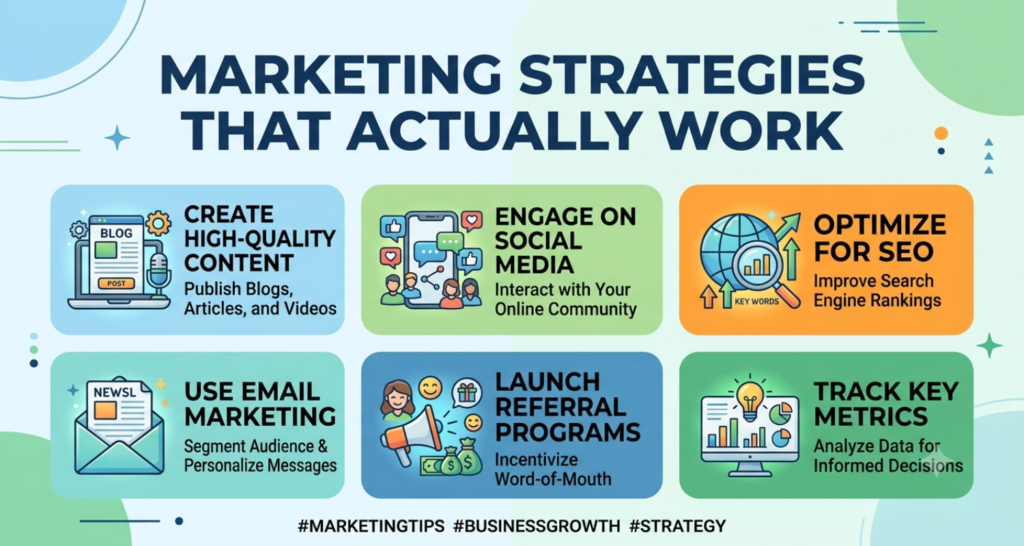
3. Invest in Search Engine Optimization (SEO)
SEO remains one of the highest-return marketing strategies.
When your website ranks higher on Google, more potential customers can find your business without paying for every click.
Good SEO includes:
- Publishing helpful content.
- Using relevant keywords naturally.
- Optimizing page titles and meta descriptions.
- Improving website speed.
- Creating mobile-friendly pages.
- Earning quality backlinks.
Although SEO takes time, it can deliver long-term traffic and leads.
4. Create Valuable Content
Content marketing helps establish your business as an industry expert.
Examples include:
- Blog articles.
- How-to guides.
- Videos.
- Case studies.
- Infographics.
- FAQs.
Instead of constantly selling, focus on solving customer problems.
Helpful content builds trust and encourages repeat visits.
5. Use Email Marketing
Email marketing continues to deliver one of the highest returns on investment.
Grow your email list by offering:
- Free guides.
- Discounts.
- Newsletters.
- Exclusive offers.
- Educational resources.
Then send valuable emails regularly without overwhelming subscribers.
Personalized emails often perform better than generic promotions.
6. Be Active on Social Media
You do not need to be on every platform.
Instead, focus on the platforms where your audience spends the most time.
Share:
- Educational posts.
- Customer success stories.
- Behind-the-scenes content.
- Product updates.
- Industry tips.
- Short videos.
Engaging consistently is more effective than posting occasionally.
7. Encourage Customer Reviews
Online reviews influence purchasing decisions.
Ask satisfied customers to leave reviews on platforms like:
- Google Business Profile.
- Yelp.
- Facebook.
- Industry-specific review sites.
Respond professionally to both positive and negative reviews.
Positive feedback builds trust with future customers.
8. Optimize Your Website
Your website should make it easy for visitors to take action.
A high-converting website should have:
- Fast loading speeds.
- Mobile-friendly design.
- Clear navigation.
- Strong calls to action.
- Secure HTTPS connection.
- Easy contact information.
A great website supports every marketing effort.
9. Use Video Marketing
Video content continues to grow in popularity.
Create videos that:
- Demonstrate products.
- Answer common questions.
- Share customer testimonials.
- Explain services.
- Provide educational tips.
Short, informative videos often generate strong engagement across multiple platforms.
10. Track Marketing Performance
Successful businesses measure their marketing results.
Important metrics include:
- Website traffic.
- Conversion rates.
- Cost per lead.
- Customer acquisition cost.
- Email open rates.
- Social media engagement.
- Return on investment (ROI).
Reviewing these numbers helps you invest more in strategies that deliver results.
11. Build Referral Programs
Happy customers can become your best marketers.
Encourage referrals by offering:
- Discounts.
- Store credits.
- Gift cards.
- Loyalty rewards.
- Exclusive offers.
Referral marketing often produces highly qualified leads because people trust recommendations from friends and family.
12. Focus on Customer Retention
Acquiring a new customer is usually more expensive than keeping an existing one.
Improve retention by:
- Providing excellent customer service.
- Following up after purchases.
- Offering loyalty programs.
- Sending personalized recommendations.
- Asking for customer feedback.
Long-term customers often generate higher lifetime value.
Common Marketing Mistakes to Avoid
Many businesses waste money by making these mistakes:
- Marketing without a clear strategy.
- Ignoring SEO.
- Posting inconsistently on social media.
- Focusing only on selling.
- Not measuring results.
- Targeting the wrong audience.
- Neglecting customer reviews.
- Ignoring email marketing.
Avoiding these mistakes can improve both marketing performance and profitability.
Practical Marketing Tips for Small Businesses
Use these habits consistently:
- Define your ideal customer.
- Set measurable marketing goals.
- Publish valuable content regularly.
- Update your website often.
- Build your email list.
- Monitor analytics monthly.
- Test different marketing campaigns.
- Improve customer service.
- Encourage online reviews.
- Continue learning about digital marketing trends.
Consistency usually produces better results than constantly changing strategies.
Why Long-Term Marketing Wins
Many business owners expect immediate results from every campaign.
However, successful marketing is a long-term investment.
Businesses that consistently create helpful content, improve their websites, build customer relationships, and measure performance often experience sustainable growth.
Rather than chasing every new trend, focus on strategies that provide lasting value.
Final Thoughts
Effective marketing is not about spending the most money. It is about understanding your customers, delivering value, and building trust over time. Marketing strategies that actually work include SEO, content marketing, email campaigns, customer reviews, social media engagement, and website optimization.
By focusing on these proven methods and measuring your results regularly, you can attract more customers, increase sales, and grow your business with confidence. Remember, successful marketing is built on consistency, not shortcuts.
U.S. Small Business Administration (SBA):
Frequently Asked Questions
What is the most effective marketing strategy for small businesses?
SEO combined with content marketing is one of the most effective long-term strategies because it helps attract qualified customers organically.
Why is email marketing still important?
Email marketing allows businesses to build direct relationships with customers, promote offers, and encourage repeat purchases at a relatively low cost.
How often should I post on social media?
Quality matters more than quantity. A consistent posting schedule with valuable content is more effective than posting frequently without a strategy.
Should every business invest in SEO?
Yes. SEO improves online visibility, attracts organic traffic, and can generate long-term leads without relying entirely on paid advertising.