
 MOHAMMAD ABUBAKR
Every business wants to increase sales and grow revenue. However, many companies unknowingly lose customers because of avoidable sales mistakes. Even businesses with excellent products or services can struggle if their sales process is ineffective.
Sales success is not just about convincing people to buy. Instead, it is about understanding customer needs, building trust, and creating a smooth buying experience. Small improvements in your sales strategy can lead to significant increases in revenue over time.
Whether you run a startup, an online store, or a local business in the United States, understanding common sales mistakes that reduce revenue can help you close more deals and grow your business.
Why a Strong Sales Process Matters
A well-organized sales process helps businesses:
- Increase conversion rates.
- Improve customer satisfaction.
- Build long-term relationships.
- Generate repeat purchases.
- Reduce customer acquisition costs.
- Increase overall profitability.
Without a clear strategy, businesses often lose potential customers before they make a purchase.
Marketing Strategies That Actually Work
1. Not Understanding Your Target Customer
One of the biggest sales mistakes is trying to sell to everyone.
Every customer has different needs, budgets, and expectations.
Before making a sales pitch, understand:
- Customer pain points.
- Buying behavior.
- Budget.
- Business goals.
- Preferred communication channels.
The better you know your audience, the easier it becomes to offer the right solution.
2. Talking More Than Listening
Many salespeople spend too much time explaining their product.
Instead, ask questions and listen carefully.
Good questions include:
- What challenge are you trying to solve?
- What solution have you tried before?
- What is most important to you?
- What concerns do you have?
Listening helps you recommend solutions that truly fit the customer’s needs.
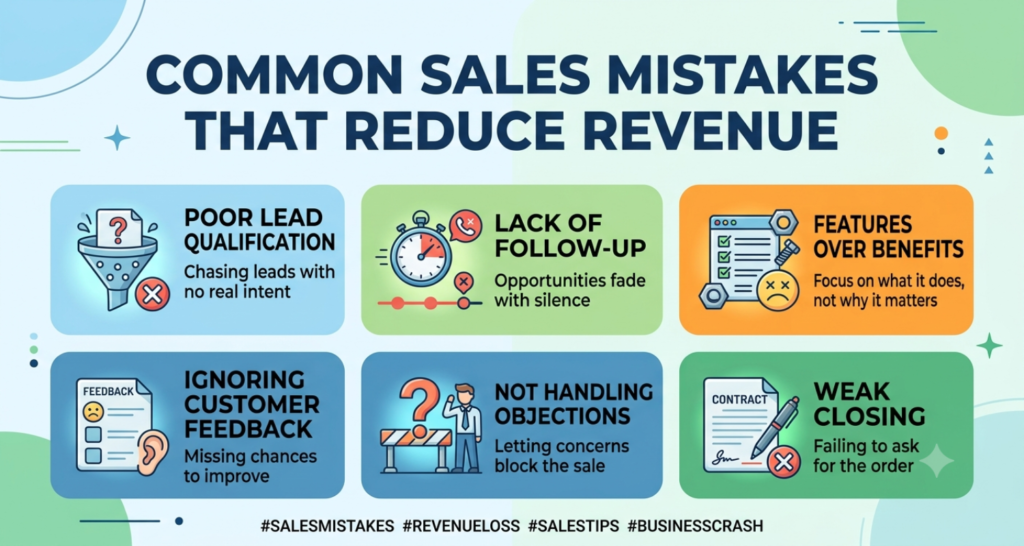
3. Focusing Only on Features
Customers rarely buy products because of features alone.
Instead, they buy benefits.
For example:
Instead of saying:
“This laptop has a fast processor.”
Say:
“This laptop helps you complete work faster, run multiple applications smoothly, and save valuable time every day.”
Always explain how your product improves the customer’s life or business.
4. Ignoring Follow-Up
Many sales opportunities are lost simply because businesses fail to follow up.
Customers often need time before making a decision.
Follow up by:
- Sending a thank-you email.
- Answering additional questions.
- Sharing helpful resources.
- Offering another demonstration.
- Checking in after a few days.
Professional follow-up keeps your business top of mind.
5. Not Building Trust
Trust is one of the strongest drivers of sales.
Customers are more likely to buy from businesses that appear honest and reliable.
Build trust by:
- Providing transparent pricing.
- Sharing customer reviews.
- Offering guarantees when appropriate.
- Responding quickly.
- Keeping promises.
Trust encourages both first-time purchases and repeat business.
6. Poor Product Knowledge
Customers expect sales representatives to answer questions confidently.
Learn about:
- Product features.
- Benefits.
- Pricing.
- Competitor differences.
- Common customer concerns.
Confidence creates credibility.
7. Weak Sales Presentations
A confusing sales presentation can quickly lose customer interest.
Keep presentations:
- Clear.
- Simple.
- Focused.
- Customer-centered.
Avoid overwhelming prospects with unnecessary information.
8. Failing to Handle Objections
Objections are a normal part of the sales process.
Common concerns include:
- Price.
- Timing.
- Competition.
- Product quality.
- Return policies.
Instead of arguing, acknowledge concerns and provide helpful information.
A respectful conversation often builds trust.
9. Not Asking for the Sale
Many sales conversations end without asking the customer to take the next step.
Simple closing questions include:
- Would you like to get started today?
- Which option works best for you?
- Shall we prepare your order?
A confident close increases conversion opportunities.
10. Ignoring Existing Customers
Many businesses spend heavily on finding new customers while forgetting current ones.
Existing customers often:
- Buy more frequently.
- Spend more.
- Refer friends.
- Leave positive reviews.
Focus on customer retention as much as customer acquisition.
11. Slow Response Times
Customers expect quick answers.
Delayed responses often result in lost sales.
Respond promptly to:
- Emails.
- Phone calls.
- Website inquiries.
- Social media messages.
Fast communication creates a positive customer experience.
12. Not Tracking Sales Performance
Successful businesses measure their results.
Monitor key performance indicators (KPIs) such as:
- Conversion rate.
- Average order value.
- Customer acquisition cost.
- Customer lifetime value.
- Sales growth.
- Lead response time.
Tracking data helps identify areas for improvement.
Common Sales Mistakes Small Businesses Make
Avoid these common errors:
- Selling before understanding customer needs.
- Ignoring follow-up.
- Overcomplicating presentations.
- Focusing only on price.
- Not asking for referrals.
- Forgetting existing customers.
- Inconsistent communication.
- Neglecting sales training.
Correcting these mistakes can significantly improve revenue.
Smart Sales Habits That Increase Revenue
Build these habits into your daily routine:
- Listen more than you speak.
- Learn about every customer.
- Follow up consistently.
- Personalize your sales approach.
- Respond quickly.
- Continue improving product knowledge.
- Request customer feedback.
- Measure your performance regularly.
- Build long-term relationships.
- Keep improving your sales process.
These habits help create sustainable business growth.
Why Customer Relationships Matter
Sales should not end after the purchase.
Strong customer relationships lead to:
- Repeat purchases.
- Higher customer loyalty.
- Positive online reviews.
- More referrals.
- Greater lifetime value.
Customers who trust your business often become your best source of future sales.
Final Thoughts
Sales success is not about using aggressive tactics or chasing every opportunity. It is about understanding customers, solving real problems, and building lasting relationships. By avoiding common sales mistakes that reduce revenue, you can improve conversion rates, strengthen customer loyalty, and increase long-term profitability.
Remember, every customer interaction is an opportunity to create trust. Small improvements in your sales process today can lead to significant business growth tomorrow.
U.S. Chamber of Commerce – Business Growth Resources:
Frequently Asked Questions
What is the biggest sales mistake businesses make?
Failing to understand customer needs is one of the most common mistakes. Listening first helps businesses recommend better solutions.
Why is follow-up important in sales?
Many customers need time before making a decision. Consistent follow-up increases trust and improves conversion rates.
How can I improve my sales conversion rate?
Understand your audience, respond quickly, personalize your approach, handle objections professionally, and always ask for the sale.
Why should businesses focus on existing customers?
Existing customers are more likely to make repeat purchases, spend more over time, and refer new customers, making them highly valuable.