
 MOHAMMAD ABUBAKR
Every business owner wants to increase profits. However, cutting costs the wrong way can slow growth, reduce customer satisfaction, and hurt employee morale. The good news is that reducing business expenses does not have to mean sacrificing quality or limiting expansion.
Successful companies focus on working smarter, not simply spending less. They eliminate waste, improve efficiency, and invest in areas that generate the highest return. As a result, they strengthen their financial position while continuing to grow.
If you own a small business or startup in the United States, this guide will show you how to reduce business costs without slowing growth through practical, proven strategies.
Why Cost Management Is Important
Managing expenses is about more than saving money. It helps businesses become more competitive and financially stable.
Effective cost management can:
- Improve cash flow.
- Increase profit margins.
- Prepare for economic uncertainty.
- Support future investments.
- Reduce financial stress.
- Strengthen long-term growth.
Instead of cutting essential resources, focus on removing unnecessary expenses that do not add value.
How to Build a Business Emergency Fund
1. Review Every Business Expense
The first step is understanding where your money goes.
Review your monthly expenses and categorize them into:
- Essential operating costs.
- Growth investments.
- Optional expenses.
- Unused subscriptions.
- One-time purchases.
Many businesses discover recurring charges they no longer need.
A monthly expense review helps identify easy savings.
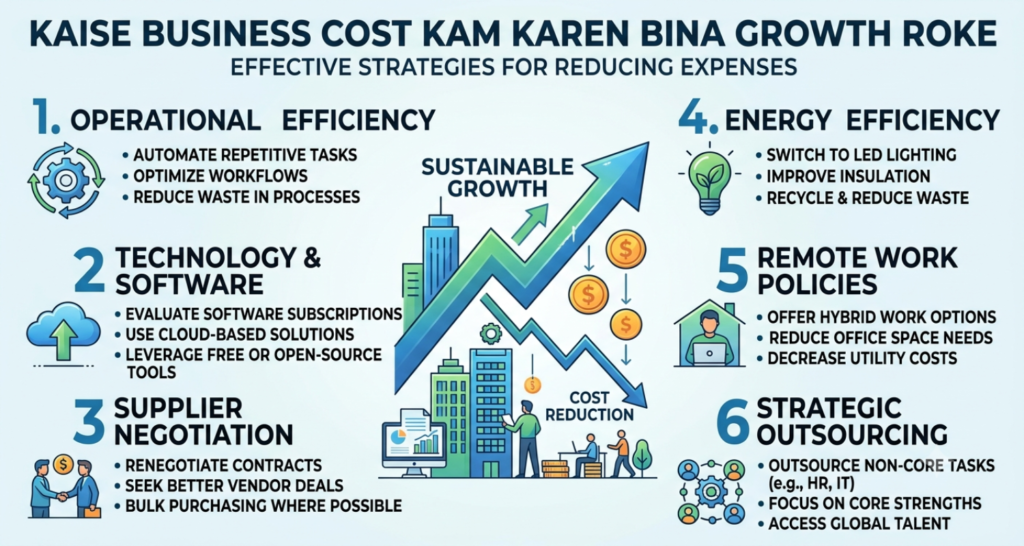
2. Automate Repetitive Tasks
Manual work takes time and increases labor costs.
Automation improves efficiency while reducing operating expenses.
Consider automating:
- Invoicing.
- Payroll.
- Appointment scheduling.
- Email marketing.
- Inventory tracking.
- Customer follow-ups.
Employees can then spend more time on activities that generate revenue.
3. Negotiate With Suppliers
Many entrepreneurs accept supplier pricing without asking for better terms.
However, long-term relationships often create opportunities for discounts.
You may negotiate:
- Bulk pricing.
- Early payment discounts.
- Longer payment terms.
- Lower shipping costs.
- Annual contracts.
Even small savings can add up significantly over the course of a year.
4. Reduce Unnecessary Software Subscriptions
Businesses often subscribe to multiple tools that perform similar functions.
Review all software subscriptions regularly.
Ask these questions:
- Do we still use this software?
- Is there a lower-cost alternative?
- Can one platform replace several others?
Removing unused subscriptions reduces recurring expenses without affecting growth.
5. Improve Energy Efficiency
Utility costs can quietly reduce profits.
Simple improvements include:
- Switching to LED lighting.
- Using energy-efficient equipment.
- Turning off unused electronics.
- Installing smart thermostats.
- Scheduling equipment maintenance.
Lower energy bills create long-term savings.
6. Outsource Non-Core Tasks
Hiring full-time employees for every function is not always necessary.
Instead, outsource specialized work such as:
- Graphic design.
- Bookkeeping.
- Payroll.
- IT support.
- Website maintenance.
- Content writing.
Outsourcing provides professional expertise while reducing payroll and benefit costs.
7. Optimize Inventory Management
Too much inventory ties up valuable cash.
Too little inventory leads to missed sales.
Use inventory management software to:
- Track demand.
- Reduce overstocking.
- Identify slow-moving products.
- Improve purchasing decisions.
Efficient inventory management improves cash flow and lowers storage costs.
8. Focus Marketing on High-ROI Channels
Not every marketing strategy delivers equal results.
Analyze which channels produce the highest return on investment.
Examples include:
- Search engine optimization (SEO).
- Email marketing.
- Social media marketing.
- Referral programs.
- Content marketing.
Reduce spending on campaigns that consistently underperform.
9. Encourage Remote or Hybrid Work
For many businesses, flexible work arrangements can reduce expenses.
Potential savings include:
- Office rent.
- Utilities.
- Office supplies.
- Parking costs.
- Travel expenses.
If remote work fits your business model, it can improve both cost efficiency and employee satisfaction.
10. Build a Monthly Budget
A business budget provides clear spending limits.
Your budget should include:
- Payroll.
- Rent.
- Marketing.
- Equipment.
- Taxes.
- Emergency savings.
- Growth investments.
Review the budget monthly and adjust it based on business performance.
11. Monitor Cash Flow Weekly
Many businesses focus only on revenue.
However, positive cash flow keeps operations running.
Weekly monitoring helps you:
- Identify spending trends.
- Prepare for large expenses.
- Collect overdue invoices.
- Maintain healthy cash reserves.
Good cash flow management supports growth without unnecessary borrowing.
12. Invest in Employee Training
Well-trained employees work more efficiently and make fewer costly mistakes.
Training can improve:
- Productivity.
- Customer service.
- Sales performance.
- Technology adoption.
- Workplace safety.
Although training requires an upfront investment, it often reduces long-term operating costs.
13. Avoid High-Interest Debt
Borrowing can help a business grow, but expensive debt reduces profitability.
Before taking a loan:
- Compare interest rates.
- Understand repayment terms.
- Borrow only what is necessary.
- Create a repayment plan.
Reducing interest expenses leaves more money available for growth.
14. Regularly Review Financial Reports
Business owners should review key reports every month.
Important reports include:
- Profit and loss statement.
- Cash flow statement.
- Balance sheet.
- Expense reports.
- Sales reports.
These reports help identify unnecessary spending before it becomes a larger problem.
Common Cost-Cutting Mistakes to Avoid
Some cost reductions can hurt your business.
Avoid these mistakes:
- Cutting customer service.
- Eliminating important marketing.
- Buying low-quality equipment.
- Underpaying employees.
- Ignoring maintenance.
- Delaying technology upgrades.
- Reducing product quality.
Short-term savings should never damage long-term growth.
Practical Tips to Lower Costs While Growing
Develop these smart habits:
- Review expenses every month.
- Track business performance regularly.
- Negotiate with vendors annually.
- Build an emergency fund.
- Reduce waste in daily operations.
- Invest in automation.
- Improve employee productivity.
- Focus on profitable customers.
- Increase operational efficiency.
- Reinvest savings into business growth.
These habits help businesses stay competitive while protecting profitability.
Why Smart Cost Management Supports Growth
Cost reduction should strengthen your business, not slow it down.
Businesses that manage expenses wisely can:
- Increase profits.
- Improve cash flow.
- Expand confidently.
- Hire strategically.
- Invest in innovation.
- Handle economic uncertainty.
By focusing on efficiency instead of cutting essential resources, companies create a stronger foundation for sustainable growth.
Final Thoughts
Reducing business costs does not mean sacrificing quality or limiting expansion. Instead, it means making smarter financial decisions. Reviewing expenses, automating routine tasks, negotiating with suppliers, optimizing inventory, and monitoring cash flow can significantly improve profitability.
Remember, successful businesses grow by investing in the right areas while eliminating waste. When you manage costs strategically, your business becomes stronger, more efficient, and better prepared for future opportunities.
U.S. Small Business Administration (SBA):
Frequently Asked Questions
What is the best way to reduce business costs?
Start by reviewing all expenses, eliminating unnecessary spending, automating repetitive tasks, and negotiating better deals with suppliers.
Can cutting costs hurt business growth?
Yes. Cutting essential services, marketing, or product quality can slow growth. Focus on improving efficiency instead of reducing value.
Why is cash flow important when reducing costs?
Healthy cash flow ensures your business can pay bills, invest in growth, and handle unexpected expenses without relying on costly debt.
Should small businesses use automation?
Yes. Automation saves time, reduces errors, lowers labor costs, and allows employees to focus on higher-value work.