
 MOHAMMAD ABUBAKR
Running a successful small business requires more than generating sales. It also requires setting clear financial goals that guide your decisions and keep your business moving in the right direction. Without measurable goals, it becomes difficult to track progress, improve profitability, or prepare for unexpected challenges.
Many small business owners focus only on increasing revenue. However, revenue alone does not guarantee success. Strong cash flow, healthy profit margins, controlled expenses, and long-term financial planning are equally important.
Whether you are launching a startup or managing an established company in the United States, setting the right financial goals can improve stability and support sustainable growth. This guide explores small business financial goals worth setting and explains how they can help your business succeed.
Why Financial Goals Matter for Small Businesses
Financial goals provide direction and accountability. Instead of making decisions based on guesswork, you can measure progress using real numbers.
Well-defined goals help you:
- Improve cash flow.
- Increase profitability.
- Prepare for emergencies.
- Control business expenses.
- Make better investment decisions.
- Build long-term financial stability.
When you regularly review your goals, your business becomes more adaptable to changing market conditions.
Why Cash Flow Matters More Than Revenue
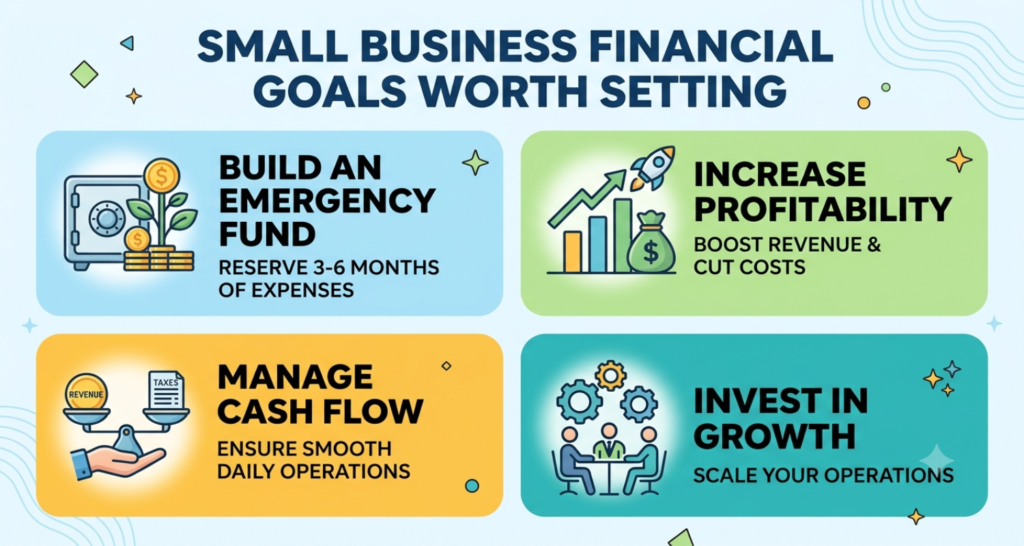
1. Increase Positive Cash Flow
Cash flow is one of the most important indicators of business health.
Even profitable businesses can struggle if they do not have enough cash available to cover daily expenses.
How to Achieve This Goal
- Invoice customers promptly.
- Follow up on overdue payments.
- Reduce unnecessary expenses.
- Build a cash reserve.
- Forecast monthly cash flow.
A business with strong cash flow can handle unexpected expenses and invest in future growth.
2. Build a Business Emergency Fund
Unexpected costs can affect any company.
Examples include:
- Equipment failures.
- Economic downturns.
- Legal expenses.
- Emergency repairs.
- Supply chain disruptions.
Aim to save enough to cover three to six months of essential operating expenses. This financial cushion helps your business remain stable during difficult times.
3. Improve Profit Margins
Revenue is important, but profits determine long-term success.
Improving profit margins means keeping more of every dollar your business earns.
Ways to increase profitability include:
- Reviewing pricing strategies.
- Negotiating with suppliers.
- Reducing waste.
- Improving productivity.
- Focusing on high-margin products or services.
Small improvements can lead to significant gains over time.
4. Reduce Business Debt
Debt can support growth when used wisely. However, excessive borrowing can limit financial flexibility.
Create a plan to:
- Pay high-interest loans first.
- Make payments on time.
- Avoid unnecessary borrowing.
- Refinance expensive debt if better terms are available.
Lower debt means more money can be invested back into the business.
5. Increase Monthly Revenue
Growing sales remains an important financial objective.
Set realistic revenue targets based on:
- Historical performance.
- Market demand.
- Customer growth.
- Seasonal trends.
Instead of chasing rapid growth, focus on steady and sustainable increases.
6. Create and Maintain a Budget
Every successful business needs a budget.
Your budget should include:
- Payroll.
- Rent.
- Utilities.
- Marketing.
- Inventory.
- Insurance.
- Taxes.
- Savings.
Review your budget monthly and adjust it as your business evolves.
7. Save for Taxes Year-Round
Taxes should never be an afterthought.
Set aside a portion of every payment you receive to prepare for tax obligations.
Benefits include:
- Fewer financial surprises.
- Better cash management.
- Reduced risk of penalties.
- Less stress during tax season.
Consulting a tax professional can also help maximize deductions.
8. Build Strong Business Credit
A good business credit profile can open doors to better financing options.
Strong business credit may help you:
- Qualify for larger loans.
- Secure lower interest rates.
- Negotiate better supplier terms.
- Increase credit limits.
Pay bills on time and monitor your business credit regularly.
9. Reduce Operating Expenses
Lower expenses without sacrificing quality.
Review recurring costs such as:
- Software subscriptions.
- Office supplies.
- Utilities.
- Shipping.
- Marketing campaigns.
Eliminate unnecessary spending and reinvest the savings into growth opportunities.
10. Invest in Technology
Modern technology improves efficiency and reduces errors.
Consider investing in:
- Accounting software.
- Payroll systems.
- Customer relationship management (CRM) tools.
- Inventory management software.
- Project management platforms.
The right technology often saves both time and money.
11. Increase Customer Retention
Keeping existing customers is often more cost-effective than acquiring new ones.
Improve retention by:
- Providing excellent customer service.
- Offering loyalty programs.
- Requesting customer feedback.
- Responding quickly to concerns.
- Maintaining consistent product quality.
Satisfied customers are more likely to return and recommend your business.
12. Review Financial Reports Every Month
Financial reports provide valuable insights into your business performance.
Review these reports regularly:
- Profit and loss statement.
- Balance sheet.
- Cash flow statement.
- Accounts receivable.
- Accounts payable.
Monthly reviews help you identify trends and make informed decisions.
13. Prepare for Business Growth
Growth requires planning.
Set financial goals that support expansion, such as:
- Hiring additional employees.
- Purchasing new equipment.
- Expanding inventory.
- Opening new locations.
- Launching new products.
Planning ahead reduces financial pressure during periods of growth.
Common Financial Goal Mistakes
Avoid these common mistakes:
- Setting unrealistic goals.
- Ignoring cash flow.
- Failing to track progress.
- Spending without a budget.
- Mixing personal and business finances.
- Not saving for taxes.
- Delaying financial reviews.
Simple, measurable goals are usually more effective than vague ambitions.
Tips for Achieving Your Financial Goals
Stay on track with these practical habits:
- Set SMART (Specific, Measurable, Achievable, Relevant, Time-bound) goals.
- Monitor your cash flow weekly.
- Review expenses every month.
- Automate savings.
- Use accounting software.
- Revisit your goals every quarter.
- Celebrate milestones to stay motivated.
- Adjust your strategy as your business changes.
Consistency is the key to long-term financial success.
Why Goal Setting Supports Long-Term Success
Financial goals provide a roadmap for your business.
They help you:
- Make confident decisions.
- Allocate resources wisely.
- Prepare for uncertainty.
- Improve profitability.
- Build stronger relationships with lenders and investors.
- Create a sustainable business model.
Businesses with clear financial goals are often better prepared to navigate challenges and seize new opportunities.
Final Thoughts
Setting financial goals is one of the smartest investments you can make in your business. Whether your objective is improving cash flow, increasing profits, reducing debt, or building an emergency fund, each goal strengthens your company’s financial foundation.
Start with a few realistic objectives, track your progress consistently, and adjust your plan as your business grows. Over time, these disciplined habits can lead to greater profitability, resilience, and long-term success.
Remember, successful businesses do not simply react to financial challenges—they plan for them.
IRS – Small Businesses and Self-Employed:
Frequently Asked Questions
What is the most important financial goal for a small business?
Maintaining positive cash flow is one of the most important goals because it ensures your business can meet daily financial obligations.
How often should financial goals be reviewed?
Review your financial goals at least once a month and evaluate overall progress every quarter.
Why should a small business have an emergency fund?
An emergency fund helps cover unexpected expenses, maintain operations during slow periods, and reduce reliance on debt.
What is a SMART financial goal?
A SMART goal is Specific, Measurable, Achievable, Relevant, and Time-bound, making it easier to track progress and achieve success.