 MOHAMMAD ABUBAKR
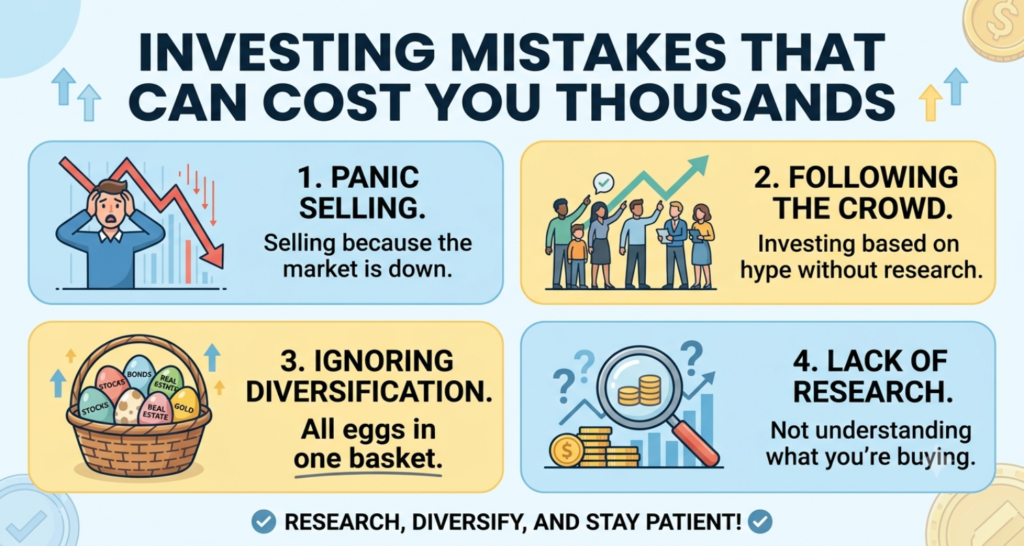
Investing is one of the best ways to build wealth. However, even small mistakes can cost you thousands of dollars over time. Many new investors focus on finding the next big stock. Yet they often ignore simple habits that protect their money.
The good news is that most investing mistakes are avoidable. Once you understand them, you can make smarter decisions. As a result, your portfolio has a better chance of growing steadily.
In this guide, you will learn the biggest investing mistakes. More importantly, you will discover how to avoid them.
1. Investing Without a Clear Plan
Many people start investing because everyone else is doing it. Unfortunately, they never define their financial goals.
Ask yourself:
- Why are you investing?
- When will you need the money?
- How much risk can you handle?
Without answers, every market drop feels scary. Consequently, many investors make emotional decisions.
Instead, create a simple investment plan. Decide your goals first. Then choose investments that match those goals.
2. Trying to Time the Market
Many investors believe they can predict the perfect time to buy and sell.
Sadly, this rarely works.
Even experienced professionals struggle to predict market movements. Therefore, waiting for the “perfect” opportunity often means missing strong market gains.
Instead, invest consistently.
A strategy called dollar-cost averaging helps reduce risk. You invest a fixed amount regularly, regardless of market conditions. Over time, this approach often produces better results.
3. Letting Emotions Control Your Decisions
Fear and greed are two of the biggest enemies of successful investing.
When markets fall, fear encourages investors to sell.
When prices rise quickly, greed pushes investors to buy expensive assets.
Neither decision usually ends well.
Instead, stay focused on your long-term plan.
Markets naturally rise and fall. However, emotional decisions often create permanent losses.
4. Ignoring Diversification
Putting all your money into one stock is risky.
Even excellent companies experience difficult years.
If that single investment performs poorly, your portfolio suffers.
Diversification spreads your money across different investments.
Consider owning:
- Stocks
- Bonds
- ETFs
- International investments
- Real estate investments
As a result, one poor investment has less impact on your overall portfolio.
5. Following Social Media Hype
Social media makes investing look easy.
Influencers often promise huge returns. Some even claim certain stocks will “explode.”
Unfortunately, many of these recommendations arrive after prices have already increased.
Instead of chasing trends, research every investment yourself.
Ask questions like:
- Does the company make money?
- Does it have long-term growth potential?
- Is the price reasonable?
Good investing relies on facts, not excitement.
6. Forgetting About Fees
Investment fees may seem small.
However, they quietly reduce your returns every year.
For example, paying a 1% annual management fee could cost tens of thousands of dollars over several decades.
Always review:
- Expense ratios
- Trading commissions
- Advisory fees
- Fund management costs
Lower fees leave more money invested for future growth.
7. Not Investing Early Enough
Many people believe they have plenty of time.
Unfortunately, every year you delay investing reduces the power of compound growth.
For example:
Someone who starts investing at age 25 often ends up with much more money than someone who starts at age 35—even if the second person invests more each month.
Time is one of your greatest investing advantages.
Therefore, start as early as possible.
8. Chasing Last Year’s Winners
Many investors buy investments simply because they performed well recently.
Past performance does not guarantee future results.
Markets constantly change.
Instead of buying yesterday’s winners, focus on quality investments with strong long-term fundamentals.
Consistency usually beats excitement.
9. Ignoring Emergency Savings
Investing every dollar sounds smart.
However, life is unpredictable.
Medical bills, job loss, or home repairs can happen without warning.
Without an emergency fund, you may have to sell investments during a market downturn.
That locks in losses.
Keep three to six months of living expenses in a separate emergency savings account before investing aggressively.
10. Trading Too Often
Some investors check their portfolios every hour.
Then they buy and sell repeatedly.
Frequent trading increases:
- Taxes
- Transaction costs
- Stress
- Mistakes
Long-term investors often outperform active traders.
Patience is a powerful investing skill.
11. Ignoring Inflation
Inflation slowly reduces purchasing power.
If your investments fail to grow faster than inflation, your money loses value over time.
Therefore, choose investments that have historically outpaced inflation over long periods.
Growth investments can help preserve purchasing power.
12. Investing Without Research
Never invest because someone says a stock is “guaranteed.”
Always understand what you own.
Research:
- Business model
- Revenue growth
- Profitability
- Debt levels
- Competitive advantages
Knowledge reduces unnecessary risk.
13. Failing to Rebalance Your Portfolio
Over time, some investments grow faster than others.
As a result, your original asset allocation changes.
For example:
You planned for 70% stocks and 30% bonds.
After several years, stocks may represent 85% of your portfolio.
This increases your risk.
Review your portfolio at least once each year.
Rebalancing keeps your investments aligned with your goals.
14. Ignoring Tax-Efficient Investing
Taxes affect your investment returns.
Many investors overlook this.
Simple strategies may help reduce taxes.
Examples include:
- Holding investments longer
- Using tax-advantaged retirement accounts
- Harvesting investment losses when appropriate
Keeping more of your returns helps build wealth faster.
15. Expecting Quick Riches
Many beginners expect to double their money quickly.
Real investing rarely works that way.
Wealth usually grows slowly.
Successful investors remain patient.
They continue investing during good years and bad years.
Over decades, this discipline often produces impressive results.
Smart Investing Habits That Build Wealth
Avoiding mistakes is only half the journey.
Develop these healthy investing habits:
- Invest regularly.
- Diversify your portfolio.
- Think long term.
- Ignore daily market noise.
- Continue learning.
- Review your investments yearly.
- Control your emotions.
- Focus on low-cost investments.
Small habits create big financial results over time.
Final Thoughts
Every investor makes mistakes. The difference is learning from them before they become expensive.
Avoid emotional decisions. Stay diversified. Invest consistently. Keep costs low. Most importantly, stay patient.
Building wealth is not about finding one perfect investment. Instead, it is about making good decisions repeatedly over many years.
The investors who succeed are usually not the smartest. They are the most disciplined.
If you avoid these common investing mistakes that can cost you thousands of dollars, you give yourself a much better chance of achieving long-term financial success while protecting your hard-earned money.