 MOHAMMAD ABUBAKR
Your credit score is one of the most important numbers in your financial life. It can affect whether you qualify for a mortgage, auto loan, credit card, apartment, or even certain job opportunities. Yet despite its importance, many Americans still believe common myths about how credit scores work.
These misconceptions often lead people to make poor financial decisions. Some avoid using credit altogether, while others unknowingly hurt their scores by following outdated advice.
The truth is that credit scoring is based on consistent financial behavior—not shortcuts or myths. Therefore, understanding how credit scores really work can help you build stronger credit and save money over time.
In this guide, we’ll separate fact from fiction by explaining the biggest credit score myths and what you should do instead.
Why Credit Score Myths Can Be Costly
Believing inaccurate information can:
- Lower your credit score
- Increase borrowing costs
- Delay loan approvals
- Make it harder to qualify for credit
- Cost thousands of dollars in higher interest rates
Fortunately, learning the facts can help you avoid these problems.
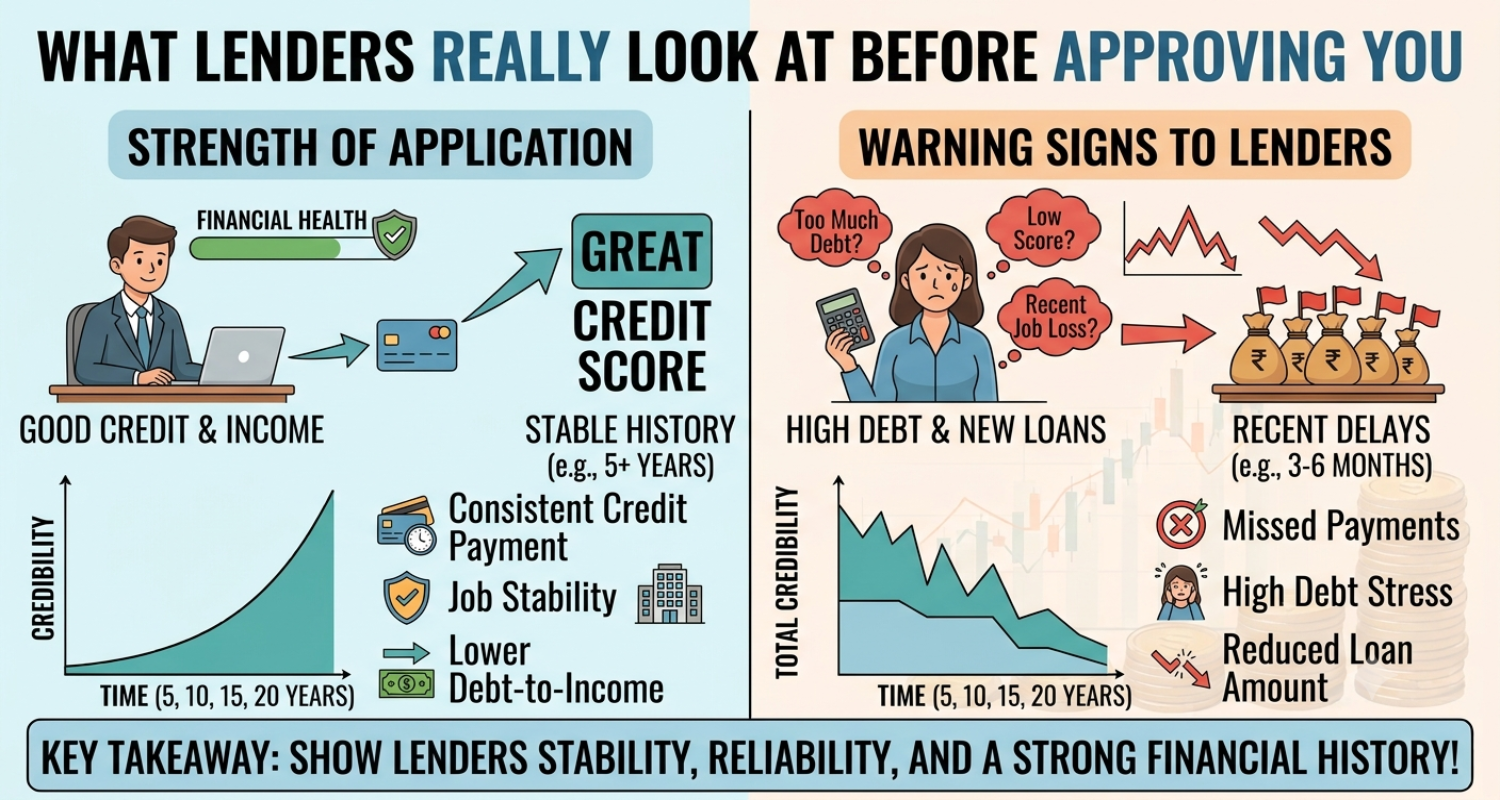
What Lenders Really Look at Before Approving You
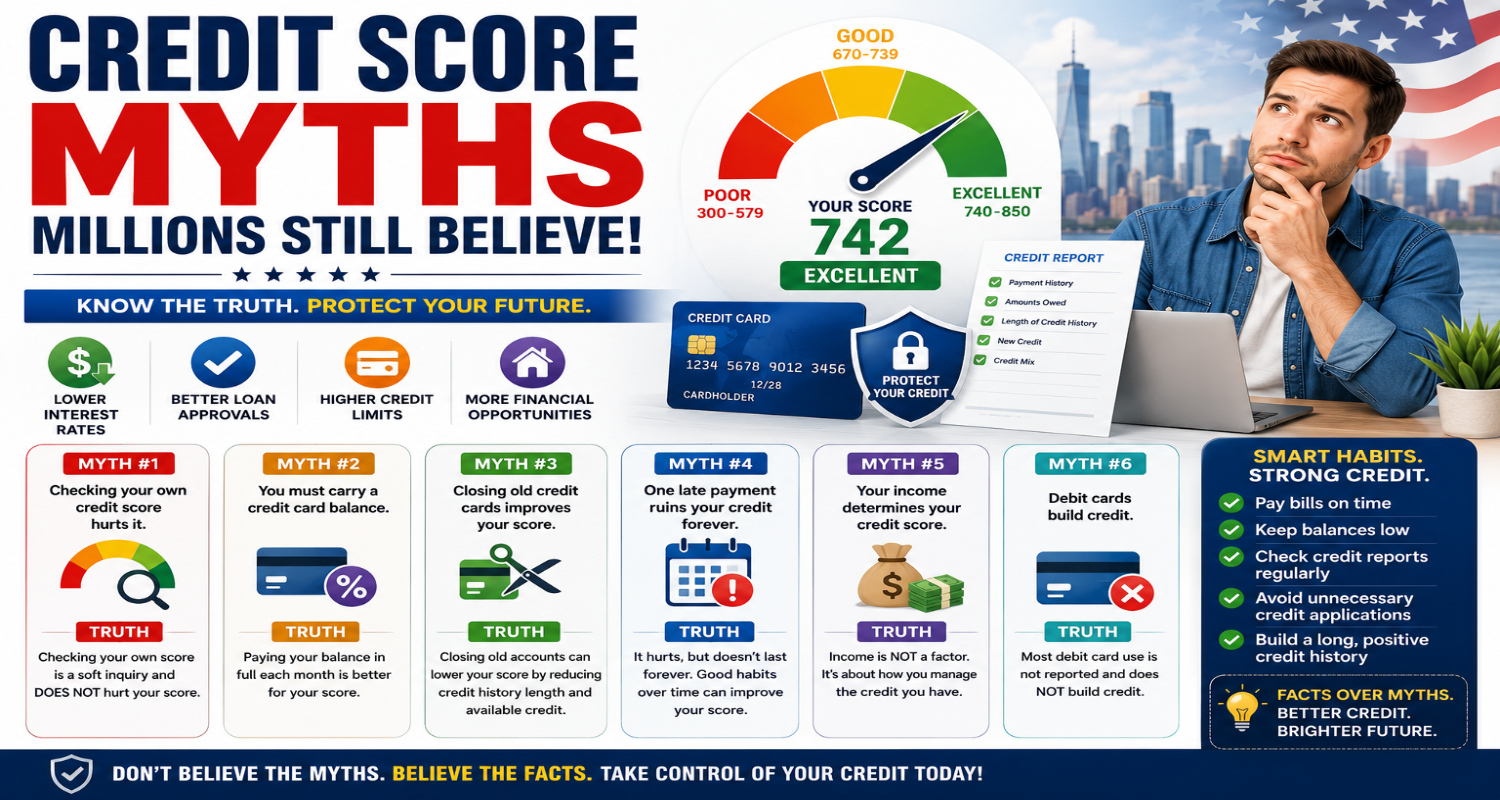
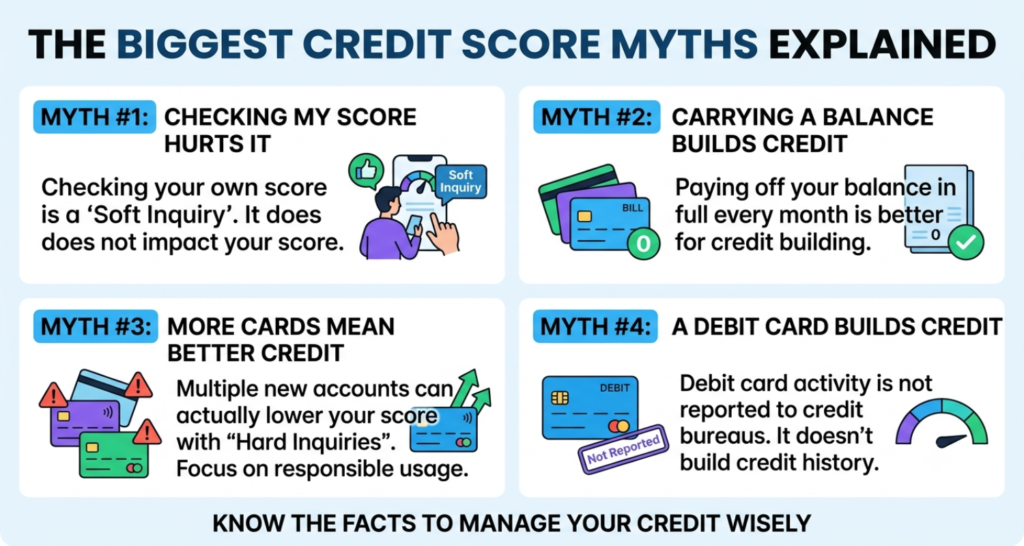
Myth #1: Checking Your Own Credit Score Hurts It
This is one of the most common myths.
The Truth
Checking your own credit score does not lower it.
When you review your own credit report or score, it creates a soft inquiry.
Soft inquiries have no impact on your credit score.
Only hard inquiries, which occur when you apply for new credit, may temporarily affect your score.
What You Should Do
Monitor your credit score regularly to catch errors, identity theft, or unexpected changes.
Myth #2: Carrying a Balance Improves Your Credit Score
Many people believe leaving a small balance on their credit card helps build credit.
The Truth
This is false.
You do not need to carry debt to build good credit.
Paying your statement balance in full every month avoids interest while still showing responsible credit use.
Better Strategy
Use your credit card regularly.
Then pay the balance before the due date.
Myth #3: Closing Old Credit Cards Always Helps Your Credit
Some people close unused cards to simplify their finances.
The Truth
Closing an older account can sometimes lower your credit score.
Why?
Because it may:
- Reduce your available credit
- Increase your credit utilization ratio
- Shorten your average account age over time
Unless the card has a costly annual fee, keeping it open may be the better choice.
Myth #4: A High Income Means a High Credit Score
Income and credit scores are often confused.
The Truth
Credit scores do not include your salary.
Someone earning $50,000 may have excellent credit.
Meanwhile, someone earning $250,000 could have poor credit due to missed payments or excessive debt.
Your score reflects how you manage credit—not how much money you make.
Myth #5: Paying Off Collections Removes Them Immediately
Paying a collection account is a smart financial decision.
However, many people expect it to disappear instantly.
The Truth
Paid collections may still remain on your credit report for a period of time, depending on the scoring model and reporting rules.
Even so, lenders often view paid collections more favorably than unpaid ones.
Myth #6: You Only Have One Credit Score
Many consumers think there is only one official credit score.
The Truth
You actually have multiple credit scores.
Different lenders may use:
- Different credit bureaus
- Different scoring models
- Industry-specific scores
Therefore, your score may vary slightly depending on who checks it.
Myth #7: Paying Off Debt Instantly Creates Excellent Credit
Paying off debt is an excellent financial move.
However, your score may not jump overnight.
The Truth
Credit scores improve gradually.
Positive payment history, lower utilization, and responsible credit management all take time to influence your score.
Patience is essential.
Myth #8: Debit Cards Build Credit
Many people use debit cards every day.
The Truth
Debit card purchases are not reported to the major credit bureaus.
As a result, using a debit card alone does not help build your credit history.
To build credit, use products that report payment activity, such as credit cards or certain loans.
Myth #9: You Should Never Use More Than 30% of Your Credit Limit
The “30% rule” is helpful, but many people misunderstand it.
The Truth
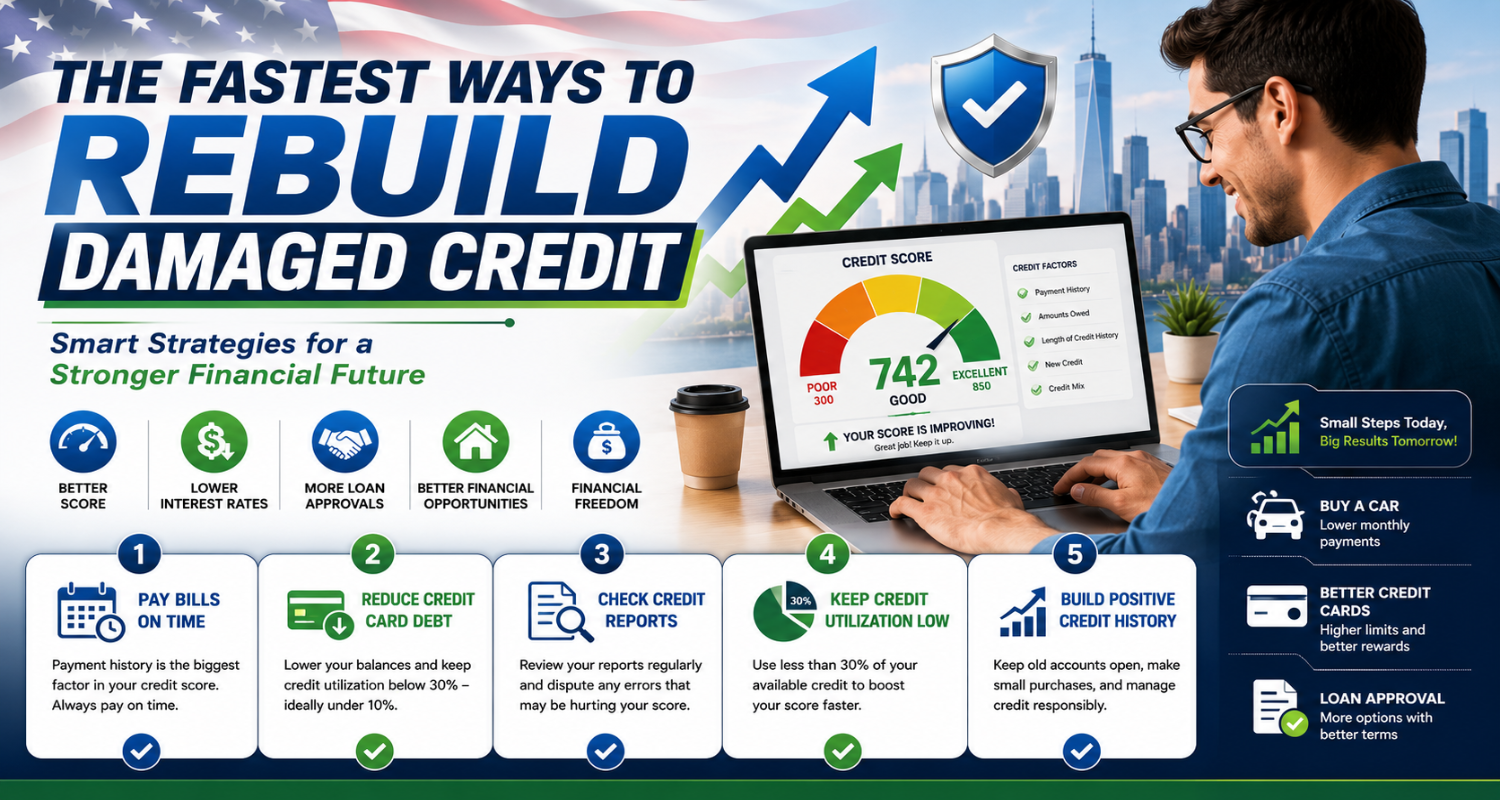
Keeping utilization below 30% is a good guideline.
However, lower is generally even better.
Many people with excellent credit keep their utilization below 10%.
Reducing balances before your statement closes may improve your score.
Myth #10: Missing One Payment Doesn’t Matter
Life happens.
However, even one missed payment can have consequences.
The Truth
A payment reported as late can negatively affect your credit score.
Repeated late payments cause even more damage.
Setting up automatic payments or reminders helps prevent this costly mistake.
Myth #11: Marriage Combines Credit Scores
Many newly married couples worry about this.
The Truth
There is no joint credit score.
Each spouse maintains an individual credit history.
However, joint loans and shared credit accounts can affect both people’s credit reports.
Myth #12: Applying for Multiple Credit Cards Always Ruins Your Credit
Some people avoid applying for any credit because they fear permanent damage.
The Truth
One or two hard inquiries usually have only a small, temporary effect.
Problems arise when you submit many applications within a short period.
Apply only when you genuinely need new credit.
What Really Determines Your Credit Score?
Although scoring models vary, they generally consider these factors:
Payment History
Making payments on time is the most important factor.
Credit Utilization
Using a smaller percentage of your available credit helps your score.
Length of Credit History
Older accounts strengthen your credit profile.
Credit Mix
Responsibly managing different types of credit can be beneficial.
New Credit
Too many recent applications may temporarily lower your score.
Focusing on these factors is far more effective than believing common myths.
Smart Habits That Actually Improve Your Credit
Instead of following misconceptions, build these habits:
- Pay every bill on time.
- Keep credit card balances low.
- Review your credit reports regularly.
- Avoid unnecessary credit applications.
- Keep older accounts open when practical.
- Build an emergency fund.
- Use credit responsibly.
- Monitor your progress consistently.
These habits create lasting improvements.
Final Thoughts
Credit scores often seem complicated, but many of the biggest myths are surprisingly easy to debunk. Checking your own score won’t hurt it, carrying a balance won’t improve it, and earning a high income doesn’t guarantee excellent credit.
The most effective way to build strong credit is simple: pay on time, keep debt manageable, avoid unnecessary applications, and monitor your credit regularly.
Don’t let outdated advice guide your financial decisions. By understanding the facts, you can improve your credit score, qualify for better financial products, and save money for years to come.
Consumer Financial Protection Bureau (CFPB) – Credit Reports and Scores
Frequently Asked Questions
Does checking my own credit score lower it?
No. Checking your own credit score creates a soft inquiry, which does not affect your credit score.
Is carrying a credit card balance good for my credit?
No. Paying your statement balance in full each month is generally the better approach because it avoids interest while demonstrating responsible credit use.
How many credit scores do I have?
You may have multiple credit scores because different lenders use different scoring models and credit bureaus.
Does my salary affect my credit score?
No. Income is not a direct factor in calculating your credit score.
What is the best way to improve a credit score?
Pay bills on time, keep credit utilization low, maintain older accounts, avoid unnecessary hard inquiries, and monitor your credit reports regularly.