
 MOHAMMAD ABUBAKR
Starting a business is exciting. It offers the chance to build wealth, create jobs, and turn ideas into reality. However, entrepreneurship also comes with financial risks. While many business owners focus on increasing sales, they often underestimate the importance of managing money effectively.
In the United States, small businesses face rising costs, changing consumer behavior, inflation, and economic uncertainty. As a result, entrepreneurs must make smart financial decisions from day one. Without a solid financial strategy, even profitable businesses can struggle to survive.
This guide explores the biggest financial challenges for entrepreneurs, explains why they happen, and shares practical solutions to help business owners build stronger, more profitable companies.
The Best Financial Habits to Build Wealth Faster
Why Financial Management Matters for Entrepreneurs
A great product or service alone does not guarantee success. Business owners must also understand how money flows through their company.
Strong financial management helps entrepreneurs:
- Keep the business operating smoothly.
- Prepare for unexpected expenses.
- Make better investment decisions.
- Build investor confidence.
- Improve long-term profitability.
- Reduce financial stress.
Businesses that manage their finances well are generally better prepared to handle economic downturns and changing market conditions.
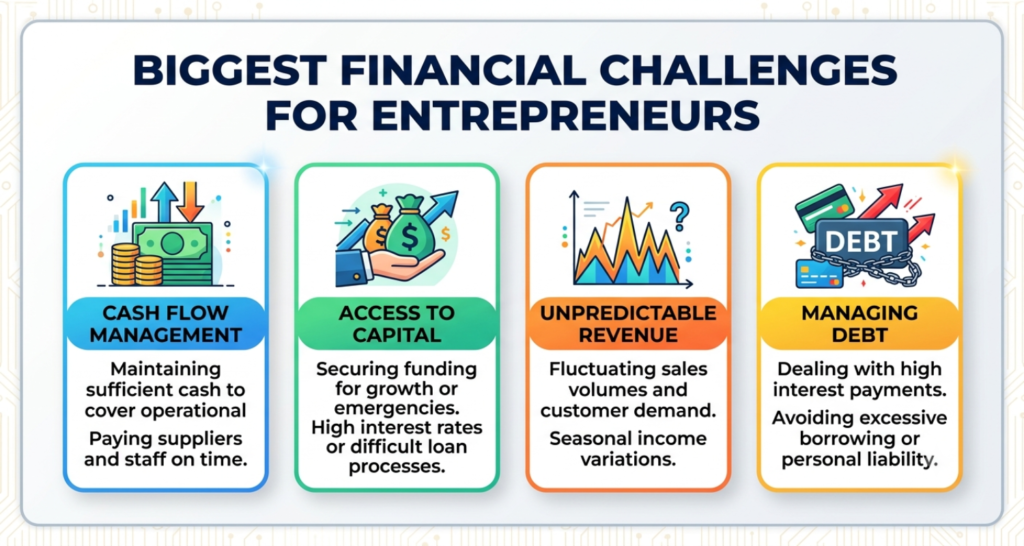
1. Managing Cash Flow
Cash flow is one of the biggest challenges entrepreneurs face.
Many businesses generate sales but still struggle because cash does not arrive when bills are due.
For example:
- Customers pay invoices late.
- Inventory costs increase.
- Payroll remains fixed.
- Rent must be paid every month.
- Suppliers expect timely payment.
Consequently, businesses may experience cash shortages even while showing profits on paper.
How to Improve Cash Flow
- Send invoices immediately.
- Encourage faster customer payments.
- Track monthly expenses.
- Build a cash reserve.
- Monitor cash flow weekly.
- Reduce unnecessary spending.
Healthy cash flow keeps a business operating during both busy and slow periods.
2. Raising Startup Capital
Many entrepreneurs need funding before their business becomes profitable.
Unfortunately, obtaining financing is not always easy.
Common funding sources include:
- Personal savings.
- Bank loans.
- Small Business Administration (SBA) loans.
- Angel investors.
- Venture capital.
- Business partners.
- Crowdfunding.
Each option has benefits and risks. Therefore, entrepreneurs should carefully evaluate repayment obligations, ownership dilution, and interest costs before accepting funding.
3. Separating Personal and Business Finances
Many first-time entrepreneurs mix personal and business expenses.
Although this may seem convenient, it creates accounting problems and tax complications.
Keeping finances separate makes it easier to:
- Track business performance.
- Prepare tax returns.
- Build business credit.
- Apply for financing.
- Maintain accurate records.
Opening a dedicated business checking account is an important first step.
4. Budgeting for Unpredictable Expenses
Unexpected expenses affect every business.
Examples include:
- Equipment repairs.
- Software upgrades.
- Legal fees.
- Insurance increases.
- Supply chain disruptions.
- Marketing emergencies.
Without an emergency fund, these costs can create financial strain.
Building a business reserve fund helps reduce the impact of unexpected events.
5. Paying Business Taxes
Taxes often surprise new entrepreneurs.
Unlike traditional employees, business owners are usually responsible for managing estimated tax payments and maintaining detailed financial records.
Common tax responsibilities include:
- Federal income tax.
- State income tax.
- Self-employment tax.
- Payroll tax.
- Sales tax, where applicable.
Working with a qualified tax professional can reduce errors and identify available deductions.
6. Controlling Operating Costs
Business expenses can increase quickly.
Common operating costs include:
- Employee salaries.
- Office rent.
- Software subscriptions.
- Advertising.
- Utilities.
- Insurance.
- Inventory.
- Shipping.
Regular expense reviews help identify unnecessary spending while protecting profitability.
7. Pricing Products and Services Correctly
Many entrepreneurs underprice their products to attract customers.
While lower prices may increase sales initially, they often reduce profit margins.
Pricing should reflect:
- Production costs.
- Labor expenses.
- Overhead.
- Market demand.
- Competitor pricing.
- Desired profit margin.
A sustainable pricing strategy supports long-term growth instead of short-term sales.
8. Building Business Credit
Business credit becomes increasingly important as a company grows.
Strong business credit may improve access to:
- Lower-interest financing.
- Better supplier terms.
- Higher credit limits.
- Equipment financing.
Entrepreneurs can build business credit by paying bills on time and maintaining responsible borrowing habits.
9. Planning for Slow Seasons
Many industries experience seasonal fluctuations.
Examples include:
- Retail businesses.
- Tourism.
- Landscaping.
- Construction.
- Event services.
Preparing for slower months by saving during busy periods helps stabilize operations throughout the year.
10. Investing in Growth Without Overspending
Growth requires investment.
However, expanding too quickly can create financial pressure.
Business owners often invest in:
- New employees.
- Larger office space.
- Additional inventory.
- Technology.
- Marketing.
- Product development.
Expansion should be based on reliable financial data rather than optimism alone.
Common Financial Mistakes Entrepreneurs Make
Avoid these costly mistakes:
- Ignoring cash flow reports.
- Mixing personal and business finances.
- Failing to create a budget.
- Taking on excessive debt.
- Underpricing products.
- Neglecting taxes.
- Skipping emergency savings.
- Making emotional financial decisions.
- Not reviewing financial statements regularly.
Learning from these mistakes can improve long-term business success.
Practical Financial Tips for Entrepreneurs
Build stronger financial habits with these strategies:
- Create a monthly operating budget.
- Monitor cash flow every week.
- Automate savings for emergencies.
- Review expenses regularly.
- Invest in accounting software.
- Build business credit gradually.
- Set realistic revenue goals.
- Reduce unnecessary debt.
- Reinvest profits strategically.
- Consult financial professionals when needed.
These habits help businesses remain resilient during both growth and economic uncertainty.
Why Financial Planning Is Essential for Business Success
Entrepreneurs often focus on generating revenue. While revenue is important, profitability and financial stability matter just as much.
Businesses that understand their finances are better equipped to:
- Navigate economic downturns.
- Invest in new opportunities.
- Hire talented employees.
- Expand confidently.
- Maintain customer trust.
- Achieve long-term growth.
Financial planning transforms uncertainty into informed decision-making.
Final Thoughts
Entrepreneurship offers incredible opportunities, but it also requires careful financial management. The biggest financial challenges for entrepreneurs include managing cash flow, securing funding, controlling expenses, handling taxes, and planning for unexpected events.
Fortunately, these challenges can be managed with consistent budgeting, smart investing, disciplined spending, and long-term planning. By understanding your numbers and making informed financial decisions, you can build a business that not only survives but thrives in today’s competitive economy.
Remember, successful entrepreneurs do more than generate sales—they manage money wisely.
Internal Revenue Service (IRS) – Small Businesses:
Frequently Asked Questions
What is the biggest financial challenge for entrepreneurs?
Cash flow management is one of the most common challenges because businesses often have expenses due before customer payments arrive.
Why should entrepreneurs separate personal and business finances?
Separate accounts improve bookkeeping, simplify taxes, build business credit, and provide a clearer picture of business performance.
How much emergency savings should a business have?
Many financial experts recommend maintaining enough cash to cover at least three to six months of essential operating expenses.