
 MOHAMMAD ABUBAKR
Many entrepreneurs celebrate when their business generates more revenue. While increasing sales is exciting, revenue alone does not guarantee financial success. In fact, many businesses with impressive sales figures still struggle to pay employees, suppliers, rent, or utility bills. The reason is simple—cash flow matters more than revenue.
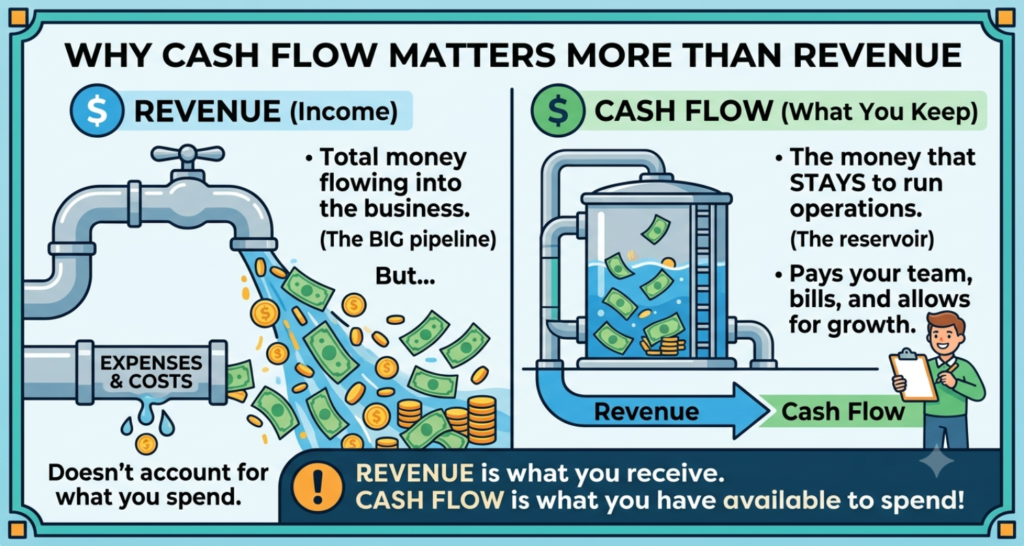
Cash flow represents the money moving into and out of your business. Revenue, on the other hand, only shows how much money your business has earned from selling products or services. If customers have not paid their invoices yet, that revenue may not be available to cover today’s expenses.
For entrepreneurs and small business owners in the United States, understanding cash flow is one of the most important financial skills. This guide explains why cash flow matters more than revenue, how it affects business growth, and practical ways to improve your company’s financial health.
What Is Revenue?
Revenue is the total amount of money your business earns from selling products or services before deducting expenses.
For example, if a business sells $100,000 worth of products in one month, its monthly revenue is $100,000.
Revenue is often called the top line because it appears at the top of an income statement.
Although revenue measures business activity, it does not show whether your company has enough money available to operate
Why Every Business Needs an Emergency Fund
.
What Is Cash Flow?
Cash flow refers to the actual movement of money into and out of your business.
Positive cash flow means more cash is coming in than going out.
Negative cash flow means your expenses exceed the cash you receive during a given period.
Unlike revenue, cash flow focuses on money that is actually available to pay bills today.
Revenue vs. Cash Flow: Understanding the Difference
Many new entrepreneurs confuse these two financial terms.
| Revenue | Cash Flow |
|---|---|
| Money earned from sales | Money moving in and out of the business |
| Includes unpaid invoices | Only includes available cash |
| Measures sales performance | Measures financial health |
| Appears on the income statement | Appears on the cash flow statement |
| Does not guarantee available money | Determines whether bills can be paid |
A business can report high revenue while experiencing poor cash flow. That is why successful business owners monitor both.
Why Cash Flow Matters More Than Revenue
1. Cash Pays Your Bills
Your landlord, employees, suppliers, and utility companies expect payment on time.
They cannot accept unpaid invoices as payment.
Even if your business has earned thousands of dollars in revenue, you still need cash available to meet these obligations.
Healthy cash flow keeps daily operations running smoothly.
2. Cash Flow Keeps Your Business Alive
Many profitable businesses fail because they run out of cash.
Imagine this situation:
- Your business generates $250,000 in sales.
- Customers have 90 days to pay.
- Payroll is due this Friday.
- Rent is due next week.
Although your business looks successful on paper, you may not have enough cash available today.
Without proper cash flow management, operations can quickly become difficult.
3. It Helps You Handle Emergencies
Unexpected expenses happen in every business.
Examples include:
- Equipment failures.
- Vehicle repairs.
- Cybersecurity incidents.
- Legal expenses.
- Supply chain disruptions.
- Emergency inventory purchases.
Businesses with strong cash flow can respond to these situations without relying heavily on loans or credit cards.
4. Strong Cash Flow Supports Growth
Growth requires money.
Businesses often need cash to:
- Hire employees.
- Purchase inventory.
- Launch marketing campaigns.
- Expand office space.
- Invest in technology.
- Develop new products.
Without healthy cash flow, expansion opportunities may have to wait.
5. It Reduces Financial Stress
Business owners frequently worry about making payroll or paying suppliers.
Consistent positive cash flow reduces that pressure.
Instead of constantly solving short-term financial problems, entrepreneurs can focus on improving customer service, innovation, and long-term growth.
Common Causes of Poor Cash Flow
Several factors can create cash flow problems.
Late Customer Payments
Customers who delay paying invoices slow down incoming cash.
Overspending
Unnecessary purchases reduce available working capital.
Excess Inventory
Too much inventory ties up money that could be used elsewhere.
Rapid Growth
Growing too quickly often requires significant upfront spending before additional revenue arrives.
Seasonal Sales
Businesses with seasonal demand may experience months of lower income.
Recognizing these challenges early allows business owners to plan more effectively.
How to Improve Cash Flow
Invoice Customers Quickly
Send invoices immediately after completing work or delivering products.
The sooner invoices go out, the sooner payments arrive.
Encourage Faster Payments
Offer convenient payment methods and clear payment terms.
Some businesses also provide small discounts for early payment.
Monitor Cash Flow Weekly
Review incoming and outgoing cash every week instead of waiting until month-end.
Frequent monitoring helps identify potential shortages before they become serious.
Build a Cash Reserve
An emergency business fund can cover unexpected expenses during slower periods.
Many financial professionals recommend maintaining several months of operating expenses in reserve.
Control Business Expenses
Review recurring expenses regularly.
Cancel unused subscriptions, negotiate vendor contracts, and eliminate unnecessary spending whenever possible.
Forecast Future Cash Flow
Create monthly cash flow forecasts that estimate:
- Expected customer payments.
- Payroll expenses.
- Rent.
- Loan payments.
- Inventory purchases.
- Tax obligations.
Forecasting helps business owners prepare for future financial needs.
Signs Your Business Has Healthy Cash Flow
Healthy businesses often share these characteristics:
- Bills are paid on time.
- Payroll is never delayed.
- Emergency expenses can be covered.
- Suppliers are paid promptly.
- Business debt remains manageable.
- Cash reserves continue growing.
- Growth opportunities can be funded without financial strain.
These indicators demonstrate financial stability beyond revenue alone.
Common Cash Flow Mistakes Entrepreneurs Make
Avoid these common errors:
- Focusing only on sales.
- Ignoring unpaid invoices.
- Mixing personal and business finances.
- Not preparing for seasonal slowdowns.
- Carrying excessive inventory.
- Failing to maintain emergency savings.
- Taking on unnecessary debt.
- Neglecting regular financial reviews.
Correcting these habits can strengthen your company’s financial position.
Practical Tips for Better Cash Flow Management
Use these strategies to maintain healthy cash flow:
- Prepare a monthly budget.
- Review financial statements regularly.
- Automate invoicing.
- Follow up on overdue payments.
- Reduce unnecessary expenses.
- Build strong customer payment policies.
- Keep business and personal accounts separate.
- Maintain an emergency fund.
- Reinvest profits carefully.
- Work with an accountant or financial advisor when needed.
Consistent financial discipline often produces better long-term results than chasing rapid revenue growth.
Why Every Entrepreneur Should Monitor Cash Flow
Revenue shows how much your business sells.
Cash flow shows whether your business can survive.
Companies with healthy cash flow are better positioned to:
- Weather economic downturns.
- Invest in expansion.
- Build customer confidence.
- Maintain supplier relationships.
- Secure financing.
- Achieve long-term profitability.
For this reason, experienced entrepreneurs review cash flow just as carefully as revenue reports.
Final Thoughts
Revenue is an important measure of business performance, but it tells only part of the story. Cash flow determines whether your business can pay its bills, invest in growth, and handle unexpected challenges.
By monitoring cash flow regularly, controlling expenses, forecasting future needs, and encouraging timely customer payments, entrepreneurs can build stronger, more resilient businesses. Remember, successful companies are not just measured by how much they sell—they are measured by how well they manage their cash.
IRS – Small Businesses and Self-Employed:
Frequently Asked Questions
Why is cash flow more important than revenue?
Cash flow reflects the money available to pay expenses, while revenue includes sales that may not yet have been collected. Positive cash flow keeps a business operating smoothly.
Can a profitable business fail because of cash flow?
Yes. A business can show strong profits but still fail if it cannot generate enough cash to cover payroll, rent, suppliers, or other operating costs.
How often should I review cash flow?
Most financial experts recommend reviewing cash flow at least weekly. Businesses with high transaction volumes may benefit from daily monitoring.
What is positive cash flow?
Positive cash flow occurs when more cash enters the business than leaves it during a specific period.