
 MOHAMMAD ABUBAKR
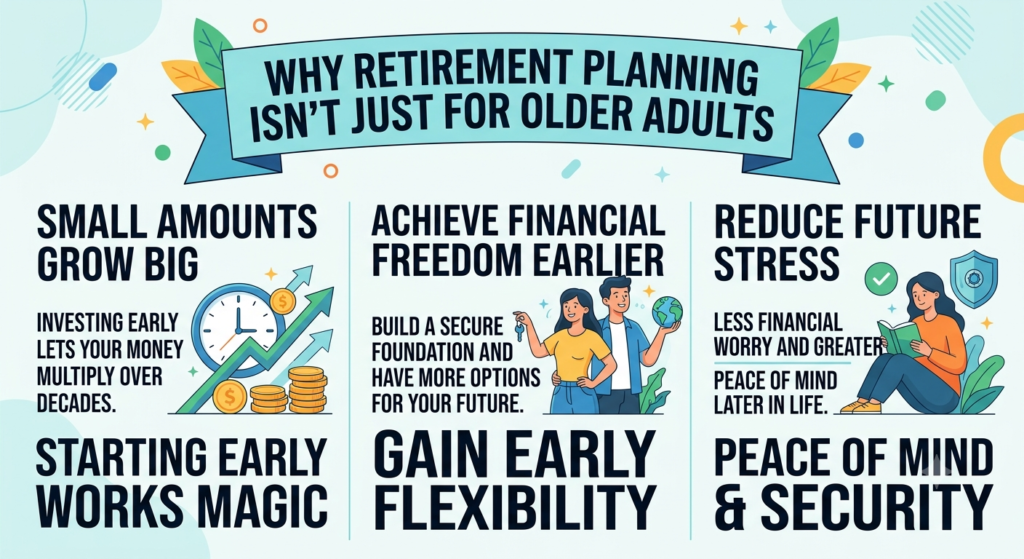
Retirement planning is often seen as something that only people in their 50s or 60s need to think about. However, that belief can become an expensive mistake. The truth is that retirement planning begins much earlier. In fact, your 20s and 30s are some of the most valuable years for building long-term wealth.
Many young Americans focus on paying rent, buying a car, managing student loans, or growing their careers. While those goals are important, retirement deserves attention too. Even small contributions made early can grow into significant savings over time.
If you want greater financial freedom later in life, the best time to start is now. This guide explains why retirement planning isn’t just for older adults in the USA and how starting early gives you a powerful financial advantage.
Why Many Young Adults Ignore Retirement
Young adults often believe retirement is too far away to worry about today. As a result, they delay saving and investing.
Several reasons contribute to this mindset.
- Retirement feels decades away.
- Daily expenses take priority.
- Student loan payments create financial pressure.
- Many people assume they can catch up later.
- Retirement investing seems confusing.
Although these reasons are understandable, delaying retirement planning usually means missing years of valuable investment
growth. Retirement Habits That Build Long-Term Security
Time Is Your Greatest Financial Asset
Money can be earned again. Time cannot.
One of the biggest advantages young investors have is time. The longer your money stays invested, the more opportunity it has to grow through compound returns.
For example, someone who begins investing at age 25 usually needs to save much less than someone who waits until age 40 to reach a similar retirement goal.
Starting early allows investment earnings to generate even more earnings over many years. Consequently, your savings can grow faster without requiring huge monthly contributions.
Compound Growth Rewards Early Savers
Compound growth is one of the strongest reasons to begin retirement planning early.
Instead of earning returns only on your original investment, you also earn returns on previous gains. Over several decades, this effect becomes powerful.
Consider two people:
- Emma starts investing at age 25.
- David starts at age 40.
Even if David invests more money every month, Emma may still retire with a larger portfolio because her investments had more years to grow.
Therefore, time often matters more than the amount invested.
Small Contributions Can Make a Big Difference
Many people think retirement investing requires thousands of dollars.
Fortunately, that is not true.
Even modest monthly contributions can build substantial retirement savings over several decades.
Examples include:
- Investing $50 each month.
- Increasing savings after each salary raise.
- Automatically contributing to a retirement account.
- Reinvesting investment earnings.
The habit of saving consistently is usually more valuable than waiting until you can save large amounts.
Employer Retirement Plans Offer Valuable Benefits
Many employers in the United States provide workplace retirement plans.
These plans often include valuable benefits such as employer matching contributions.
Employer matching is essentially additional money added to your retirement account when you contribute enough to qualify.
Failing to take advantage of employer matching means leaving potential retirement savings behind.
Whenever possible, contribute enough to receive the full employer match.
Retirement Planning Reduces Financial Stress
Planning for retirement is not only about reaching old age.
It also creates peace of mind throughout your working years.
People who regularly save often experience:
- Greater financial confidence.
- Better emergency preparedness.
- Less money-related stress.
- More flexibility during career changes.
- Increased financial independence.
Knowing your future is becoming more secure can improve your overall financial well-being.
Inflation Makes Early Planning More Important
The cost of living rarely stays the same.
Housing, groceries, healthcare, transportation, and utilities generally become more expensive over time.
Because of inflation, money saved today will buy less in the future.
Investing early gives your money a better chance to outpace inflation and preserve purchasing power throughout retirement.
Ignoring inflation can significantly reduce future financial security.
Retirement Is Becoming Longer
Americans are living longer than previous generations.
While this is positive news, it also means retirement savings must last longer.
Some retirees may spend 20 to 30 years in retirement.
Consequently, relying only on Social Security or personal savings accumulated late in life may not provide enough income.
Preparing early creates a stronger financial foundation for these additional retirement years.
Unexpected Life Events Can Change Your Plans
Life rarely follows a perfect schedule.
Unexpected situations may include:
- Job loss.
- Medical emergencies.
- Disability.
- Family responsibilities.
- Economic downturns.
Starting retirement planning early provides greater financial flexibility during difficult periods.
It becomes easier to recover when your retirement savings have already begun growing.
Retirement Planning Builds Better Financial Habits
Retirement planning encourages healthy financial behaviors.
These habits often improve every area of your finances.
Examples include:
- Creating a monthly budget.
- Spending intentionally.
- Avoiding unnecessary debt.
- Saving consistently.
- Investing regularly.
- Monitoring financial goals.
Over time, these habits create long-term financial stability instead of short-term financial pressure.
Retirement Planning Is About Financial Freedom
Many people imagine retirement as simply stopping work.
However, retirement planning is really about having choices.
Financial independence allows you to:
- Retire earlier if desired.
- Change careers.
- Start a business.
- Travel more.
- Spend time with family.
- Volunteer in your community.
- Work because you enjoy it instead of because you must.
Starting early increases the likelihood of having these options later in life.
Common Retirement Planning Mistakes Young Adults Make
Avoid these common mistakes.
Waiting Until Age 40 or 50
Every year of delay reduces the benefits of compound growth.
Ignoring Employer Matching
Employer contributions can significantly increase retirement savings.
Keeping Too Much Money in Cash
Cash loses purchasing power over time because of inflation.
Withdrawing Retirement Savings Early
Early withdrawals often reduce long-term investment growth and may trigger taxes or penalties.
Never Increasing Contributions
As your income grows, your retirement savings should grow too.
Simple Steps to Start Retirement Planning Today
Getting started does not have to be complicated.
Follow these practical steps.
Create a Retirement Goal
Estimate when you would like to retire and what lifestyle you hope to enjoy.
Build an Emergency Fund
Having emergency savings helps prevent dipping into retirement accounts.
Contribute Every Month
Automatic contributions make saving easier.
Increase Contributions Gradually
Raise your retirement contribution whenever your salary increases.
Diversify Investments
Avoid putting all your money into one investment.
Review Your Plan Every Year
Your goals, income, and expenses will change over time.
Annual reviews help keep your retirement strategy on track.
Why Retirement Planning Matters at Every Age
Whether you are 22 or 52, retirement planning remains important.
However, younger adults have one advantage that cannot be replaced.
They have time.
Time allows investments to grow, reduces the amount needed to save each month, and creates more opportunities to recover from financial setbacks.
That is why retirement planning is not only for older adults. It is a lifelong financial strategy that begins with your very first paycheck.
Final Thoughts
Many Americans mistakenly believe retirement planning belongs on tomorrow’s to-do list. In reality, every year you wait can reduce your future financial opportunities. Starting early does not require a high income or perfect financial knowledge. It simply requires consistency.
By saving regularly, taking advantage of employer retirement benefits, investing for long-term growth, and reviewing your progress each year, you can build a stronger financial future. Retirement planning isn’t just for older adults—it is one of the smartest financial decisions young adults can make today.
U.S. Department of Labor – Retirement Planning:
Frequently Asked Questions
At what age should I start retirement planning?
The best time is as soon as you begin earning income. Starting in your 20s provides the greatest advantage because of compound growth.
Can I start retirement planning with a small income?
Yes. Even small monthly contributions can grow significantly over several decades.
Is Social Security enough for retirement?
For most Americans, Social Security is intended to replace only part of retirement income. Personal savings and investments are usually necessary.
Why is compound growth important?
Compound growth allows your investment earnings to generate additional earnings over time, helping your retirement savings grow faster.