
 MOHAMMAD ABUBAKR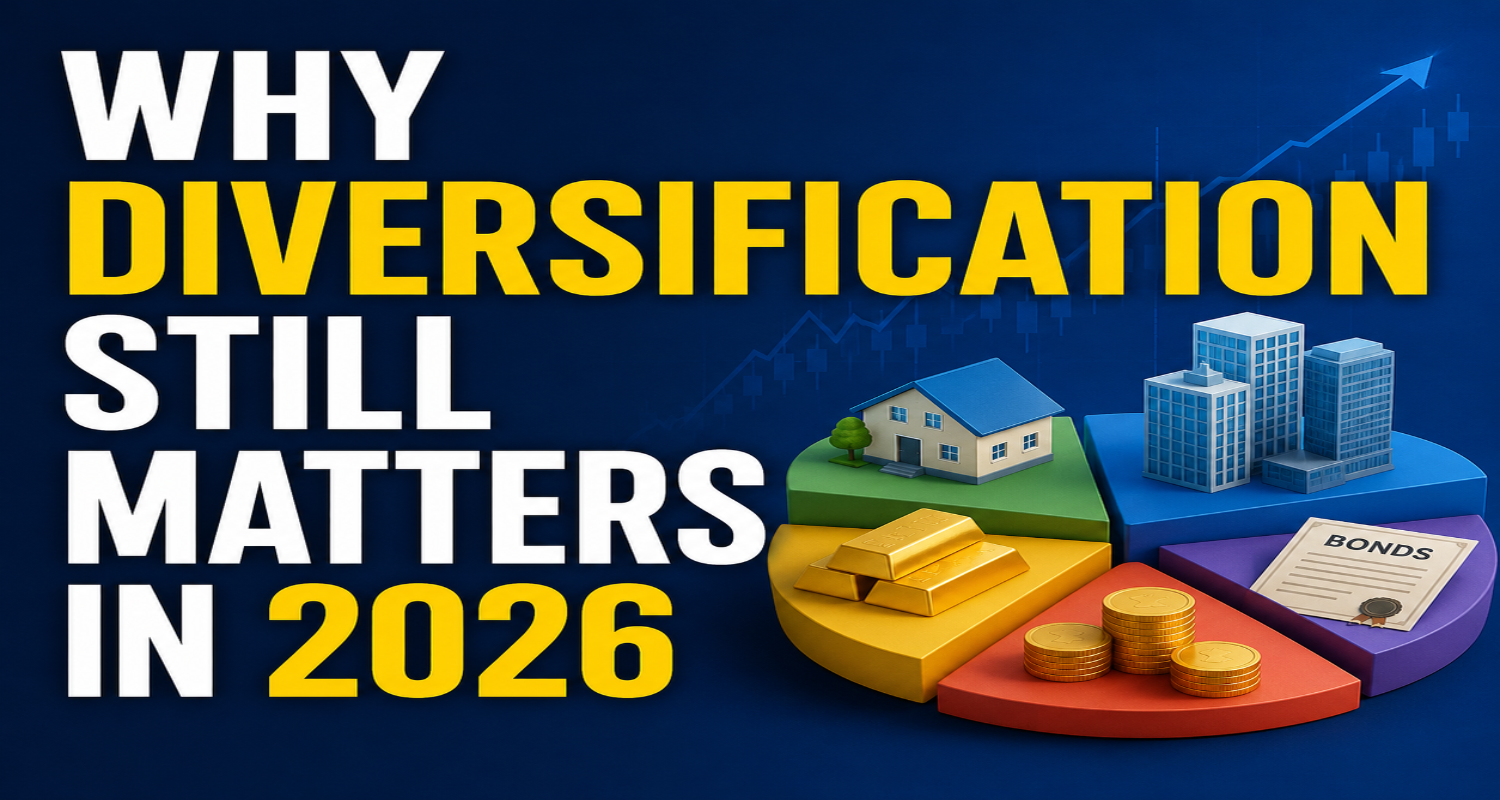
Investing has changed quickly over the last few years. Artificial intelligence, high interest rates, geopolitical tensions, and rapid market swings have created both opportunities and risks. Many investors now wonder if diversification is still necessary when some sectors appear to outperform everything else.
The simple answer is yes.
What Is Diversification?
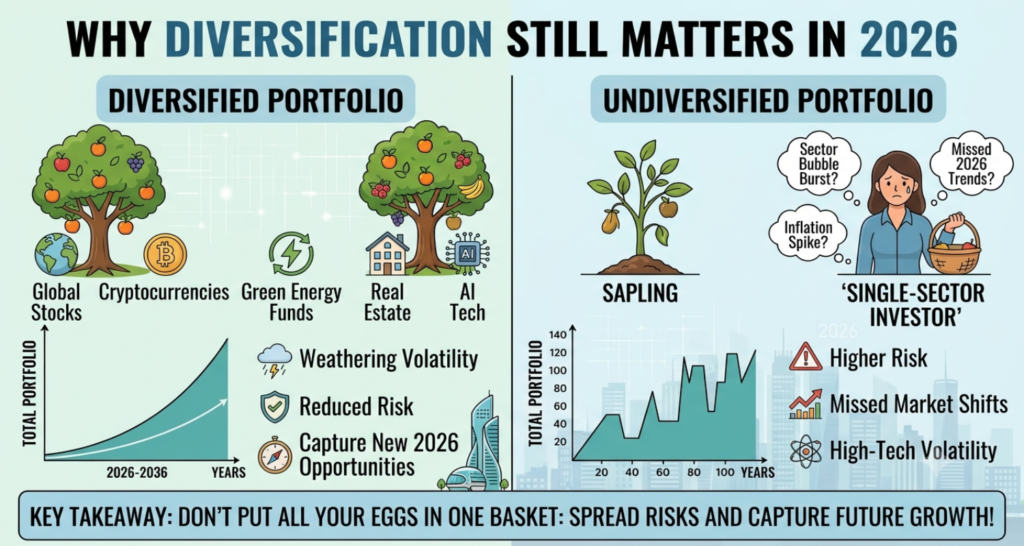
Diversification means spreading your money across different investments instead of putting everything into one place.
Rather than investing only in one company or one industry, you invest in multiple asset classes.
These may include:
The Best Places to Keep Your Emergency Fund
- U.S. stocks
- International stocks
- Bonds
- Real estate
- ETFs
- Index funds
- Cash investments
- Commodities like gold
As a result, if one investment performs poorly, others may help balance your returns.
This simple idea has protected investors for decades.
Why Diversification Is Even More Important in 2026
The investment landscape looks very different today.
Several factors have increased market uncertainty.
1. AI Is Driving Market Concentration
Artificial intelligence companies continue attracting massive investments.
Many investors now own portfolios heavily weighted toward a few technology giants.
Although these companies have produced impressive gains, relying on only a handful of stocks increases risk.
If technology slows down, your portfolio could lose significant value.
Therefore, spreading investments across different sectors remains essential.
2. Interest Rates Still Affect Markets
Interest rates continue influencing borrowing costs, business profits, and consumer spending.
Some industries benefit from higher rates.
Others struggle.
Because nobody knows exactly when rates will change again, diversification helps reduce uncertainty.
Instead of trying to predict the next move, investors prepare for different outcomes.
3. Global Events Can Change Markets Overnight
Trade disputes, elections, military conflicts, and supply chain disruptions can quickly affect financial markets.
These events often impact specific industries more than others.
However, diversified portfolios usually recover more smoothly because losses in one area may be balanced by gains elsewhere.
4. Inflation Has Not Completely Disappeared
Inflation remains an important concern.
Higher prices reduce purchasing power.
Certain investments perform better during inflation.
For example:
- Real estate
- Energy companies
- Commodities
- Treasury Inflation-Protected Securities (TIPS)
Adding different asset types can help your portfolio remain resilient.
The Biggest Risk of Not Diversifying
Many investors become excited when one investment performs exceptionally well.
Unfortunately, this often leads them to put too much money into one stock or one sector.
History shows why this is dangerous.
Companies that once dominated the market eventually lost value.
Examples include:
- Nokia
- Kodak
- Yahoo
- General Electric during certain periods
No company remains unbeatable forever.
Diversification protects investors from relying on a single winner.
Benefits of a Diversified Portfolio
Diversification offers several advantages.
Lower Investment Risk
No investment rises every year.
A diversified portfolio helps reduce the impact of poor-performing assets.
Therefore, losses may become less severe.
More Consistent Returns
Instead of experiencing extreme highs and lows, diversified portfolios often produce steadier long-term growth.
Although returns may not always be spectacular, consistency often wins over time.
Better Emotional Control
Large market swings often cause panic selling.
However, diversified investors usually experience smaller losses.
As a result, they are less likely to make emotional decisions.
Staying invested often produces better long-term results.
Greater Flexibility
Different investments perform well during different economic cycles.
Some grow during recessions.
Others thrive during expansions.
Diversification helps investors prepare for changing conditions.
How to Diversify Your Investments in 2026
Building a diversified portfolio is easier than many people think.
Invest Across Multiple Asset Classes
A balanced portfolio may include:
- U.S. Stocks
- International Stocks
- Bonds
- Real Estate Investment Trusts (REITs)
- Cash or High-Yield Savings
- Gold or Commodities
Each asset behaves differently during market changes.
Diversify Within Stocks
Owning many companies is better than owning only one.
Spread investments across sectors such as:
- Technology
- Healthcare
- Financial Services
- Consumer Goods
- Energy
- Utilities
- Industrials
This reduces dependence on one industry.
Include International Markets
The U.S. remains one of the strongest economies.
However, international markets can provide additional growth opportunities.
Countries in Europe, Asia, and emerging markets often perform differently from U.S. stocks.
Global diversification reduces country-specific risk.
Use Low-Cost Index Funds
Index funds make diversification simple.
Instead of choosing individual stocks, investors buy hundreds or even thousands of companies through one investment.
Many financial experts recommend index funds because they offer:
- Lower costs
- Broad diversification
- Long-term growth potential
- Reduced company-specific risk
Common Diversification Mistakes
Even diversified investors sometimes make errors.
Avoid these common mistakes.
Owning Too Many Similar Investments
Buying five technology ETFs does not create diversification.
Although the funds have different names, they often hold the same companies.
Always check what your investments actually own.
Ignoring Portfolio Rebalancing
Some investments grow faster than others.
Eventually, your portfolio becomes unbalanced.
Review your investments once or twice each year.
Then rebalance if necessary.
Following Market Trends
Many investors chase the hottest investment.
Unfortunately, trends eventually cool down.
Instead, follow your long-term strategy.
Consistency often beats excitement.
Forgetting About Bonds
Younger investors sometimes ignore bonds.
However, bonds can provide stability during market downturns.
Even a small bond allocation may reduce overall portfolio volatility.
Does Diversification Reduce Returns?
Some investors believe diversification limits profits.
In certain years, concentrated portfolios may outperform.
However, they also carry much higher risk.
Long-term investing is not about finding one perfect stock.
Instead, it is about consistently growing wealth while managing risk.
Diversification helps investors stay invested during difficult markets.
That discipline often creates better long-term results.
Diversification and Retirement Planning
Retirement investing requires a long-term mindset.
As retirement approaches, many investors gradually reduce stock exposure and increase bonds or income-producing assets.
This approach lowers risk while preserving accumulated wealth.
Target-date retirement funds automatically adjust diversification over time.
Many retirement accounts also provide diversified investment options.
Is Diversification Enough?
Diversification is powerful.
However, it is not a guarantee against losses.
Successful investing also requires:
- Regular investing
- Long-term patience
- Low investment costs
- Portfolio reviews
- Clear financial goals
- Emergency savings
When combined, these habits significantly improve long-term financial success.
Final Thoughts
Financial markets will continue changing in 2026 and beyond.
Technology will evolve.
Economic cycles will come and go.
New investment opportunities will appear.
However, one principle has stood the test of time.
Diversification remains one of the most reliable ways to reduce risk while building long-term wealth.
Instead of trying to predict the next market winner, build a balanced portfolio that can handle uncertainty.
Stay diversified.
Stay patient.
Most importantly, stay invested.
Over time, these habits can help you reach your financial goals with greater confidence.
U.S. Securities and Exchange Commission (SEC) – Beginner’s Guide to Diversification:
Frequently Asked Questions
Is diversification still important in 2026?
Yes. Diversification helps reduce investment risk, improve long-term stability, and protect portfolios during market volatility.
How many investments should I own?
There is no perfect number. Many investors achieve broad diversification through low-cost index funds or ETFs that hold hundreds of companies.
Does diversification guarantee profits?
No. Diversification reduces risk but cannot eliminate losses or guarantee positive returns.
What is the easiest way to diversify?
Investing in broad-market index funds or diversified ETFs is one of the simplest and most effective strategies.
Should beginners diversify immediately?
Yes. Beginners should diversify from the start instead of concentrating investments in a few individual stocks.