 MOHAMMAD ABUBAKR
Life is full of surprises. A job loss, unexpected medical bill, car repair, or home emergency can happen when you least expect it. That’s why financial experts recommend building an emergency fund. However, saving money is only part of the equation. You also need to choose the right place to keep it.
Many people leave their emergency savings in a regular checking account, while others invest it in the stock market. Neither option is ideal. Your emergency fund should be safe, easy to access, and able to earn some interest.
In this guide, you’ll learn the best places to keep your emergency fund, the pros and cons of each option, and how to choose the one that fits your financial needs in 2026.
Online Banks vs Traditional Banks: Which Is Better in 2026?
What Is an Emergency Fund?
An emergency fund is money set aside for unexpected expenses. It helps you avoid using credit cards or loans when life takes an unexpected turn.
Common reasons to use an emergency fund include:
- Medical emergencies
- Job loss
- Major car repairs
- Home repairs
- Emergency travel
- Unexpected family expenses
Most financial experts recommend saving three to six months of essential living expenses. If your income is irregular or you support a family, you may want to save even more.
What Makes a Good Emergency Fund Account?
Before choosing where to keep your emergency savings, make sure it offers these key features:
- Easy access when you need your money
- Federal deposit insurance (FDIC or NCUA)
- Low or no monthly fees
- Competitive interest rates
- Minimal withdrawal restrictions
The goal is to protect your money while allowing it to grow modestly.
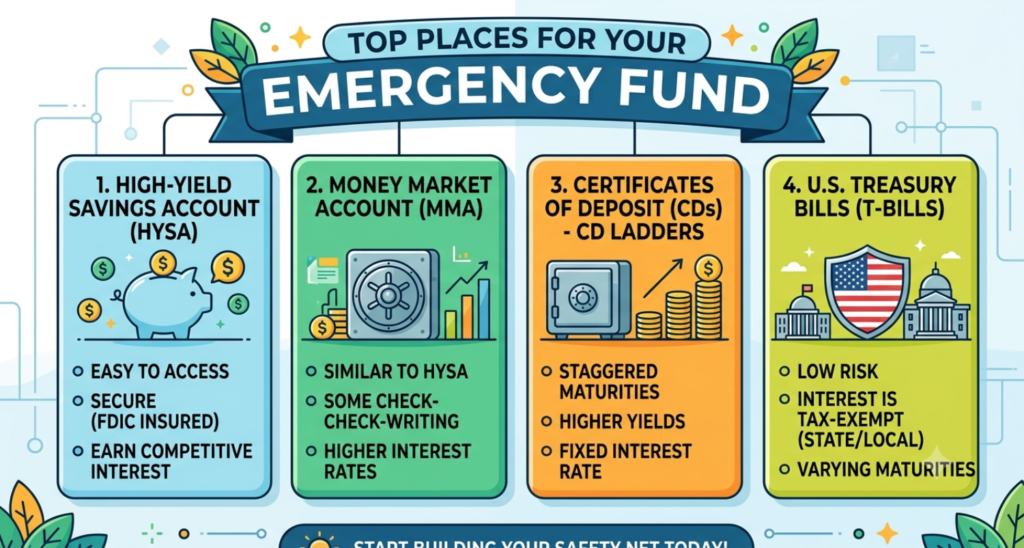
1. High-Yield Savings Account (Best Overall)
A high-yield savings account (HYSA) is one of the best places to keep an emergency fund.
Unlike traditional savings accounts, HYSAs often offer much higher interest rates. Many online banks provide these accounts with no monthly maintenance fees.
Advantages
- Higher interest earnings
- FDIC or NCUA insurance
- Easy online access
- Low fees
- Ideal for emergency savings
Disadvantages
- Cash deposits may be limited at some online banks
- Interest rates can change over time
For most Americans, a high-yield savings account offers the best balance of safety, accessibility, and growth.
2. Money Market Account
A money market account combines features of checking and savings accounts.
Many accounts include:
- Debit card access
- Check-writing privileges
- Competitive interest rates
This makes them useful if you want quick access to your emergency savings while still earning interest.
Advantages
- Higher rates than many standard savings accounts
- Easy access to funds
- Federal deposit insurance
Disadvantages
- Some accounts require higher minimum balances
- Interest rates may vary
3. Traditional Savings Account
A regular savings account remains a safe place for emergency funds.
Although interest rates are often lower than high-yield accounts, these accounts are simple to use and widely available.
Advantages
- Easy to open
- FDIC or NCUA insured
- Convenient branch access
Disadvantages
- Lower interest rates
- Slower savings growth
4. Certificate of Deposit (CD)
Certificates of Deposit offer fixed interest rates for a specific period.
Because CDs lock your money for several months or years, they are not ideal for your entire emergency fund.
However, some savers place a small portion of their emergency savings into short-term CDs.
Advantages
- Fixed returns
- FDIC or NCUA protection
- Predictable earnings
Disadvantages
- Early withdrawal penalties
- Limited access to funds
5. Cash Management Account
Many brokerage firms now offer cash management accounts.
These accounts often provide:
- Competitive interest rates
- Debit cards
- Bill pay
- ATM access
Some also spread deposits across multiple banks to increase FDIC coverage.
Advantages
- Flexible banking features
- Higher interest potential
- Easy transfers
Disadvantages
- Features vary by provider
- May be less familiar than traditional bank accounts
Where You Should NOT Keep an Emergency Fund
Stocks
Stock prices can fall sharply during market downturns. Selling investments during a crisis may result in losses.
Cryptocurrency
Crypto prices are highly volatile. Emergency savings should not depend on unpredictable markets.
Long-Term Investments
Retirement accounts and long-term investments may include penalties, taxes, or market risk if accessed early.
Cash at Home
Keeping large amounts of cash at home exposes your savings to theft, fire, and natural disasters. It also earns no interest.
Should You Split Your Emergency Fund?
Yes, many financial experts recommend dividing your emergency savings.
For example:
- One month of expenses in a checking account
- Three to six months in a high-yield savings account
- Additional reserves in a money market account or short-term CD
This strategy keeps some money immediately available while allowing the rest to earn more interest.
How Much Should You Save?
Your emergency fund depends on your situation.
Single Adults
Aim for three to six months of essential expenses.
Families
Consider six months or more due to higher financial responsibilities.
Freelancers and Self-Employed Workers
Since income may fluctuate, saving six to twelve months of expenses can provide greater financial security.
Tips for Building an Emergency Fund
Automate Your Savings
Set up automatic transfers each payday.
Save Windfalls
Tax refunds, bonuses, and gifts can help grow your emergency fund faster.
Keep It Separate
Avoid mixing emergency savings with your everyday spending account.
Review Annually
As your income and expenses change, adjust your emergency savings goal.
Frequently Asked Questions
How much should my emergency fund contain?
Most experts recommend saving three to six months of essential living expenses. Some households may need more.
Can I invest my emergency fund?
It’s generally better to keep emergency savings in safe, liquid accounts rather than investments that can lose value.
Is a high-yield savings account safe?
Yes. If the account is held at an FDIC-insured bank or an NCUA-insured credit union, eligible deposits are federally protected.
Should I keep my emergency fund in my checking account?
Keeping all your emergency savings in checking makes it easier to spend accidentally. A separate savings account is usually a better choice.
Can I have multiple emergency savings accounts?
Yes. Some people split their emergency fund across different accounts to improve organization and stay within federal insurance limits.
FDIC Deposit Insurance Coverage
Final Thoughts
An emergency fund is one of the most important tools for achieving financial stability. The right account can protect your savings while ensuring you have quick access during unexpected situations.
For most people, a high-yield savings account offers the best combination of safety, accessibility, and interest earnings. Money market accounts and traditional savings accounts are also excellent choices, depending on your needs. While CDs can play a role, they are best used for only a portion of your emergency savings due to withdrawal restrictions.
By keeping your emergency fund in a secure, federally insured account and reviewing it regularly, you’ll be better prepared for life’s financial surprises and have greater peace of mind.