 MOHAMMAD ABUBAKR
Planning for retirement is about more than saving money. It involves developing habits that support long-term financial stability and help you prepare for life’s uncertainties. Whether retirement is 10 years away or 40, the decisions you make today can have a lasting impact on your future.
Many Americans worry they won’t have enough money to retire comfortably. While market conditions and inflation are beyond your control, your financial habits are not. Consistently saving, investing wisely, managing debt, and reviewing your financial plan can help you build long-term security.
In this guide, you’ll discover the retirement habits that successful savers practice and how you can adopt them to strengthen your financial future.
Why Retirement Habits Matter
Retirement success rarely depends on one big financial decision.
Instead, it is usually the result of small, consistent habits practiced over many years.
Good retirement habits help you:
Common Savings Account Mistakes to Avoid
- Build wealth steadily
- Reduce financial stress.
- Prepare for unexpected expenses.
- Stay focused on long-term goals.
- Maintain financial independence.
The earlier you develop these habits, the greater the potential benefits.
1. Pay Yourself First
One of the most effective retirement habits is paying yourself before spending money on non-essential purchases.
When you receive your paycheck:
- Contribute to your retirement account first.
- Pay essential bills.
- Spend what remains.
This approach ensures retirement savings become a priority rather than an afterthought.
Automatic payroll deductions can make this habit effortless.
2. Save Consistently Every Month
Consistency often matters more than making occasional large contributions.
Even if you can only save a modest amount, investing every month helps build momentum.
For example:
- $100 each month
- $250 each month
- $500 each month
Regular contributions take advantage of compound growth and reduce the temptation to time the market.
3. Increase Contributions as Your Income Grows
Whenever you receive:
- A raise
- A promotion
- A bonus
- Additional income
consider increasing your retirement contribution.
Even increasing your savings rate by 1% each year can significantly improve your retirement fund over several decades.
Because the increase is gradual, it is often easier to manage within your budget.
4. Take Full Advantage of Employer Matching
If your employer offers a 401(k) match, contribute enough to receive the maximum matching contribution.
Employer matching is one of the easiest ways to grow your retirement savings.
Failing to claim the full match means missing out on money that could support your future retirement.
5. Live Below Your Means
Building retirement security often starts with controlling everyday spending.
Living below your means allows you to:
- Save more.
- Invest consistently.
- Build an emergency fund.
- Reduce financial stress.
Simple lifestyle choices today can create greater financial freedom later.
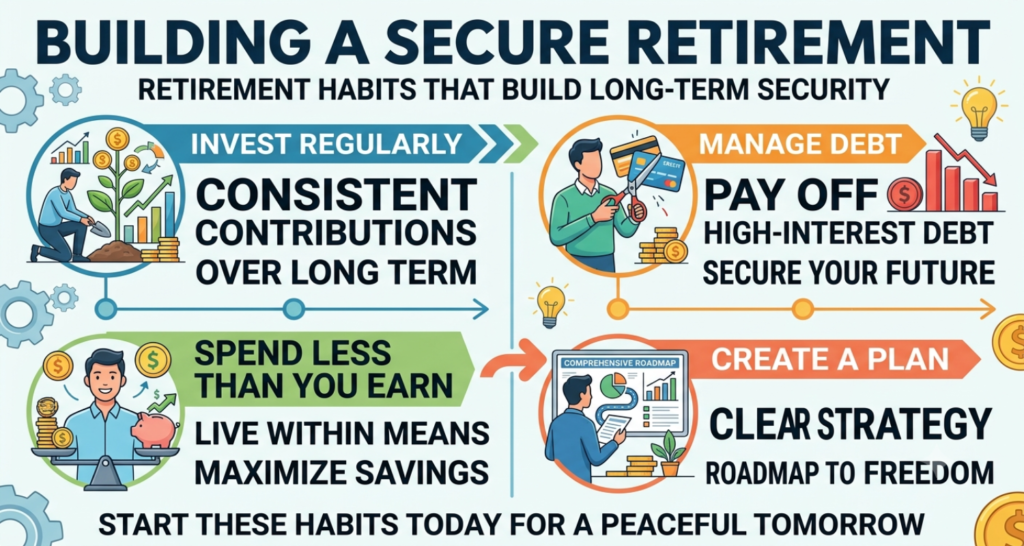
6. Avoid High-Interest Debt
Credit card debt can slow retirement progress.
High-interest balances reduce the amount of money available for investing.
Whenever possible:
- Pay off high-interest credit cards.
- Avoid unnecessary borrowing.
- Use credit responsibly.
Reducing debt creates more room in your budget for retirement savings.
7. Build an Emergency Fund
Unexpected expenses happen.
Without emergency savings, you may be forced to withdraw money from retirement accounts.
A healthy emergency fund can help cover:
- Medical expenses
- Car repairs
- Home maintenance
- Temporary income loss
Many financial experts recommend saving three to six months of essential living expenses.
8. Diversify Your Investments
Successful retirement investors rarely rely on one investment.
Diversification helps reduce overall portfolio risk.
A diversified portfolio may include:
- U.S. stocks
- International stocks
- Bonds
- Index funds
- ETFs
- Real Estate Investment Trusts (REITs)
Different investments perform differently during changing market conditions.
Diversification helps create greater long-term stability.
9. Review Your Retirement Plan Every Year
Your financial situation changes over time.
Therefore, review your retirement plan at least once a year.
Ask yourself:
- Am I saving enough?
- Has my income changed?
- Are my investments still appropriate?
- Do I need to rebalance my portfolio?
Regular reviews help keep your retirement strategy aligned with your goals.
10. Stay Invested During Market Volatility
Market downturns can be stressful.
However, making emotional investment decisions often hurts long-term returns.
Instead:
- Stay focused on your long-term goals.
- Continue making regular contributions.
- Avoid panic selling.
Historically, patient investors have often benefited from staying invested through market cycles.
11. Continue Learning About Personal Finance
Financial knowledge helps you make better decisions.
Read articles, attend webinars, or follow trusted financial education resources.
Learning about:
- Investing
- Taxes
- Retirement accounts
- Budgeting
- Risk management
can improve your retirement outcomes over time.
12. Plan for Healthcare Costs
Healthcare is often one of the largest retirement expenses.
Preparing early can reduce financial pressure later.
Consider:
- Health Savings Accounts (HSAs), if eligible
- Long-term care planning
- Medicare costs
- Prescription expenses
Including healthcare in your retirement plan creates a more realistic financial strategy.
Common Retirement Mistakes to Avoid
Even disciplined savers can make costly mistakes.
Avoid these common errors.
Waiting Too Long to Start
Time is one of the greatest advantages in retirement planning.
Starting today—even with a small amount—is usually better than waiting.
Ignoring Inflation
Prices generally increase over time.
Your retirement savings should continue growing to maintain purchasing power.
Withdrawing Retirement Savings Early
Early withdrawals may reduce long-term growth and could result in taxes or penalties.
Whenever possible, leave retirement investments untouched until retirement.
Saving Without Investing
Keeping all retirement money in a regular savings account may not provide enough growth over several decades.
A diversified investment strategy often offers better long-term potential.
Failing to Update Beneficiaries
Major life events such as marriage, divorce, or the birth of children may require updates to your retirement account beneficiaries.
Review these details regularly.
Retirement Is More Than Saving Money
Financial security also depends on healthy lifestyle habits.
Maintaining good physical and mental health may reduce healthcare costs and improve your quality of life during retirement.
A balanced retirement plan includes:
- Financial wellness
- Physical health
- Emotional well-being
- Social connections
- Lifelong learning
Preparing in these areas helps create a more fulfilling retirement.
Final Thoughts
Building long-term retirement security doesn’t happen overnight. It develops through consistent financial habits practiced year after year.
By saving regularly, increasing contributions as your income grows, taking advantage of employer matching, managing debt wisely, diversifying your investments, and reviewing your retirement plan annually, you can build a stronger financial future.
You don’t need to be perfect. You simply need to stay consistent.
The habits you develop today can provide greater confidence, financial independence, and peace of mind throughout your retirement years.
U.S. Securities and Exchange Commission (SEC) – Saving and Investing:
Frequently Asked Questions
What is the most important retirement habit?
Consistently saving and investing every month is one of the most effective habits for building long-term retirement security.
How much should I save for retirement?
Many financial professionals recommend saving 10% to 15% of your income, although your ideal amount depends on your goals and retirement timeline.
Why is diversification important for retirement?
Diversification helps reduce investment risk by spreading your money across different asset classes and sectors.
Should I review my retirement plan every year?
Yes. An annual review helps ensure your savings rate, investments, and financial goals remain aligned with your current situation.
Is it too late to improve my retirement habits?
No. Regardless of your age, adopting better financial habits today can strengthen your retirement outlook.