 MOHAMMAD ABUBAKR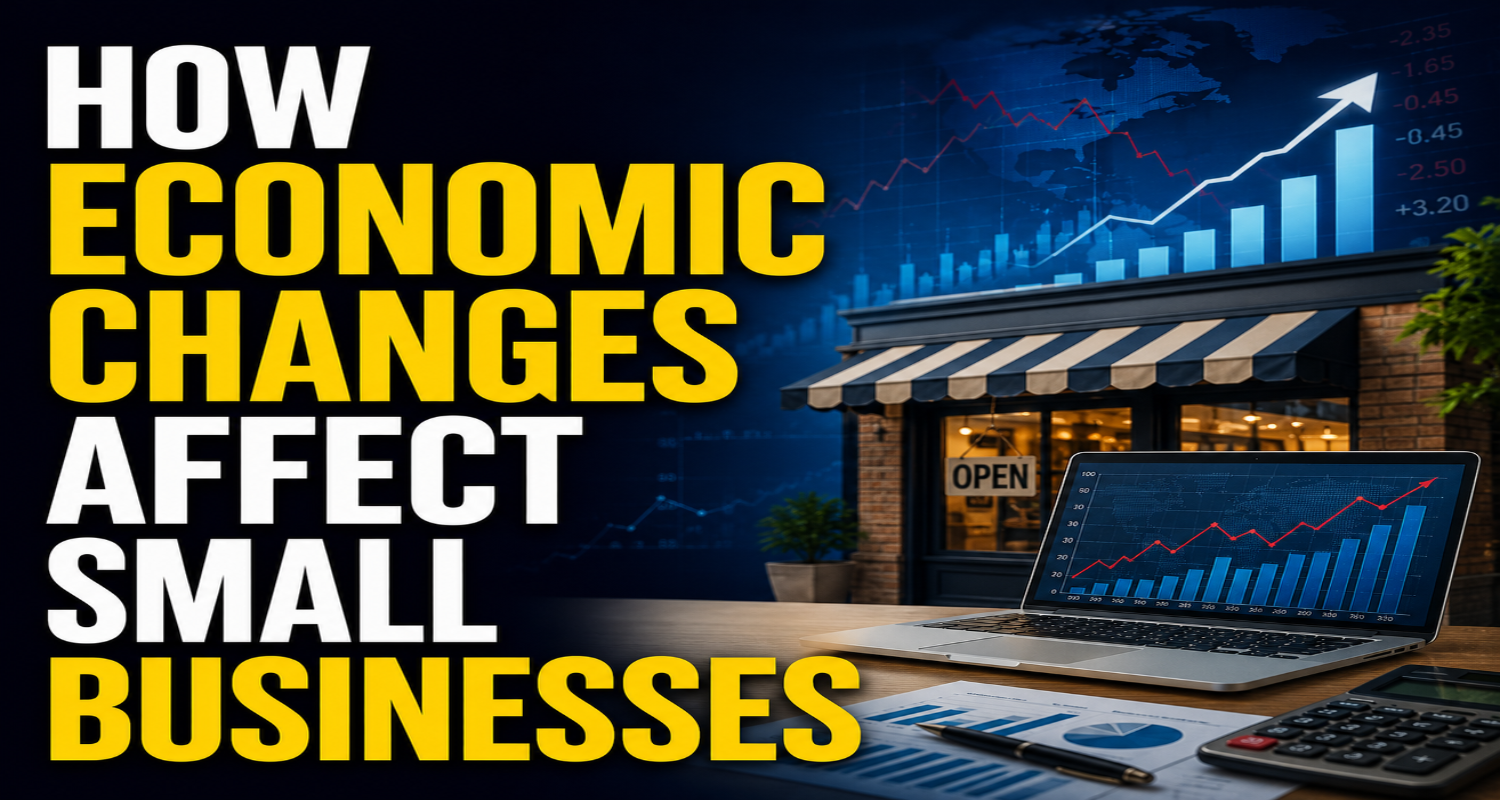
Small businesses are the backbone of the U.S. economy, but they are also among the first to feel the effects of economic change. Inflation, interest rates, consumer confidence, labor costs, and supply chain disruptions can all influence how a business operates. While some economic shifts create new opportunities, others present serious challenges.
Business owners who understand these changes can prepare ahead of time instead of reacting after problems arise. By monitoring economic conditions and adjusting strategies, small businesses can protect cash flow, serve customers effectively, and continue growing.
In this guide, we’ll explore how economic changes affect small businesses, the key factors to watch, and practical ways to remain resilient in a changing economy.
Why Economic Conditions Matter
Economic conditions influence nearly every part of a business.
They affect:
- Customer spending.
- Operating costs.
- Hiring decisions.
- Business financing.
- Inventory management.
- Business expansion.
Understanding these factors helps business owners make informed decisions.
How to Reduce Business Costs Without Slowing Growth
1. Inflation Increases Business Expenses
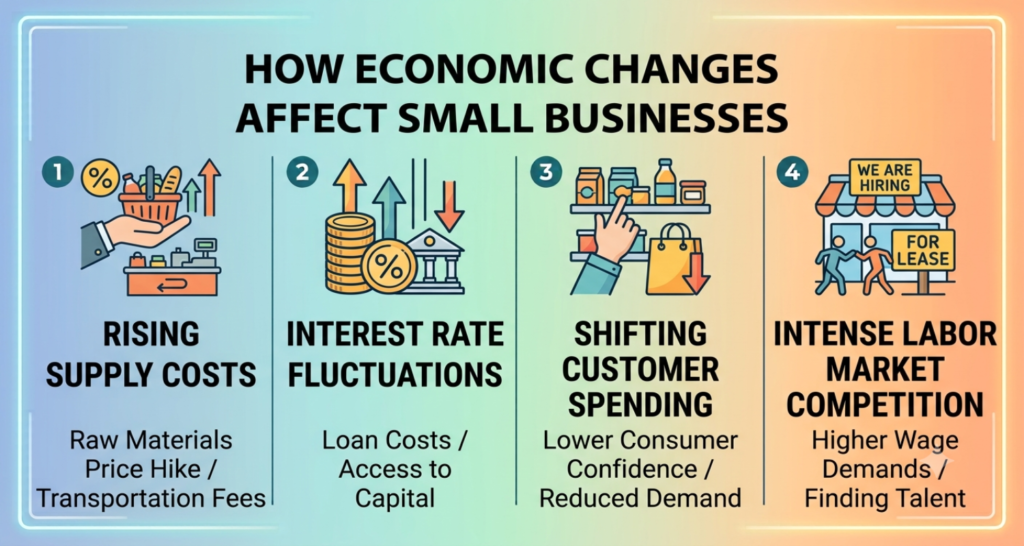
Inflation causes the prices of goods and services to rise over time.
For small businesses, this often means paying more for:
- Raw materials.
- Inventory.
- Fuel.
- Rent.
- Utilities.
- Insurance.
- Employee wages.
Higher costs can reduce profit margins if businesses are unable to adjust pricing or improve efficiency.
How to Respond
- Review expenses regularly.
- Negotiate with suppliers.
- Reduce unnecessary costs.
- Improve operational efficiency.
- Adjust pricing carefully when necessary.
2. Interest Rates Affect Borrowing Costs
Many businesses rely on loans or credit to finance growth.
When interest rates rise:
- Loan payments increase.
- Equipment financing becomes more expensive.
- Business expansion may slow.
- Cash flow becomes tighter.
Lower interest rates generally make borrowing more affordable.
How to Respond
- Pay down high-interest debt.
- Compare financing options.
- Improve your business credit profile.
- Borrow only when necessary.
3. Consumer Spending Influences Revenue
Customer spending often changes with the economy.
When consumers feel financially confident, they may spend more on:
- Retail products.
- Home improvements.
- Travel.
- Entertainment.
During periods of uncertainty, customers may reduce discretionary spending and focus on essential purchases.
How to Respond
- Understand changing customer priorities.
- Offer value-focused products or services.
- Create flexible pricing options.
- Strengthen customer relationships.
4. Labor Costs Continue to Rise
Hiring and retaining skilled employees has become more expensive.
Businesses may experience:
- Higher wages.
- Increased benefits costs.
- Recruitment challenges.
- Employee turnover.
A strong workplace culture can help improve employee retention.
How to Respond
- Invest in employee development.
- Improve workplace flexibility.
- Recognize employee achievements.
- Increase productivity through technology.
5. Supply Chain Disruptions Impact Operations
Global and domestic supply chains can be affected by:
- Natural disasters.
- Transportation delays.
- Labor shortages.
- International conflicts.
- Manufacturing disruptions.
These issues may lead to inventory shortages and delayed customer orders.
How to Respond
- Diversify suppliers.
- Maintain appropriate inventory levels.
- Build strong supplier relationships.
- Plan for potential disruptions.
6. Technology Creates New Opportunities
Economic change often accelerates technology adoption.
Businesses increasingly use:
- Artificial intelligence (AI).
- Cloud computing.
- Digital payment systems.
- Customer relationship management (CRM) software.
- Automation tools.
Technology can improve efficiency while reducing operating costs.
7. Digital Marketing Becomes More Important
As customer behavior shifts online, businesses need a strong digital presence.
Effective digital marketing includes:
- Search engine optimization (SEO).
- Content marketing.
- Email campaigns.
- Social media marketing.
- Local SEO.
- Video marketing.
Digital strategies often provide measurable results and long-term value.
8. Cash Flow Becomes More Critical
During economic uncertainty, healthy cash flow is essential.
Businesses should:
- Monitor income and expenses.
- Invoice customers promptly.
- Reduce unnecessary spending.
- Build emergency reserves.
Strong cash flow helps businesses navigate unexpected challenges.
9. Customer Expectations Continue to Evolve
Economic changes often influence what customers value.
Many consumers now prioritize:
- Affordable pricing.
- Fast service.
- Flexible payment options.
- High-quality customer support.
- Honest communication.
Businesses that respond to changing expectations often maintain stronger customer loyalty.
10. Innovation Helps Businesses Stay Competitive
Economic challenges encourage innovation.
Businesses may discover new opportunities by:
- Launching new products.
- Expanding online services.
- Exploring new markets.
- Improving customer experiences.
- Developing recurring revenue streams.
Innovation can turn challenges into long-term growth opportunities.
Common Mistakes Small Businesses Should Avoid
Many businesses struggle because they:
- Ignore economic trends.
- Delay financial planning.
- Depend on one revenue source.
- Neglect cash flow management.
- Overborrow during uncertain times.
- Ignore customer feedback.
- Resist technological improvements.
Avoiding these mistakes improves long-term resilience.
Practical Strategies for Economic Uncertainty
Use these habits consistently:
- Review your budget monthly.
- Track business performance.
- Build an emergency cash reserve.
- Diversify revenue streams.
- Strengthen customer relationships.
- Improve operational efficiency.
- Invest in employee training.
- Monitor industry trends.
- Protect your business with appropriate insurance.
- Continue improving your online presence.
Small, consistent improvements often produce lasting results.
Why Adaptability Matters
No business can control the economy.
However, every business can control how it responds.
Adaptable businesses are more likely to:
- Identify new opportunities.
- Retain loyal customers.
- Control costs.
- Improve efficiency.
- Recover from setbacks.
Flexibility is one of the most valuable qualities a business can develop.
Final Thoughts
Economic changes are a normal part of running a business. Inflation, interest rates, consumer spending, labor costs, and technology all influence how small businesses operate. While these changes can create challenges, they also present opportunities for businesses that are prepared.
By focusing on strong financial management, maintaining healthy cash flow, investing in technology, and staying connected to customer needs, small businesses can navigate changing economic conditions with confidence. Success is not about predicting every economic shift—it is about building a business that can adapt and thrive in any environment.
U.S. Small Business Administration (SBA):
Frequently Asked Questions
How does inflation affect small businesses?
Inflation increases the cost of goods, services, wages, and operating expenses, which can reduce profit margins if businesses do not adjust their strategies.
Why do interest rates matter for business owners?
Higher interest rates increase borrowing costs, making loans, equipment financing, and expansion projects more expensive.
How can small businesses prepare for economic uncertainty?
Businesses can strengthen cash flow, reduce unnecessary expenses, diversify revenue, monitor market trends, and build emergency reserves.
Why is adaptability important during economic changes?
Adaptable businesses can respond more effectively to changing customer needs, market conditions, and financial challenges, helping them remain competitive.