
 MOHAMMAD ABUBAKR
The business landscape is changing rapidly. Advances in technology, shifting consumer behavior, and evolving economic conditions are creating exciting opportunities across many industries. While no industry guarantees success, some sectors are expected to experience stronger growth than others over the next decade.
For entrepreneurs, investors, and business owners in the United States, identifying high-growth industries can help guide smarter business decisions. Companies that enter expanding markets early often gain a competitive advantage and build stronger long-term profitability.
In this guide, we’ll explore industries with the fastest growth potential, the factors driving their expansion, and what businesses should consider before entering these markets.
Why High-Growth Industries Matter
Growing industries offer several advantages, including:
- Higher customer demand.
- More business opportunities.
- Greater investment interest.
- Increased job creation.
- Better long-term growth potential.
- Opportunities for innovation.
Although competition may also increase, expanding markets often provide more room for new businesses.
Marketing Strategies That Actually Work
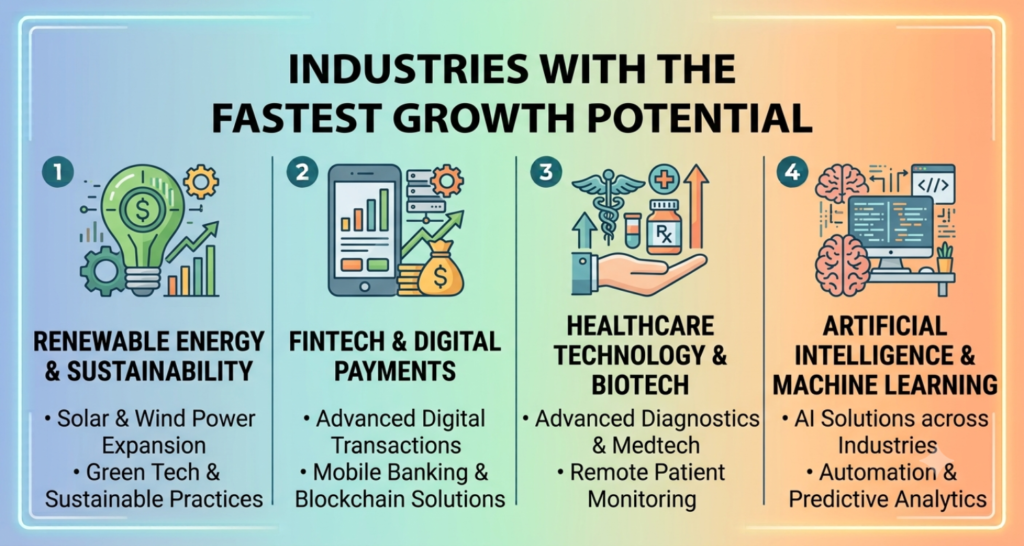
1. Artificial Intelligence (AI)
Artificial intelligence is transforming nearly every industry.
Businesses are using AI for:
- Customer support.
- Marketing automation.
- Predictive analytics.
- Fraud detection.
- Software development.
- Healthcare diagnostics.
As AI tools become more accessible, demand for AI-powered products and services is expected to continue growing.
2. Cybersecurity
As businesses rely more on digital systems, protecting sensitive information has become essential.
The cybersecurity industry includes:
- Network security.
- Cloud security.
- Identity protection.
- Threat detection.
- Security consulting.
- Compliance services.
Growing cyber threats continue to increase demand for skilled professionals and innovative security solutions.
3. Healthcare Technology
Healthcare continues to evolve through digital innovation.
Growth areas include:
- Telehealth.
- Wearable health devices.
- Electronic health records.
- AI-assisted diagnostics.
- Remote patient monitoring.
- Healthcare software.
An aging population and technological advancements continue to drive demand.
4. Renewable Energy
Interest in cleaner energy sources continues to expand.
Key sectors include:
- Solar energy.
- Wind power.
- Battery storage.
- Electric vehicle charging.
- Energy efficiency solutions.
Businesses that support sustainability may benefit from long-term market demand.
5. E-Commerce
Online shopping continues to reshape retail.
Growth opportunities include:
- Direct-to-consumer brands.
- Online marketplaces.
- Subscription businesses.
- Digital payment solutions.
- E-commerce logistics.
Consumers increasingly expect convenient online shopping experiences.
6. Financial Technology (FinTech)
Technology is transforming financial services.
Popular FinTech solutions include:
- Mobile banking.
- Digital wallets.
- Payment processing.
- Personal finance apps.
- Business accounting software.
- Investment platforms.
Demand for secure and convenient financial services continues to rise.
7. Cloud Computing
Cloud technology helps businesses reduce costs and improve flexibility.
Cloud services include:
- Data storage.
- Software as a Service (SaaS).
- Infrastructure services.
- Cloud security.
- Business collaboration tools.
Organizations of all sizes continue moving operations to cloud-based platforms.
8. Digital Marketing
As more businesses compete online, digital marketing remains a fast-growing industry.
Key services include:
- Search engine optimization (SEO).
- Content marketing.
- Social media management.
- Email marketing.
- Video production.
- Paid advertising.
Businesses increasingly rely on digital channels to reach customers.
9. Online Education
Demand for flexible learning continues to grow.
Popular areas include:
- Professional certifications.
- Business training.
- Technical skills.
- Language learning.
- Personal development.
- Corporate education.
Digital learning allows students and professionals to learn from anywhere.
10. Logistics and Supply Chain Technology
Efficient logistics have become a competitive advantage.
Growth opportunities include:
- Warehouse automation.
- Inventory management software.
- Delivery optimization.
- Freight technology.
- Supply chain analytics.
Technology is helping businesses improve speed and reduce costs.
11. Smart Home Technology
Consumers continue adopting connected devices for convenience and security.
Popular products include:
- Smart lighting.
- Home security systems.
- Smart thermostats.
- Voice assistants.
- Energy management devices.
Innovation continues to expand this market.
12. Pet Care Industry
Americans continue to spend more on pet care.
Growing businesses include:
- Pet healthcare.
- Grooming services.
- Pet insurance.
- Premium pet food.
- Pet technology.
- Pet boarding.
Strong consumer spending supports continued growth.
Factors Driving Industry Growth
Several long-term trends are fueling these industries:
- Technological innovation.
- Changing consumer preferences.
- Digital transformation.
- Population aging.
- Remote work.
- Sustainability initiatives.
- Growing internet access.
- Increased automation.
Businesses that understand these trends are better positioned to identify opportunities.
How to Choose the Right Industry
Before entering a growing industry, evaluate:
- Market demand.
- Competition.
- Startup costs.
- Required skills.
- Profit potential.
- Customer needs.
- Long-term sustainability.
A growing industry alone does not guarantee business success. Strong execution remains essential.
Common Mistakes Entrepreneurs Should Avoid
Avoid these common errors:
- Following trends without research.
- Ignoring customer feedback.
- Underestimating competition.
- Poor financial planning.
- Neglecting digital marketing.
- Overlooking legal requirements.
- Failing to adapt to market changes.
Careful planning increases the likelihood of long-term success.
How to Prepare for Future Growth
Use these practical strategies:
- Stay informed about industry developments.
- Invest in continuous learning.
- Build a strong online presence.
- Monitor customer behavior.
- Adopt new technology thoughtfully.
- Focus on solving real customer problems.
- Diversify revenue streams.
- Measure business performance regularly.
- Strengthen your financial management.
- Build a trusted brand.
Small, consistent improvements create lasting business growth.
Why Innovation Matters
Successful businesses do more than follow trends—they create value.
Innovation may involve:
- Improving customer experiences.
- Developing better products.
- Streamlining operations.
- Solving unmet needs.
Businesses that embrace innovation while staying customer-focused are often the most successful over time.
Final Thoughts
The next decade is expected to bring significant opportunities across industries such as artificial intelligence, cybersecurity, healthcare technology, renewable energy, e-commerce, financial technology, cloud computing, and digital marketing. These sectors are benefiting from technological advances, changing consumer expectations, and ongoing digital transformation.
Choosing the right industry is only the first step. Long-term success depends on understanding your customers, managing finances wisely, adapting to change, and consistently delivering value. By combining careful planning with innovation, entrepreneurs can position their businesses for sustainable growth in the years ahead.
National Institute of Standards and Technology (NIST):
Frequently Asked Questions
Which industry is expected to grow the fastest?
Artificial intelligence, cybersecurity, healthcare technology, and renewable energy are widely expected to remain among the fastest-growing industries over the next decade.
Is e-commerce still a good business opportunity?
Yes. Online shopping continues to grow, creating opportunities for retailers, service providers, and technology companies that support digital commerce.
How can entrepreneurs identify growing industries?
Research market trends, consumer behavior, industry reports, technological developments, and long-term demand before making business decisions.
Why is innovation important in growing industries?
Innovation helps businesses meet changing customer needs, improve efficiency, and stay competitive as markets continue to evolve.