
 MOHAMMAD ABUBAKR
Every business experiences slow sales at some point. Seasonal demand, economic uncertainty, increased competition, or changing customer behavior can all reduce sales. While a temporary slowdown is normal, relying on unpredictable sales can make it difficult to manage expenses, pay employees, and plan for future growth.
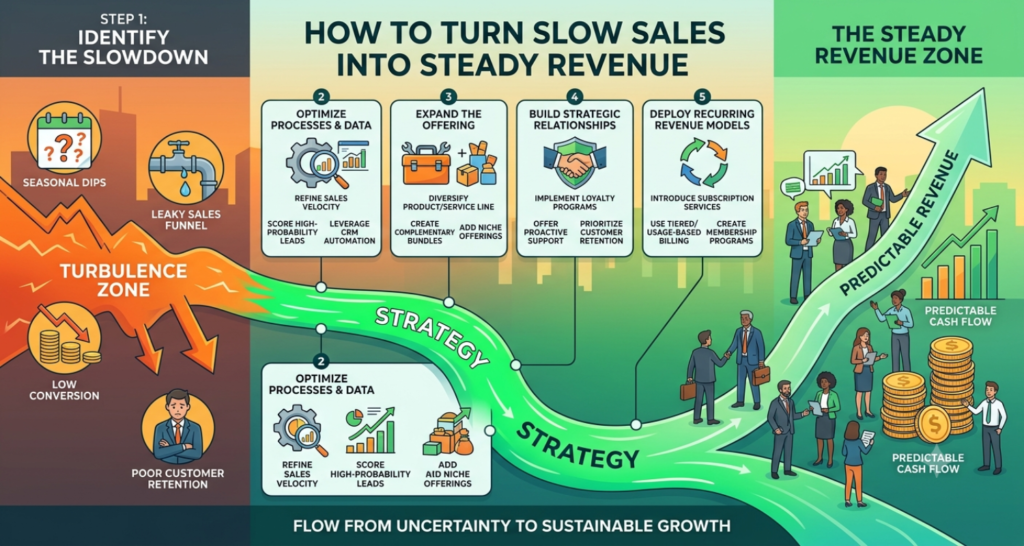
The good news is that slow sales do not have to become a permanent problem. By improving your marketing, strengthening customer relationships, and creating multiple income streams, you can build a business that generates more consistent revenue throughout the year.
In this guide, you’ll learn how to turn slow sales into steady revenue, discover practical strategies that work for businesses in the United States, and understand how to create long-term financial stability.
Why Steady Revenue Matters
Consistent revenue gives businesses greater financial confidence.
It helps you:
- Improve cash flow.
- Pay bills on time.
- Plan future investments.
- Hire employees.
- Reduce financial stress.
- Grow sustainably.
A predictable income stream allows business owners to make better long-term decisions.
How to Get Your First 100 Customers
Common Reasons Sales Slow Down
Before solving the problem, identify the cause.
Sales may decline because of:
- Seasonal demand.
- Increased competition.
- Weak marketing.
- Changing customer preferences.
- Poor customer service.
- Economic conditions.
- Outdated products or services.
- Low online visibility.
Understanding the root cause helps you choose the right solution.
1. Focus on Existing Customers
Winning a new customer often costs more than keeping an existing one.
Increase repeat business by:
- Following up after purchases.
- Offering loyalty programs.
- Sending personalized emails.
- Providing excellent customer service.
- Asking for customer feedback.
Satisfied customers are more likely to buy again and recommend your business.
2. Improve Your Online Presence
Many customers search online before making a purchase.
Strengthen your digital presence by:
- Updating your website.
- Improving page speed.
- Optimizing for mobile devices.
- Publishing helpful blog content.
- Using search engine optimization (SEO).
Better visibility can attract more qualified visitors.
3. Diversify Your Revenue Streams
Depending on one product or service increases business risk.
Consider adding:
- Subscription services.
- Online courses.
- Consulting services.
- Digital products.
- Maintenance plans.
- Membership programs.
Multiple income sources create more stable revenue.
4. Increase Customer Retention
Repeat customers contribute significantly to long-term profitability.
Improve retention by:
- Delivering consistent quality.
- Offering exclusive promotions.
- Providing outstanding support.
- Communicating regularly.
Building loyalty often costs less than constantly acquiring new customers.
5. Review Your Pricing Strategy
Pricing affects both sales volume and profitability.
Evaluate:
- Competitor pricing.
- Customer expectations.
- Profit margins.
- Product value.
Avoid lowering prices unnecessarily.
Instead, focus on communicating value.
6. Invest in Content Marketing
Helpful content builds trust and attracts potential customers.
Create:
- Blog articles.
- Videos.
- Buying guides.
- Email newsletters.
- Educational resources.
High-quality content can continue generating leads long after it is published.
7. Encourage Customer Reviews
Positive reviews build trust and influence buying decisions.
Ask satisfied customers to leave honest reviews on:
- Google Business Profile.
- Facebook.
- Yelp.
- Industry-specific review websites.
Respond professionally to both positive and negative feedback.
8. Improve Sales Follow-Up
Many sales are lost because businesses fail to follow up.
Develop a consistent follow-up process by:
- Sending reminder emails.
- Calling qualified leads.
- Sharing useful information.
- Answering customer questions promptly.
Persistence often leads to higher conversion rates.
9. Monitor Business Data
Track important performance indicators such as:
- Website traffic.
- Conversion rates.
- Customer acquisition cost.
- Repeat purchase rate.
- Average order value.
- Monthly revenue.
Data helps identify what is working and where improvements are needed.
10. Strengthen Your Brand
Customers are more likely to buy from businesses they trust.
Build a stronger brand by:
- Maintaining consistent messaging.
- Using professional visuals.
- Delivering excellent service.
- Sharing customer success stories.
- Being transparent and reliable.
A trusted brand encourages repeat business.
11. Use Email Marketing
Email remains one of the most effective marketing tools.
Send emails that provide:
- Product updates.
- Special offers.
- Helpful tips.
- Educational content.
- Personalized recommendations.
Regular communication keeps your business top of mind.
12. Adapt to Changing Customer Needs
Customer preferences evolve over time.
Stay competitive by:
- Listening to feedback.
- Monitoring market trends.
- Improving products.
- Testing new ideas.
- Expanding services.
Businesses that adapt quickly often recover faster from slow sales periods.
Common Mistakes That Keep Sales Low
Avoid these common errors:
- Ignoring customer feedback.
- Relying on one marketing channel.
- Neglecting SEO.
- Providing inconsistent customer service.
- Failing to follow up with leads.
- Cutting marketing during slow periods.
- Ignoring financial reports.
Correcting these mistakes can improve long-term revenue.
Practical Habits That Increase Revenue
Build these habits into your business:
- Review sales performance every month.
- Set measurable revenue goals.
- Improve customer relationships.
- Invest in digital marketing.
- Optimize your website.
- Train your sales team.
- Diversify your offerings.
- Strengthen your online reputation.
- Track key business metrics.
- Continue learning about your industry.
Small improvements made consistently can lead to steady business growth.
Why Consistency Beats Short-Term Sales Spikes
Many businesses experience occasional periods of high sales followed by long slowdowns.
A healthier approach is to build systems that generate consistent revenue.
Focus on:
- Long-term customer relationships.
- Reliable marketing.
- Operational efficiency.
- Financial discipline.
- Continuous improvement.
Consistency creates stability and sustainable growth.
Final Thoughts
Slow sales do not have to define your business. By understanding why sales have slowed, improving customer retention, strengthening your online presence, investing in marketing, and creating multiple revenue streams, you can build a business that generates steady income throughout the year.
Success comes from consistency rather than quick wins. Businesses that focus on delivering value, listening to customers, and continuously improving are more likely to achieve lasting financial stability and long-term growth.
U.S. Small Business Administration (SBA):
Frequently Asked Questions
Why do small businesses experience slow sales?
Common causes include seasonal demand, increased competition, weak marketing, economic conditions, and changing customer preferences.
How can I generate more consistent revenue?
Focus on customer retention, improve your online presence, diversify revenue streams, invest in content marketing, and monitor business performance regularly.
Is lowering prices the best way to increase sales?
Not always. Instead of competing only on price, emphasize quality, customer service, and the value your business provides.
Why is customer retention important?
Returning customers often spend more over time, are less expensive to retain than new customers, and frequently recommend your business to others.