
 MOHAMMAD ABUBAKR
Making sales is exciting, but sales alone do not guarantee success. Many small businesses generate thousands—or even millions—of dollars in revenue every year and still struggle financially. The reason is simple: profit matters more than sales. If expenses continue to rise while profit margins shrink, a business can quickly run into financial trouble.
According to business experts, one of the biggest reasons small businesses fail is poor financial management rather than a lack of customers. Business owners who understand the common profit mistakes can avoid costly decisions and build a stronger, more sustainable company.
In this guide, you’ll learn the profit mistakes that sink small businesses, why they happen, and how to protect your business from them.
Why Profit Is More Important Than Revenue
Revenue is the total money your business earns from sales.
Profit is the money left after paying all expenses.
A business with:
- High revenue
- Low profit
- Poor cash flow
may struggle more than a business with lower sales but healthy profit margins.
Long-term success depends on consistently generating profit.
Why Cash Flow Matters More Than Revenue
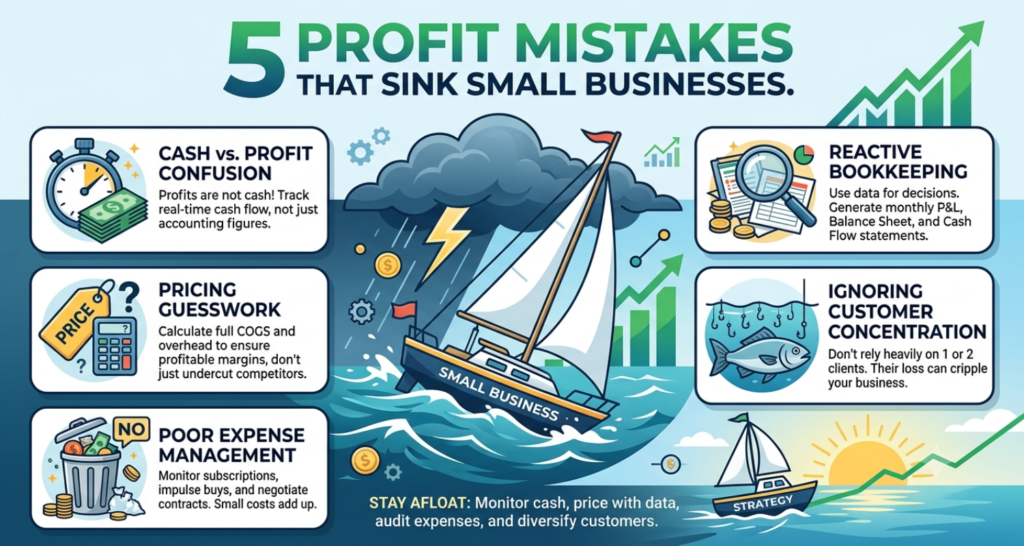
1. Pricing Products Too Low
Many small business owners lower prices to attract customers.
However, pricing too low can:
- Reduce profit margins.
- Make growth difficult.
- Lower the perceived value of your products.
- Leave little room for unexpected expenses.
How to Avoid It
- Calculate all business costs.
- Understand your profit margin.
- Research competitors.
- Price based on value, not fear.
Customers often pay more for quality and excellent service.
2. Ignoring Cash Flow
A profitable business can still fail if cash is unavailable when bills are due.
Late customer payments and poor budgeting create cash flow problems.
Improve Cash Flow By:
- Sending invoices immediately.
- Following up on overdue payments.
- Monitoring monthly cash flow.
- Maintaining emergency reserves.
Cash flow keeps the business operating every day.
3. Failing to Track Business Expenses
Small expenses often go unnoticed.
Over time they can significantly reduce profits.
Common hidden expenses include:
- Software subscriptions.
- Bank fees.
- Office supplies.
- Delivery charges.
- Advertising costs.
- Equipment maintenance.
Review expenses every month to identify unnecessary spending.
4. Mixing Personal and Business Finances
Using one account for personal and business expenses creates confusion.
It becomes difficult to:
- Measure profitability.
- Prepare taxes.
- Track expenses.
- Make financial decisions.
Maintain separate business accounts and accounting records.
5. Not Understanding Profit Margins
Many owners celebrate sales without measuring profitability.
Track important metrics such as:
- Gross profit margin.
- Net profit margin.
- Operating margin.
- Cost of goods sold.
These numbers provide a clearer picture of business performance.
6. Overinvesting Too Early
Rapid expansion can strain finances.
Examples include:
- Hiring too many employees.
- Leasing large office spaces.
- Purchasing expensive equipment.
- Opening additional locations too soon.
Grow based on sustainable demand rather than optimism alone.
7. Depending on One Customer or Revenue Source
If one major customer leaves, revenue can drop dramatically.
Reduce risk by:
- Expanding your customer base.
- Offering additional services.
- Creating recurring revenue.
- Entering new markets.
Diversification improves financial stability.
8. Ignoring Inventory Costs
Excess inventory ties up valuable cash.
It may also lead to:
- Storage costs.
- Product damage.
- Obsolete inventory.
- Cash shortages.
Maintain inventory levels that match customer demand.
9. Neglecting Financial Reports
Business owners should review financial statements regularly.
Important reports include:
- Profit and loss statement.
- Cash flow statement.
- Balance sheet.
- Budget reports.
These reports help identify problems before they become serious.
10. Cutting Marketing During Slow Periods
Many businesses reduce marketing when sales decline.
However, this often creates even fewer sales.
Instead:
- Focus on cost-effective marketing.
- Improve SEO.
- Build your email list.
- Encourage customer referrals.
- Strengthen social media engagement.
Consistent marketing supports long-term growth.
11. Ignoring Customer Retention
Acquiring new customers often costs more than keeping existing ones.
Increase customer retention by:
- Delivering excellent service.
- Following up after purchases.
- Rewarding loyal customers.
- Responding to feedback.
Loyal customers improve profitability over time.
12. Failing to Plan for Taxes
Unexpected tax bills can create financial stress.
Prepare by:
- Setting aside tax funds regularly.
- Keeping accurate financial records.
- Consulting qualified tax professionals.
- Monitoring tax deadlines.
Planning reduces surprises.
Common Signs Your Business Is Losing Profit
Watch for these warning signs:
- Sales increase but profits decline.
- Cash shortages become frequent.
- Rising operating expenses.
- Increasing debt.
- Declining customer retention.
- Constant discounting.
- Difficulty paying suppliers on time.
Early action prevents larger financial problems.
Practical Ways to Increase Profit
Improve profitability by:
- Reviewing pricing annually.
- Reducing unnecessary expenses.
- Negotiating supplier contracts.
- Automating repetitive tasks.
- Increasing customer retention.
- Selling higher-margin products.
- Monitoring financial reports monthly.
- Improving operational efficiency.
- Strengthening cash flow management.
- Investing in employee productivity.
Small improvements across multiple areas often produce significant results.
Why Financial Discipline Creates Long-Term Success
Profitable businesses rarely succeed by accident.
They consistently:
- Monitor performance.
- Control expenses.
- Invest wisely.
- Adapt to market changes.
- Focus on customer value.
Financial discipline supports sustainable growth.
Final Thoughts
Many small businesses fail because they focus only on increasing sales while overlooking profitability. Pricing products too low, ignoring cash flow, failing to monitor expenses, and expanding too quickly are common mistakes that reduce long-term success.
By understanding your financial numbers, managing cash carefully, improving efficiency, and making data-driven decisions, you can build a stronger and more profitable business. Remember, sustainable profit—not just revenue—is what keeps a business healthy for years to come.
SCORE – Small Business Mentoring and Financial Resources:
Frequently Asked Questions
What is the biggest profit mistake small businesses make?
One of the biggest mistakes is focusing on revenue while ignoring profit margins and cash flow.
Why is cash flow important for profitability?
Healthy cash flow ensures a business can pay expenses, invest in growth, and continue operating even during slow periods.
How often should businesses review financial reports?
Most experts recommend reviewing financial reports monthly to identify trends and address problems early.
How can small businesses improve profit?
Businesses can improve profit by adjusting pricing, reducing unnecessary expenses, increasing efficiency, retaining customers, and monitoring financial performance.