
 MOHAMMAD ABUBAKR
Many small business owners carefully track major expenses like payroll, rent, inventory, and marketing. However, the biggest threat to profitability often comes from smaller, hidden expenses that quietly add up over time. These overlooked costs may seem insignificant individually, but together they can reduce cash flow, lower profit margins, and slow business growth.
Hidden expenses are one of the main reasons businesses struggle financially despite having steady sales. Identifying and controlling these costs is an important step toward improving profitability and building a stronger financial foundation.
In this guide, you’ll learn the hidden expenses that hurt small businesses, understand their impact on your bottom line, and discover practical strategies to reduce unnecessary spending.
Why Hidden Expenses Matter
Small expenses are easy to ignore.
However, when they occur every month, they can significantly affect:
- Cash flow.
- Profit margins.
- Business growth.
- Financial stability.
- Investment opportunities.
Successful businesses review every expense, not just the largest ones.
How to Reduce Business Costs Without Slowing Growth
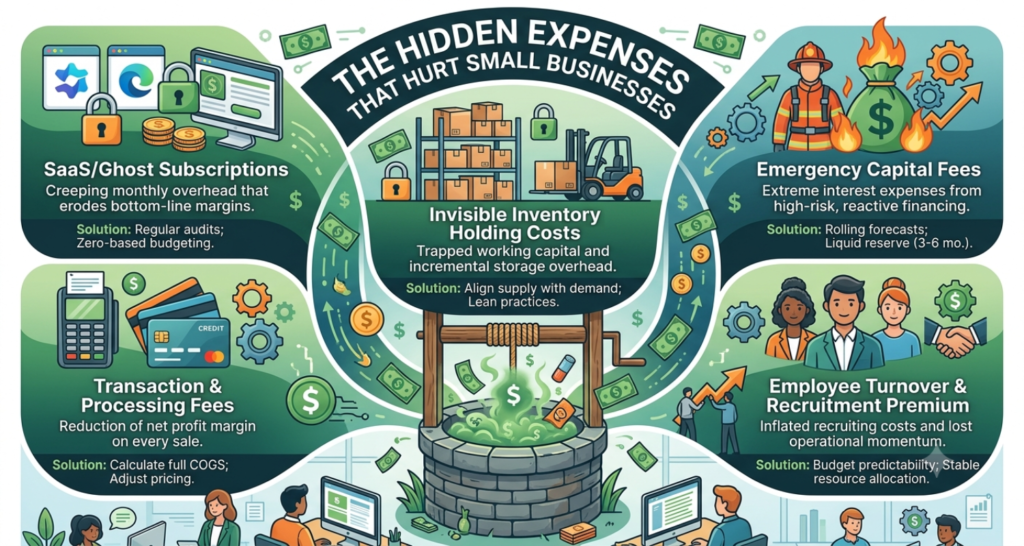
1. Unused Software Subscriptions
Many businesses sign up for software tools but rarely use them.
Examples include:
- Project management software.
- Marketing platforms.
- Design tools.
- Cloud storage.
- Productivity apps.
Monthly subscription fees can quietly drain your budget.
How to Reduce This Expense
- Review subscriptions every quarter.
- Cancel unused services.
- Consolidate similar tools.
- Negotiate annual pricing discounts.
2. Payment Processing Fees
Every credit card or digital payment usually includes processing fees.
Although each transaction fee seems small, the total cost can become substantial over hundreds or thousands of sales.
Ways to manage these costs include:
- Comparing payment providers.
- Negotiating lower rates.
- Encouraging lower-cost payment methods where appropriate.
3. Late Payment Fees
Missing payment deadlines often leads to:
- Interest charges.
- Late fees.
- Damaged business credit.
Creating automatic payment reminders can help avoid unnecessary penalties.
4. High Employee Turnover
Replacing employees is more expensive than many business owners realize.
Hidden costs include:
- Recruiting.
- Hiring.
- Training.
- Lost productivity.
- Reduced customer service quality.
Investing in employee satisfaction often saves money over time.
5. Equipment Maintenance
Waiting until equipment breaks down usually costs more than regular maintenance.
Unexpected repairs may result in:
- Emergency service fees.
- Lost productivity.
- Delayed customer orders.
- Replacement equipment costs.
Preventive maintenance reduces long-term expenses.
6. Excess Inventory
Too much inventory creates hidden costs such as:
- Storage fees.
- Insurance.
- Product damage.
- Obsolete inventory.
- Reduced cash flow.
Managing inventory carefully keeps more cash available for growth.
7. Shipping and Delivery Costs
Shipping expenses often increase gradually.
Hidden costs may include:
- Packaging materials.
- Fuel surcharges.
- Return shipping.
- Expedited delivery.
- Carrier rate increases.
Review shipping contracts regularly to find savings.
8. Office Utility Costs
Electricity, internet, water, heating, and cooling expenses can quietly rise.
Businesses can reduce utility costs by:
- Using energy-efficient equipment.
- Turning off unused devices.
- Monitoring monthly utility bills.
- Upgrading lighting.
Small efficiency improvements create long-term savings.
9. Poor Cash Flow Management
Cash flow problems often create additional expenses, including:
- Overdraft fees.
- Interest charges.
- Short-term loan costs.
- Missed supplier discounts.
Healthy cash flow reduces unnecessary financial pressure.
10. Weak Cybersecurity
Cybersecurity incidents can become extremely expensive.
Hidden costs may include:
- Data recovery.
- Business interruptions.
- Legal expenses.
- Customer notification.
- Reputation damage.
Investing in security is usually less expensive than recovering from a cyberattack.
11. Tax Penalties
Poor financial recordkeeping may result in:
- Filing mistakes.
- Missed deadlines.
- IRS penalties.
- Interest charges.
Accurate bookkeeping helps businesses avoid unnecessary tax expenses.
12. Inefficient Business Processes
Manual, outdated processes often waste:
- Employee time.
- Business resources.
- Customer opportunities.
Automation can reduce labor costs while improving efficiency.
13. Customer Acquisition Costs
Finding new customers is essential, but it can become expensive.
Hidden costs include:
- Advertising.
- Sales commissions.
- Marketing software.
- Promotional discounts.
Increasing customer retention often provides a better return on investment than constantly acquiring new customers.
14. Poor Supplier Contracts
Businesses sometimes continue paying outdated prices because they never renegotiate supplier agreements.
Review supplier relationships regularly to:
- Request volume discounts.
- Compare competitors.
- Improve payment terms.
Negotiation can reduce operating expenses without lowering quality.
Warning Signs That Hidden Expenses Are Growing
Watch for these indicators:
- Revenue increases but profit stays flat.
- Cash flow becomes tighter each month.
- Operating expenses continue rising.
- Business savings decline.
- Monthly budgets become difficult to maintain.
These warning signs suggest it’s time to review your expenses.
How to Identify Hidden Business Costs
Develop these financial habits:
- Review financial statements monthly.
- Audit recurring subscriptions.
- Analyze supplier invoices.
- Monitor employee productivity.
- Compare monthly utility bills.
- Track payment processing fees.
- Forecast cash flow regularly.
- Measure return on investment (ROI) for marketing campaigns.
Regular reviews make hidden costs easier to identify.
Practical Ways to Reduce Hidden Expenses
Improve financial performance by:
- Creating a detailed monthly budget.
- Eliminating unnecessary subscriptions.
- Improving inventory management.
- Negotiating vendor contracts.
- Automating repetitive tasks.
- Monitoring cash flow weekly.
- Investing in preventive maintenance.
- Building emergency cash reserves.
- Reviewing expenses every month.
- Training employees to improve efficiency.
Consistent cost management increases long-term profitability.
Why Expense Control Supports Business Growth
Reducing hidden expenses doesn’t mean cutting quality or limiting growth.
Instead, it allows businesses to:
- Improve profit margins.
- Increase available cash.
- Invest in innovation.
- Hire talented employees.
- Expand with greater confidence.
Efficient businesses often outperform businesses with higher sales but poor cost control.
Final Thoughts
Hidden expenses can quietly reduce profits and limit business growth. From unused software subscriptions and payment processing fees to employee turnover and poor cash flow management, these overlooked costs can have a significant impact over time.
The most successful businesses review their finances regularly, monitor recurring expenses, and look for opportunities to improve efficiency. By identifying hidden costs early and making smart financial decisions, small business owners can strengthen cash flow, increase profitability, and build a more resilient business for the future.
U.S. Small Business Administration (SBA):
Frequently Asked Questions
What are hidden business expenses?
Hidden business expenses are recurring or overlooked costs—such as software subscriptions, payment processing fees, equipment maintenance, and employee turnover—that reduce profitability over time.
Why do hidden expenses matter?
Although each expense may seem small, together they can significantly reduce cash flow, profit margins, and long-term business growth.
How can small businesses identify hidden expenses?
Businesses should review financial statements, monitor recurring subscriptions, analyze supplier invoices, and track monthly operating costs regularly.
What is the best way to reduce unnecessary business expenses?
Create a detailed budget, review expenses every month, negotiate with suppliers, eliminate unused services, and improve operational efficiency.