
 MOHAMMAD ABUBAKR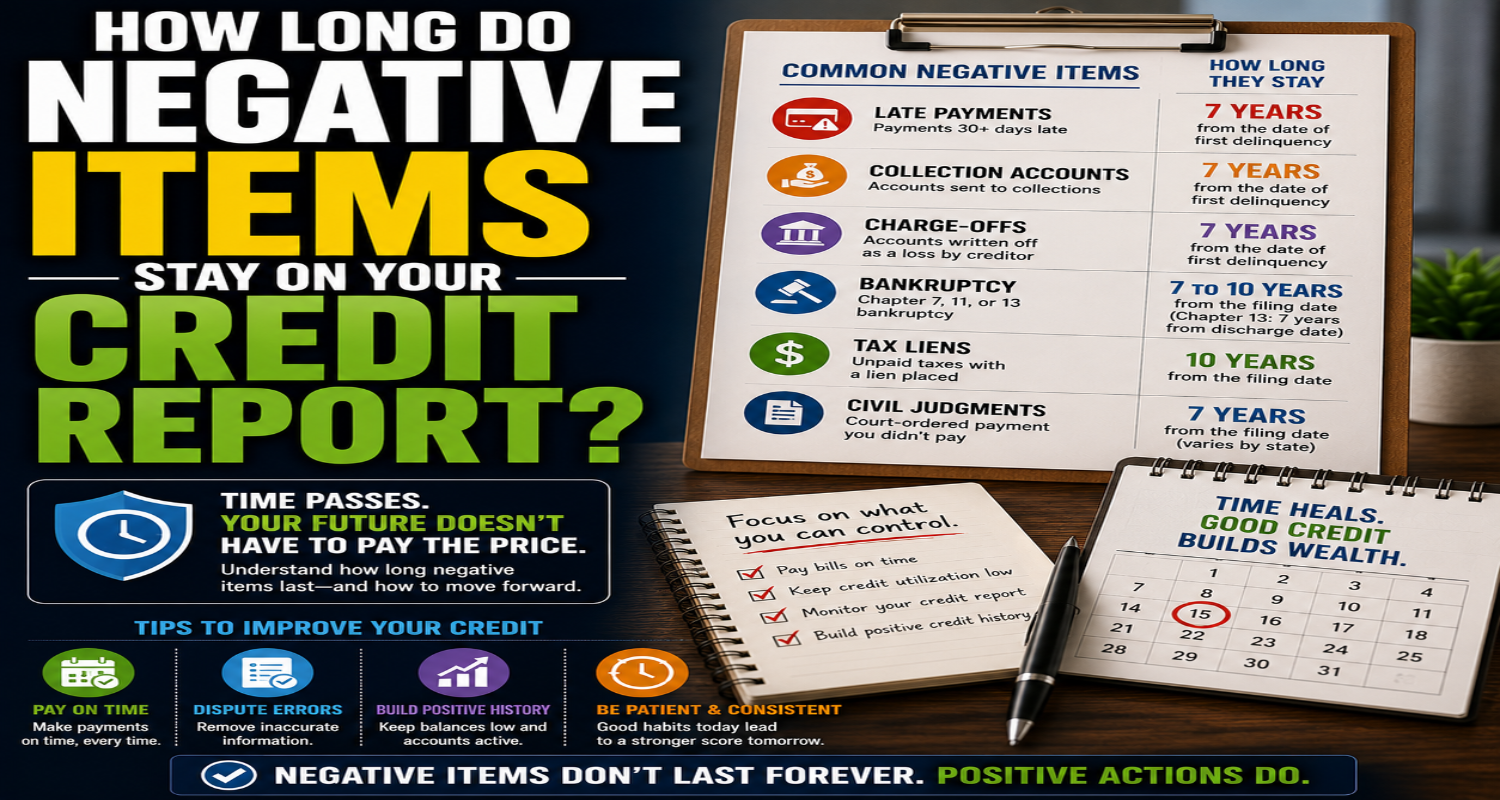
No one has perfect credit forever. Life happens. You might miss a payment, fall behind on a loan, or face unexpected financial challenges. The good news is that negative items do not stay on your credit report permanently.
In 2026, the Fair Credit Reporting Act (FCRA) continues to limit how long most negative information can remain on your credit report. While these items can affect your credit score for several years, their impact usually decreases over time—especially if you build positive credit habits.
In this guide, you’ll learn how long negative items stay on your credit report, which items remain the longest, and what you can do to recover your credit faster.
Why Negative Items Matter
Your credit report tells lenders how you’ve managed debt in the past. Negative information may signal higher lending risk.
As a result, negative items can lead to:
- Lower credit scores
- Higher interest rates
- Loan denials
- Smaller credit limits
- Difficulty renting an apartment
- Higher insurance premiums in some states
Fortunately, most negative information has a reporting time limit.
Soft Inquiry vs Hard Inquiry: What’s the Difference?
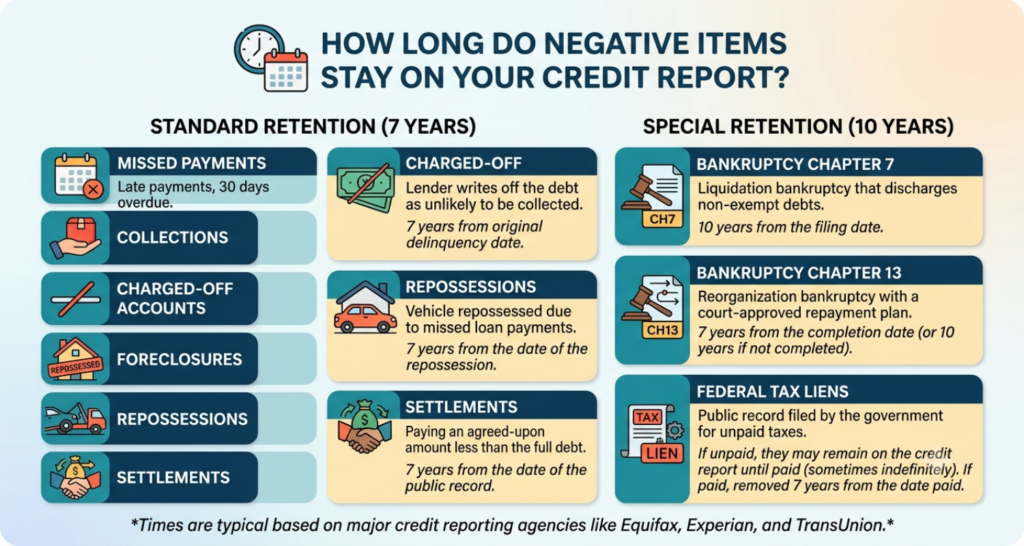
How Long Different Negative Items Stay on Your Credit Report
Although every situation is different, most negative items follow standard reporting periods.
1. Late Payments
Typical reporting period: Up to 7 years
Even one missed payment can appear on your credit report.
However, the impact is usually strongest during the first two years.
If you continue making on-time payments afterward, the damage gradually decreases.
2. Collection Accounts
Typical reporting period: Up to 7 years
When unpaid debts are sent to collections, collection accounts may appear on your credit report.
Recent credit reporting changes have reduced the impact of certain medical collections. However, other qualifying collection accounts can still affect your credit.
3. Charge-Offs
Typical reporting period: Up to 7 years
A charge-off occurs when a lender considers a debt unlikely to be collected.
Even after a charge-off, you may still owe the balance unless it is settled or otherwise resolved.
4. Repossessions
Typical reporting period: Up to 7 years
If a lender repossesses a vehicle because of missed payments, the repossession may remain on your credit report for several years.
Additionally, you could still owe money if the sale of the vehicle does not cover the remaining loan balance.
5. Foreclosures
Typical reporting period: Up to 7 years
Foreclosure can significantly affect your credit.
Although the impact lessens over time, it may influence future mortgage applications during the reporting period.
6. Chapter 13 Bankruptcy
Typical reporting period: Up to 7 years
Chapter 13 bankruptcy generally remains on your credit report for up to seven years from the filing date.
Because repayment is part of the process, the reporting period is shorter than some other bankruptcies.
7. Chapter 7 Bankruptcy
Typical reporting period: Up to 10 years
Chapter 7 bankruptcy usually remains the longest.
Although it can significantly lower your credit score initially, many consumers begin rebuilding credit well before it disappears from their reports.
8. Hard Credit Inquiries
Typical reporting period: Up to 2 years
Hard inquiries stay on your credit report for about two years.
However, their impact on your credit score usually fades much sooner, often within several months.
Do Negative Items Affect Your Credit Score the Entire Time?
Not usually.
The impact is generally strongest soon after the negative event occurs.
As time passes—and you continue making on-time payments—many scoring models place greater emphasis on your recent positive behavior.
Therefore, responsible financial habits can help offset older negative information.
Can Negative Items Be Removed Early?
Sometimes.
Negative items may be removed before the standard reporting period if:
- The information is inaccurate.
- The account was reported in error.
- The creditor agrees to correct inaccurate data.
- A successful dispute results in removal.
However, accurate negative information generally remains until the legal reporting period expires.
Be cautious of companies promising to remove legitimate negative items for a fee.
How to Check for Incorrect Negative Items
Review your credit reports carefully.
Look for:
- Accounts that do not belong to you
- Incorrect late payments
- Duplicate collection accounts
- Paid debts still reported as unpaid
- Outdated negative information
If you discover an error, file a dispute with the appropriate credit bureau and provide supporting documentation.
How to Rebuild Your Credit While Negative Items Remain
Waiting for negative items to disappear is not enough.
Instead, focus on building positive credit habits.
Pay Every Bill on Time
Consistent on-time payments are one of the most effective ways to strengthen your credit profile.
Keep Credit Utilization Low
Try to use only a small percentage of your available credit.
Lower utilization generally supports healthier credit scores.
Avoid Unnecessary Credit Applications
Applying for multiple credit accounts in a short period can result in additional hard inquiries.
Only apply for new credit when necessary.
Review Your Credit Reports Regularly
Checking your credit reports helps you identify errors and monitor your progress.
Build Positive Credit History
Keeping older accounts in good standing and using credit responsibly can gradually improve your overall credit profile.
Common Myths About Negative Credit Items
Myth: Negative Items Stay Forever
False.
Most negative information has a legal reporting limit.
Myth: Paying Off a Collection Immediately Removes It
False.
Although paying a collection is financially beneficial, accurate collection accounts may remain on your report until the reporting period ends unless reporting policies or bureau rules require removal.
Myth: Credit Repair Companies Can Erase Accurate Negative Information
False.
No company can legally remove accurate information before the reporting period expires.
Myth: You Can’t Improve Your Credit Until Negative Items Disappear
False.
Positive financial habits can improve your credit long before older negative items are removed.
Tips for Maintaining Strong Credit
To build healthier credit over time:
- Pay bills before the due date.
- Keep credit card balances low.
- Monitor your credit reports several times each year.
- Correct reporting errors promptly.
- Avoid unnecessary debt.
- Create an emergency savings fund to reduce missed payments during financial setbacks.
These habits can make a meaningful difference even if negative items are still listed on your report.
Consumer Financial Protection Bureau (CFPB) – Credit Reports and Scores
Final Thoughts
Negative items on your credit report can affect your financial opportunities, but they do not last forever. Most late payments, collections, charge-offs, foreclosures, and repossessions remain for up to seven years, while Chapter 7 bankruptcy can stay for up to ten years. Hard inquiries generally remain for up to two years, though their effect on your score fades much sooner.
The most important step is to focus on what you can control today. Make payments on time, keep your credit utilization low, review your credit reports for errors, and practice responsible credit management. Over time, these positive actions can help rebuild your credit and improve your financial future.