 MOHAMMAD ABUBAKR
Many Americans avoid checking their credit score because they believe it will lower their score. This is one of the most common credit myths. In reality, checking your own credit score usually has no negative impact on your credit.
Understanding the difference between a soft inquiry and a hard inquiry is essential. While some credit checks can affect your score slightly, checking your own credit score is generally safe and can even help you catch problems before they become costly.
In this guide, you’ll learn whether checking your credit score hurts it, how credit inquiries work in 2026, and the best ways to monitor your credit without damaging your financial health.
The Short Answer
No. Checking your own credit score does not hurt your credit score.
When you review your own credit score or credit report, it creates a soft inquiry, not a hard inquiry.
Soft inquiries do not lower your score and are not visible to lenders making credit decisions.
Therefore, you can check your credit score as often as you like without worrying about hurting your credit.
What Is a Credit Inquiry?
A credit inquiry happens whenever someone accesses your credit report.
There are two main types:
- Soft inquiries
- Hard inquiries
Although both involve reviewing your credit information, they affect your credit differently.
How Credit Utilization Can Make or Break Your Credit Score
What Is a Soft Inquiry?
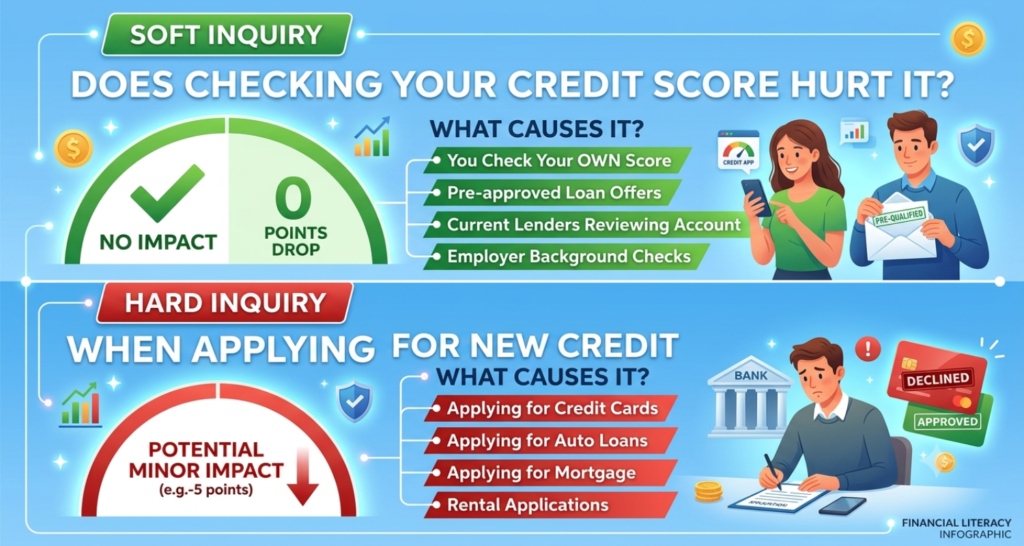
A soft inquiry occurs when your credit is reviewed for informational purposes.
Common examples include:
- Checking your own credit score
- Reviewing your own credit report
- Pre-approved credit card offers
- Background checks by some employers
- Existing lenders reviewing your account
Soft inquiries:
- Do not lower your credit score.
- Are not considered when lenders calculate lending risk.
- Can occur multiple times without affecting your credit.
As a result, regularly monitoring your credit is considered a healthy financial habit.
What Is a Hard Inquiry?
A hard inquiry usually happens when you apply for new credit.
Examples include:
- Credit cards
- Auto loans
- Mortgages
- Personal loans
- Some apartment rental applications
A hard inquiry tells lenders that you are seeking new credit.
Because of this, it may lower your credit score by a few points.
However, the impact is usually small and temporary.
Why Hard Inquiries Affect Your Credit
Lenders view multiple recent credit applications as a possible sign of increased borrowing risk.
If someone applies for several loans within a short period, lenders may wonder whether the borrower is experiencing financial difficulty.
Consequently, credit scoring models may reduce the score slightly.
Still, one hard inquiry alone rarely causes major credit damage.
How Much Can a Hard Inquiry Lower Your Score?
For most people, a single hard inquiry lowers a credit score by only a few points.
The exact impact depends on factors such as:
- Your existing credit history
- The number of recent inquiries
- Your overall credit profile
- The credit scoring model being used
People with long, well-managed credit histories often experience less impact than those with limited credit histories.
Does Checking Your Credit Report Count as a Hard Inquiry?
No.
Reviewing your own credit report creates a soft inquiry.
You can safely check your credit report through authorized credit reporting services whenever you want.
Doing so helps you:
- Verify account information
- Detect identity theft
- Find reporting errors
- Monitor your credit progress
Therefore, checking your report regularly is recommended.
Why You Should Check Your Credit Score Regularly
Many consumers only review their credit after being denied a loan.
Instead, make credit monitoring part of your financial routine.
Regular checks help you:
Catch Errors Early
Mistakes on your credit report can reduce your score unfairly.
Finding them early gives you time to dispute inaccurate information.
Detect Identity Theft
Unexpected accounts or unfamiliar inquiries may indicate fraud.
Early detection reduces the potential financial damage.
Track Your Financial Progress
Monitoring your score allows you to see how responsible financial habits improve your credit over time.
Prepare for Major Purchases
If you’re planning to buy a home or vehicle, knowing your credit score ahead of time gives you an opportunity to improve it before applying.
How Often Should You Check Your Credit Score?
There is no universal rule.
However, many financial experts recommend checking your score at least once a month.
You should also review your credit:
- Before applying for a mortgage
- Before financing a vehicle
- Before applying for a credit card
- After paying off significant debt
- If you suspect identity theft
Since self-checks are soft inquiries, frequent monitoring will not hurt your score.
Other Factors That Affect Your Credit Score
Credit inquiries are only one part of your credit profile.
Other important factors include:
Payment History
Paying bills on time remains one of the strongest influences on your credit score.
Credit Utilization
Using too much of your available credit can lower your score.
Keeping balances low generally helps.
Length of Credit History
Older accounts often strengthen your overall credit profile.
Credit Mix
Having different types of credit accounts may benefit some scoring models.
New Credit Accounts
Opening several accounts within a short period may reduce your score temporarily.
Common Myths About Checking Your Credit Score
Myth: Checking Your Score Lowers It
False.
Checking your own score creates only a soft inquiry.
Myth: Every Credit Check Hurts Your Score
False.
Only certain hard inquiries may have a small impact.
Myth: You Should Avoid Looking at Your Credit
False.
Regular monitoring helps protect your financial health.
Myth: Hard Inquiries Stay Forever
False.
Hard inquiries remain on your credit report for a limited time, although their impact on your score usually fades much sooner.
Tips for Protecting Your Credit Score
To maintain strong credit:
- Pay every bill on time.
- Keep credit card balances low.
- Avoid unnecessary credit applications.
- Monitor your credit reports regularly.
- Dispute inaccurate information quickly.
- Protect your personal information from identity theft.
These habits contribute far more to your credit score than occasional hard inquiries.
AnnualCreditReport.com – Free Annual Credit Reports
Final Thoughts
Checking your own credit score does not hurt your credit. It creates a soft inquiry, which has no impact on your credit score or your ability to qualify for loans.
The real concern is excessive hard inquiries from multiple credit applications within a short period. Even then, the effect is usually modest and temporary.
By monitoring your credit regularly, reviewing your credit reports for errors, and practicing responsible credit habits, you can protect your financial future and improve your chances of qualifying for better loan terms when you need them.