
 MOHAMMAD ABUBAKR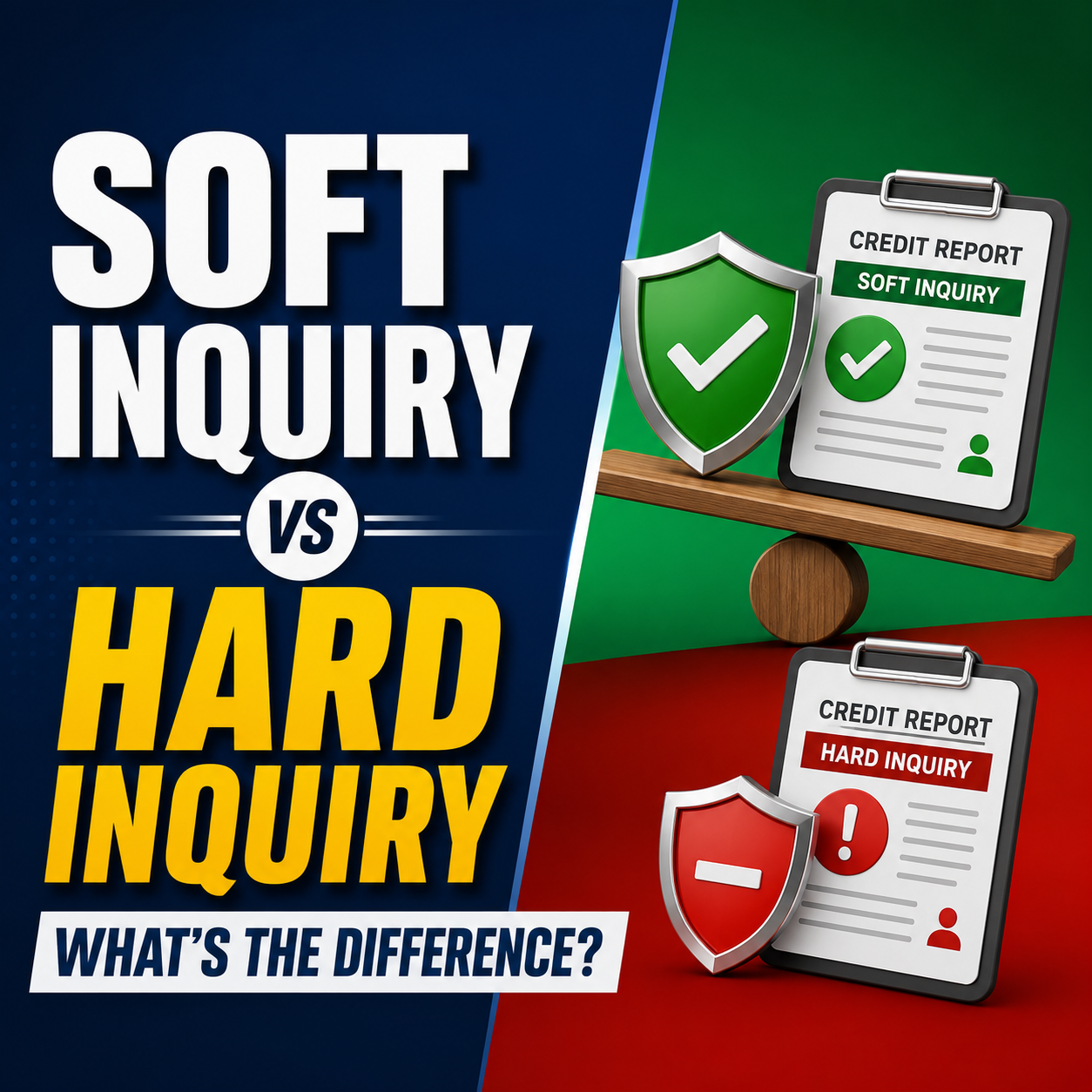
If you’ve ever applied for a credit card, auto loan, mortgage, or even checked your own credit score, you’ve likely encountered the terms soft inquiry and hard inquiry. While both involve someone accessing your credit report, they don’t have the same impact on your credit score.
Many consumers worry that every credit check will lower their score. Fortunately, that’s not true. Understanding the difference between soft and hard inquiries can help you protect your credit, make informed financial decisions, and apply for new credit at the right time.
In this guide, we’ll explain what soft and hard inquiries are, how they affect your credit score, and how to manage them wisely.
What Is a Credit Inquiry?
A credit inquiry occurs whenever someone requests access to your credit report from one of the major credit bureaus.
Credit inquiries help lenders evaluate your creditworthiness before approving loans or credit cards. However, not all inquiries are treated equally.
There are two main types:
- Soft inquiries
- Hard inquiries
The key difference is whether you’re actively applying for credit.
What Lenders Really Look at Before Approving You
What Is a Soft Inquiry?
A soft inquiry (also called a soft pull) happens when your credit report is reviewed for reasons other than a credit application.
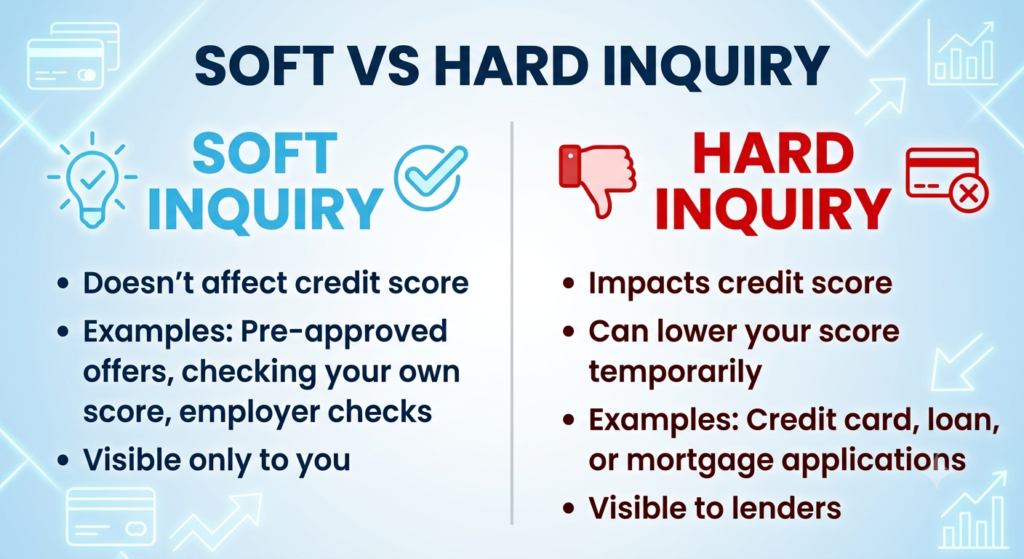
Soft inquiries do not affect your credit score.
They are common and often happen without any negative impact on your credit history.
Examples of Soft Inquiries
- Checking your own credit score
- Reviewing your credit report
- Pre-approved credit card offers
- Employer background checks (with permission)
- Insurance quote checks
- Existing lenders reviewing your account
- Identity verification
Because these inquiries don’t indicate new borrowing, credit scoring models ignore them.
What Is a Hard Inquiry?
A hard inquiry (also called a hard pull) occurs when you apply for new credit and authorize a lender to review your credit report.
Hard inquiries can temporarily lower your credit score.
They signal that you’re seeking additional credit, which may slightly increase lending risk.
Common Examples
- Credit card applications
- Mortgage applications
- Auto loan applications
- Personal loans
- Student loans
- Home equity loans
- Business credit applications
Most hard inquiries reduce your credit score by about 2 to 5 points, although the exact impact depends on your overall credit profile.
Soft Inquiry vs Hard Inquiry Comparison
| Feature | Soft Inquiry | Hard Inquiry |
|---|---|---|
| Affects credit score | No | Yes (slightly) |
| Visible to lenders | No | Yes |
| Requires your permission | Usually not | Yes |
| Appears on your report | Only visible to you | Visible to lenders |
| Common reason | Credit monitoring | Credit application |
How Hard Inquiries Affect Your Credit Score
Hard inquiries are only one small part of your credit score.
While they can reduce your score slightly, the impact is usually temporary.
Most people recover within a few months if they continue making payments on time and avoid excessive borrowing.
Hard inquiries generally remain on your credit report for two years, but they mainly affect your score during the first 12 months.
Multiple Hard Inquiries: Should You Be Worried?
Not always.
Credit scoring models recognize that consumers often shop around for the best loan rates.
If several mortgage, auto loan, or student loan inquiries occur within a short shopping window, they’re usually treated as one inquiry.
This allows borrowers to compare lenders without severely damaging their credit scores.
However, applying for multiple credit cards within a short period may result in several separate hard inquiries.
When Should You Avoid Hard Inquiries?
Consider delaying new credit applications if you plan to:
- Buy a home
- Finance a vehicle
- Apply for a large personal loan
- Refinance your mortgage
Keeping hard inquiries to a minimum before major financial decisions may help you qualify for better interest rates.
Can You Remove Hard Inquiries?
Legitimate hard inquiries cannot usually be removed.
However, if you notice an inquiry you don’t recognize, you should:
- Contact the credit bureau.
- Report possible identity theft.
- File a dispute if the inquiry is unauthorized.
Fraudulent inquiries may be removed after investigation.
Do Soft Inquiries Ever Hurt Your Credit?
No.
You can check your own credit score as often as you’d like without lowering it.
In fact, regularly monitoring your credit is a smart financial habit because it helps you:
- Detect fraud early
- Track your credit improvement
- Catch reporting errors
- Understand your borrowing profile
How to Minimize Hard Inquiries
Here are practical ways to protect your credit:
Only Apply When Necessary
Avoid applying for credit cards simply because attractive offers arrive in the mail.
Research Before Applying
Check the lender’s approval requirements to improve your chances.
Use Prequalification Tools
Many lenders offer prequalification using only a soft inquiry.
Space Out Applications
Avoid submitting multiple unrelated credit applications within a short period.
Monitor Your Credit Report
Regularly reviewing your report helps identify unauthorized inquiries quickly.
Common Myths About Credit Inquiries
Myth 1: Checking Your Own Credit Hurts Your Score
False.
Checking your own credit creates only a soft inquiry.
Myth 2: Every Hard Inquiry Causes Major Damage
False.
Most hard inquiries only reduce your score by a few points.
Myth 3: Hard Inquiries Stay Forever
False.
Most remain on your report for two years but lose scoring impact after about one year.
Myth 4: Pre-Approved Credit Offers Hurt Your Score
False.
Pre-screened offers are based on soft inquiries.
Best Practices for Managing Credit Inquiries
Follow these habits to keep your credit healthy:
- Check your own credit regularly.
- Apply for new credit only when necessary.
- Compare loan rates within a short shopping period.
- Review your credit reports for unauthorized inquiries.
- Use prequalification whenever available.
- Focus on paying bills on time and maintaining low credit utilization.
Final Thoughts
Understanding the difference between soft inquiries and hard inquiries is essential for maintaining a healthy credit score. Soft inquiries are harmless and often occur during routine credit checks or when you monitor your own credit. Hard inquiries, on the other hand, happen when you apply for new credit and can temporarily lower your score by a few points.
The good news is that hard inquiries have only a modest impact, especially if you borrow responsibly. By applying for credit strategically, monitoring your credit reports, and maintaining strong financial habits, you can minimize the effects of hard inquiries and build a stronger credit profile over time.
Federal Trade Commission (FTC):
Frequently Asked Questions
1. Does checking my own credit score lower my score?
No. Checking your own credit creates a soft inquiry and does not affect your credit score.
2. How many points does a hard inquiry lower my score?
Most hard inquiries lower a credit score by about 2–5 points, depending on your credit history.
3. How long do hard inquiries stay on my credit report?
They remain on your credit report for two years, but their impact on your score generally fades after 12 months.
4. Can multiple loan inquiries count as one?
Yes. Multiple mortgage, auto loan, or student loan inquiries made within a rate-shopping window are often treated as a single inquiry by many credit scoring models.
5. Can I remove a hard inquiry from my credit report?
Only if it’s unauthorized or fraudulent. Legitimate hard inquiries cannot typically be removed.