 MOHAMMAD ABUBAKR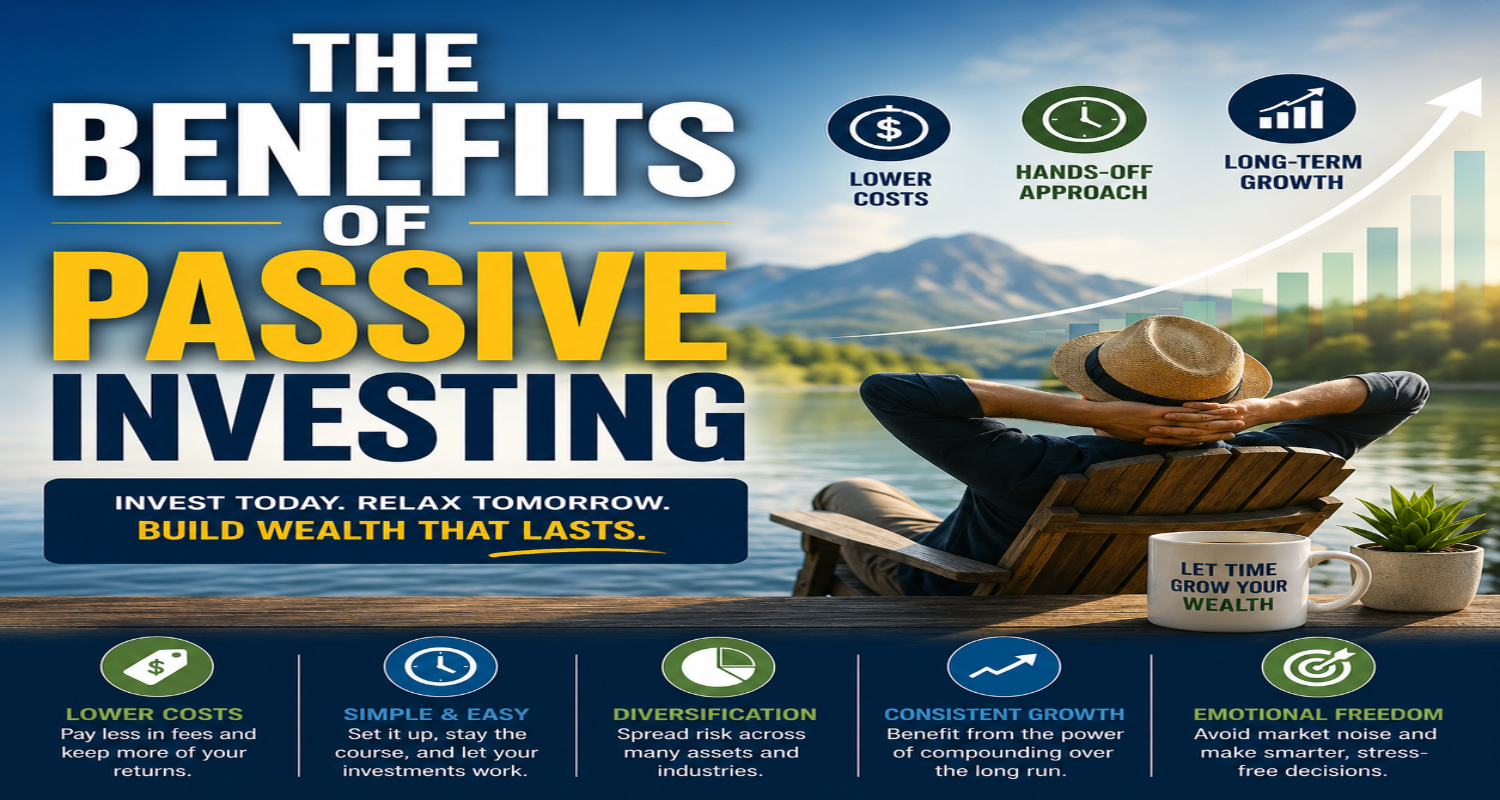
Many investors believe they need to constantly buy and sell stocks to earn strong returns. However, decades of research suggest that a simple, long-term investment strategy can be just as effective—or even better. This approach is known as passive investing.
Understanding the benefits of passive investing for long-term wealth building can help you create a portfolio that grows steadily while reducing costs, stress, and unnecessary trading. Instead of trying to predict the stock market or pick winning stocks, passive investors focus on owning diversified investments and holding them for many years.
Whether you’re a beginner or an experienced investor, passive investing offers a practical way to build wealth while staying focused on your financial goals.
In this guide, you’ll learn how passive investing works, its advantages and disadvantages, and why many financial professionals recommend it for long-term investors.
What Is Passive Investing?
Passive investing is an investment strategy that aims to match the performance of a market index rather than beat it.
Instead of actively selecting individual stocks or frequently trading investments, passive investors typically buy and hold:
- Index funds
- Exchange-Traded Funds (ETFs)
- Broad market mutual funds
The goal is simple: participate in the overall growth of the market over the long term.
How Passive Investing Works
Passive investing follows a “buy and hold” strategy.
After selecting diversified investments, investors continue contributing regularly while avoiding frequent buying and selling.
Rather than reacting to daily market news, passive investors stay invested through both market gains and declines.
This long-term approach allows compound growth to work over time.
Why Passive Investing Has Become Popular
More investors are choosing passive investing because it offers:
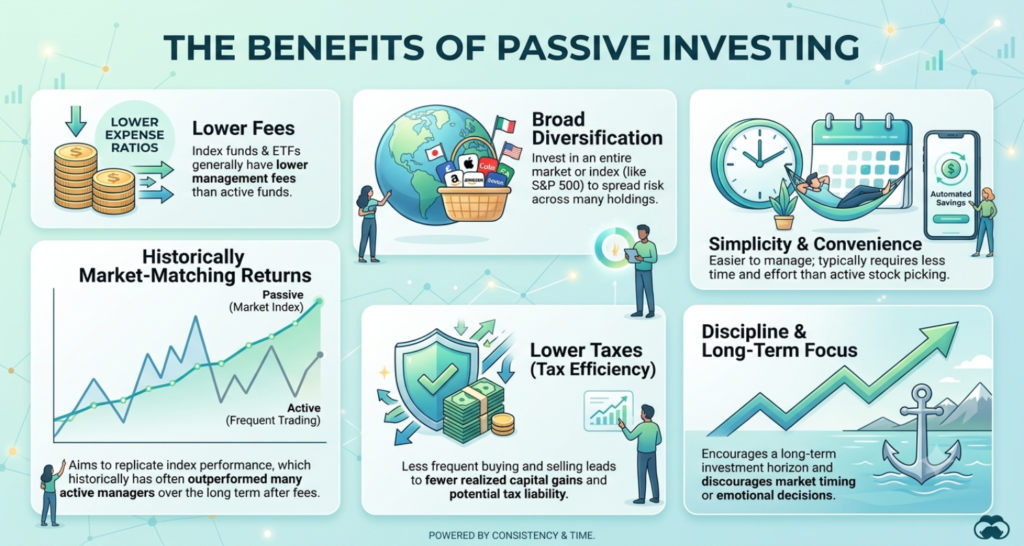
- Lower investment costs
- Broad diversification
- Simpler portfolio management
- Consistent long-term strategy
- Less emotional decision-making
Over the past several decades, passive investing has grown significantly as index funds and ETFs have become widely available.
Key Benefits of Passive Investing
1. Lower Investment Costs
One of the biggest advantages of passive investing is lower fees.
Because index funds don’t require active stock selection, they usually have:
- Lower expense ratios
- Fewer trading costs
- Reduced management fees
Lower costs allow more of your investment returns to remain in your portfolio.
2. Broad Diversification
Most index funds invest in hundreds or even thousands of companies.
For example, a total stock market index fund may provide exposure to businesses across many industries.
Diversification helps reduce the impact of poor performance from any single company.
3. Reduced Emotional Investing
Frequent market swings often trigger emotional decisions.
Passive investors are less likely to:
- Panic during market declines
- Chase popular investments
- Buy based on market hype
- Sell during temporary downturns
Following a long-term strategy encourages discipline.
4. Long-Term Wealth Building
Historically, financial markets have grown over long periods despite temporary declines.
Passive investing allows investors to benefit from long-term economic growth rather than trying to predict short-term market movements.
5. Saves Time
Active investing requires:
- Research
- Company analysis
- Earnings reports
- Market monitoring
- Frequent decision-making
Passive investing requires much less ongoing effort.
Most investors only need to review their portfolios periodically.
6. Tax Efficiency
Because passive investors trade less frequently, they often generate fewer taxable capital gains.
Lower turnover may improve after-tax investment returns.
Tax rules vary, so consider your individual situation before making investment decisions.
7. Consistent Investment Strategy
Passive investing encourages regular investing regardless of market conditions.
Many investors automate monthly contributions.
This consistency helps remove emotion from investing.
Passive Investing vs. Active Investing
| Passive Investing | Active Investing |
|---|---|
| Buy and hold strategy | Frequent buying and selling |
| Tracks market indexes | Attempts to outperform the market |
| Lower fees | Higher management costs |
| Less trading | More trading |
| Broad diversification | Individual investment selection |
| Lower time commitment | Requires ongoing research |
Both approaches can play a role in investing, but passive investing is often preferred by long-term investors seeking simplicity and lower costs.
Who Should Consider Passive Investing?
Passive investing may be a good fit if you:
- Are new to investing
- Want long-term wealth growth
- Prefer lower investment costs
- Don’t have time to research individual stocks
- Want a diversified portfolio
- Prefer a simple investment strategy
Potential Drawbacks of Passive Investing
Although passive investing offers many advantages, it also has limitations.
You Won’t Outperform the Market
Passive investing aims to match market performance, not exceed it.
Limited Flexibility
Index funds follow predetermined market indexes.
They don’t adjust holdings based on changing market conditions.
Market Declines Still Affect You
Because passive investors remain invested, portfolio values will decline during bear markets.
However, long-term investors typically stay invested rather than attempting to time the market.
Tips for Successful Passive Investing
Invest Consistently
Regular monthly contributions help build wealth over time.
Diversify Across Asset Classes
Consider including:
- Stock index funds
- Bond funds
- International funds
- Cash reserves
Diversification reduces overall portfolio risk.
Reinvest Dividends
Automatically reinvesting dividends increases the power of compound growth.
Review Your Portfolio Periodically
Review your investments once or twice a year.
Adjust your asset allocation if your financial goals or risk tolerance change.
Stay Focused on the Long Term
Avoid making investment decisions based on daily market headlines.
Successful passive investing rewards patience.
Common Passive Investing Mistakes
Avoid these common errors.
- Trying to time the market
- Checking portfolio performance every day
- Chasing recent investment trends
- Ignoring portfolio diversification
- Stopping investments during market declines
- Failing to rebalance periodically
Consistency is one of the keys to long-term investing success.
Is Passive Investing Right for You?
Passive investing works well for many people, but the right strategy depends on your:
- Financial goals
- Investment timeline
- Risk tolerance
- Income stability
- Overall financial plan
Many investors combine passive investing with regular savings, emergency funds, and diversified portfolios to create a balanced financial strategy.
Final Thoughts
Understanding the benefits of passive investing for long-term wealth building can help you make smarter financial decisions and reduce unnecessary investment stress. By focusing on diversified index funds or ETFs, minimizing costs, and staying invested through market ups and downs, passive investors often give themselves a strong opportunity to benefit from long-term market growth.
While no investment strategy guarantees profits, passive investing offers a simple, disciplined approach that has helped millions of investors build wealth over time. Continue investing consistently, review your portfolio periodically, and avoid emotional decisions. Patience, diversification, and long-term thinking remain some of the most valuable tools for successful investing.
U.S. Securities and Exchange Commission (SEC):
Frequently Asked Questions (FAQs)
What is passive investing?
Passive investing is a strategy that aims to match the performance of a market index by investing in diversified funds such as index funds and ETFs.
Is passive investing better than active investing?
It depends on your goals. Passive investing generally offers lower costs, greater diversification, and less maintenance, while active investing attempts to outperform the market.
Is passive investing safe?
All investments involve risk. However, diversified passive investments can reduce the risk associated with individual stocks.
How often should I review a passive investment portfolio?
Most long-term investors review their portfolios every six to twelve months or after major life changes.
Can beginners use passive investing?
Yes. Passive investing is often recommended for beginners because it is simple, diversified, and requires less ongoing management.