 MOHAMMAD ABUBAKR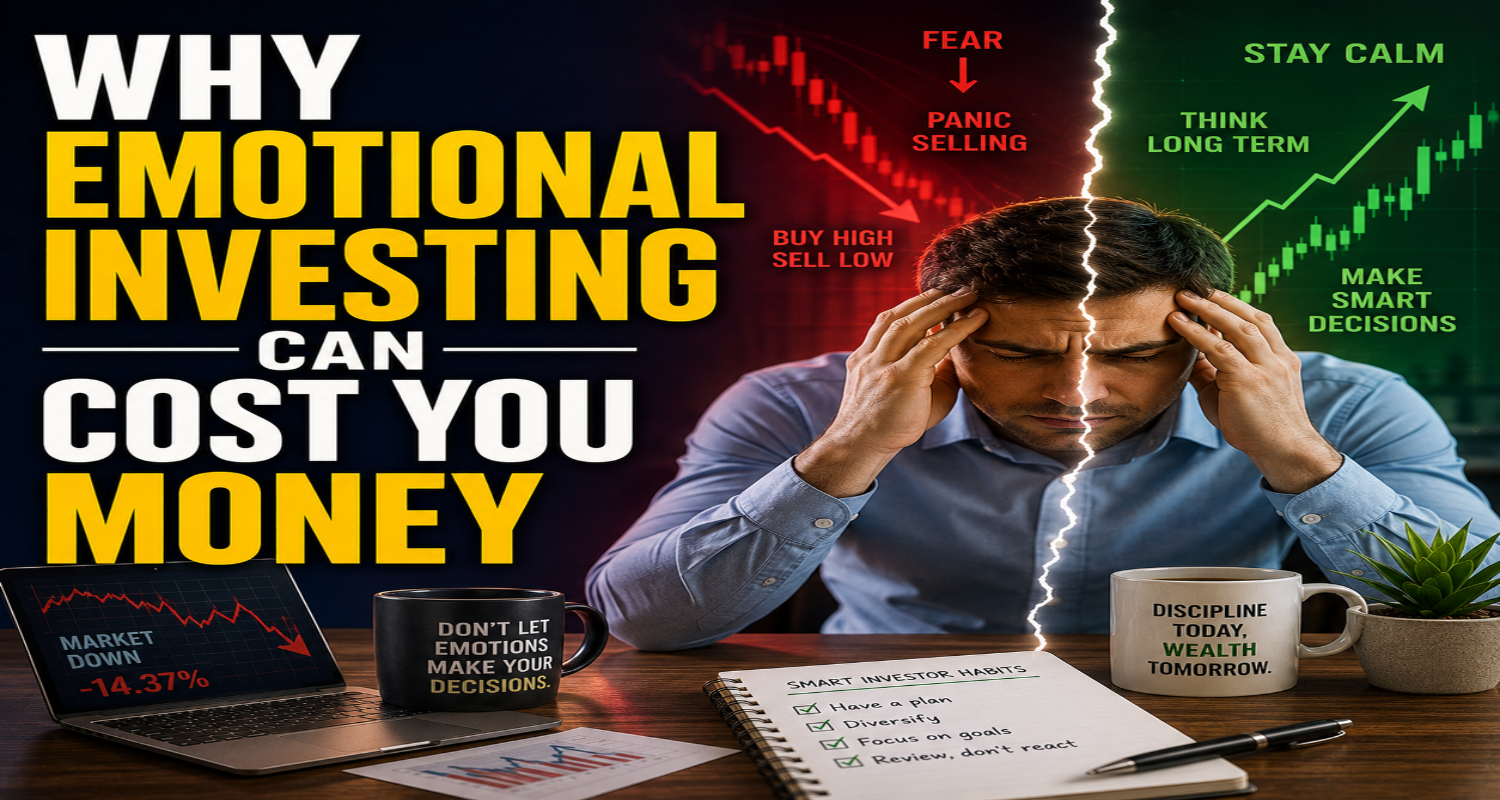
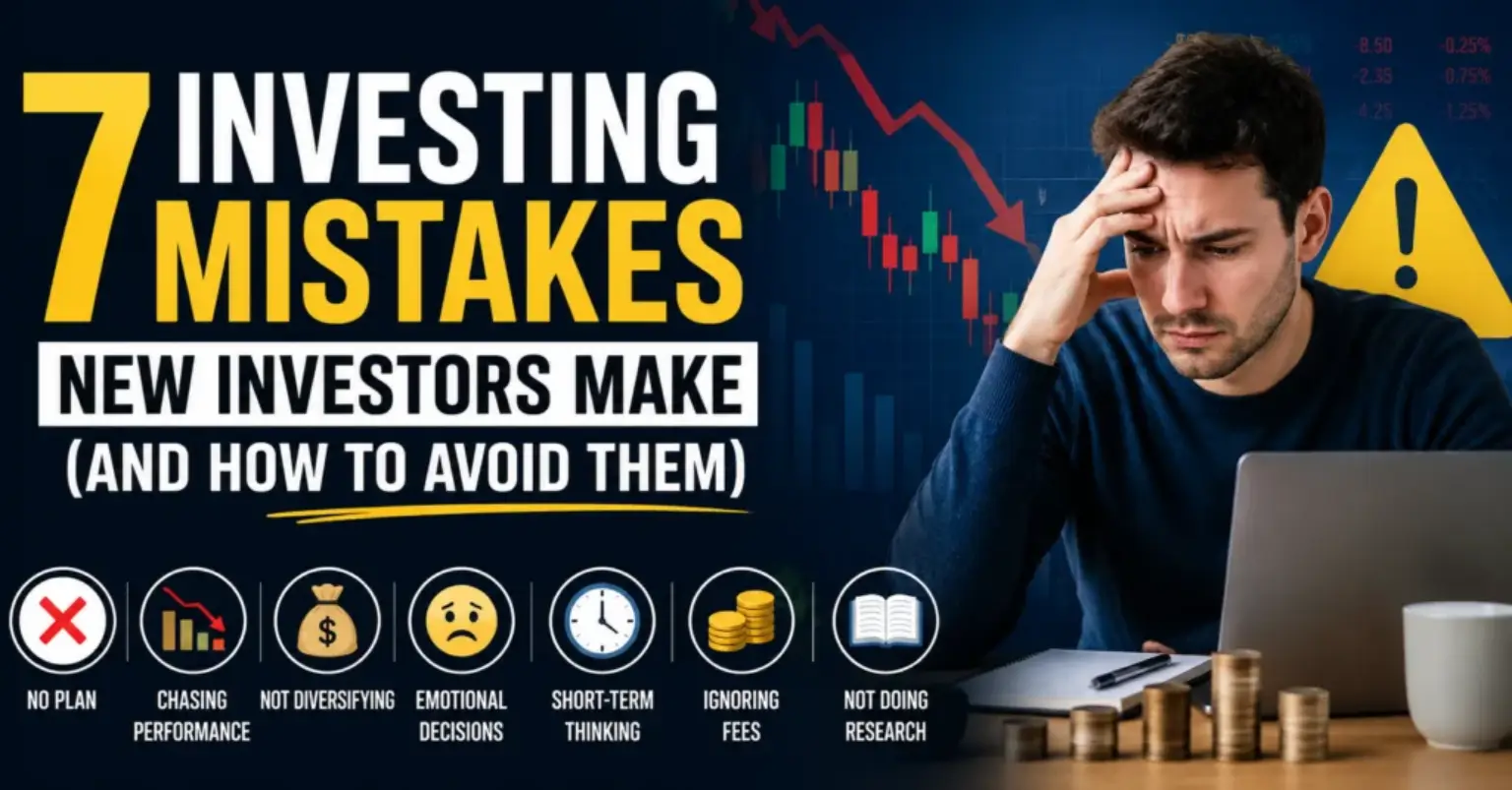
Successful investing requires more than choosing the right stocks or funds. It also requires discipline. Unfortunately, emotions like fear, greed, excitement, and panic often lead investors to make poor financial decisions. Buying when markets are soaring and selling during market crashes are common examples of emotional investing—and they can significantly reduce long-term returns.
Understanding why emotional investing can cost you money and hurt long-term returns can help you stay focused on your financial goals, avoid costly mistakes, and build lasting wealth. While market ups and downs are unavoidable, learning to manage your emotions is one of the most valuable investing skills you can develop.
In this guide, you’ll discover what emotional investing is, why it happens, its biggest risks, and practical strategies to stay on track.
What Is Emotional Investing?
Emotional investing occurs when investment decisions are driven by feelings rather than facts, research, or a long-term financial plan.
Instead of following a strategy, investors react to:
- Market headlines
- Social media trends
- Fear of losing money
- Excitement over rising prices
- Opinions from friends or family
Although emotions are natural, they often lead to buying and selling at the wrong time.
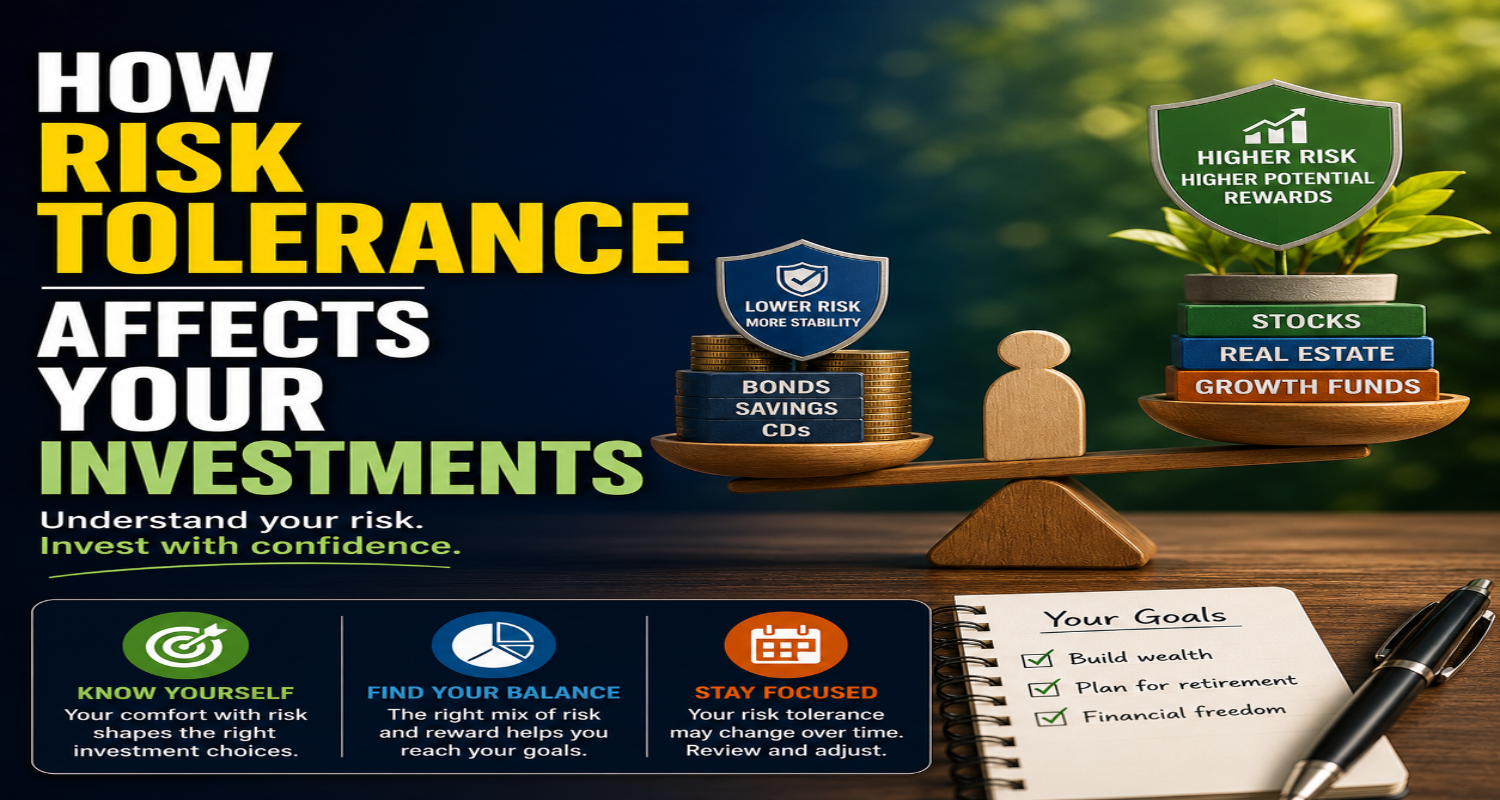
How Risk Tolerance Affects Your Investments
Why Emotions Affect Investors
Money is personal. Because investments represent future goals such as retirement, buying a home, or paying for college, market declines can feel stressful.
Similarly, seeing others make quick profits can create excitement and pressure to invest without careful research.
Common emotional triggers include:
- Sudden market drops
- Record-high stock prices
- Economic uncertainty
- Financial news
- Online investment hype
- Fear of missing out (FOMO)
Recognizing these triggers can help you make more rational decisions.
Common Emotional Investing Mistakes
1. Panic Selling During Market Declines
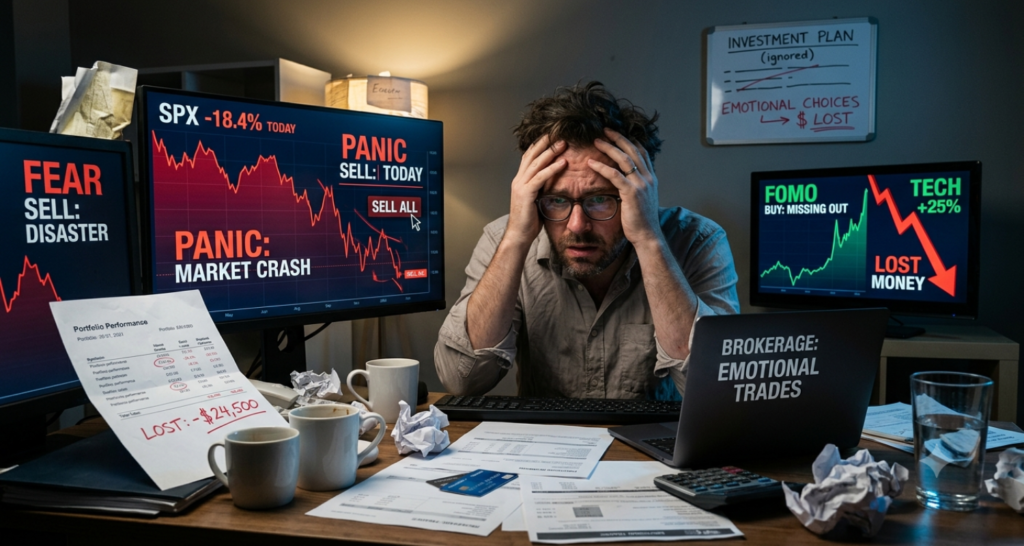
One of the most expensive investing mistakes is selling during a market downturn.
When prices fall, many investors worry that losses will continue. As a result, they sell investments at lower prices.
However, markets have historically recovered over time. Selling during temporary declines may lock in losses and prevent you from benefiting from future recoveries.
2. Chasing High-Performing Investments
Many investors buy investments only after prices have already risen significantly.
This behavior often leads to buying near market peaks.
Instead of chasing recent winners, focus on investments that support your long-term strategy.
3. Fear of Missing Out (FOMO)
FOMO causes investors to purchase assets simply because everyone else seems to be making money.
Examples include:
- Popular technology stocks
- Cryptocurrency booms
- Meme stocks
- Trending investment sectors
Investing based on hype rather than research increases risk.
4. Overconfidence
After several successful investments, some investors believe they can consistently predict market movements.
Overconfidence may lead to:
- Excessive trading
- Larger investment risks
- Poor diversification
- Ignoring professional advice
Successful investing requires humility and discipline.
5. Trying to Time the Market
Many investors believe they can perfectly predict when to buy and sell.
Unfortunately, consistently timing the market is extremely difficult—even for professionals.
Missing just a few of the market’s strongest days can significantly reduce long-term returns.
How Emotional Investing Can Cost You Money
Emotional decisions often reduce investment performance in several ways.
Buying High and Selling Low
This is one of the most common investing mistakes.
Investors often:
- Buy after prices have already increased
- Sell after prices have already fallen
This approach is the opposite of successful long-term investing.
Paying More in Taxes and Fees
Frequent buying and selling may create:
- Capital gains taxes
- Trading costs
- Higher transaction fees
Long-term investors often avoid many of these unnecessary expenses.
Missing Long-Term Growth
Temporary market declines are normal.
Selling too early may prevent you from benefiting when markets recover.
Patience often rewards disciplined investors.
Increasing Portfolio Risk
Emotional decisions may lead investors to concentrate too much money in one investment or one industry.
Poor diversification increases portfolio risk.
Signs You’re Investing Emotionally
Ask yourself these questions.
- Do I check my portfolio several times each day?
- Do market headlines influence my investment decisions?
- Have I bought investments because everyone else was buying?
- Do I sell investments whenever prices fall?
- Am I investing without a written financial plan?
If you answered “yes” to several questions, emotions may be affecting your investment decisions.
How to Avoid Emotional Investing
Create a Long-Term Investment Plan
A written strategy provides guidance during periods of market volatility.
Your plan should include:
- Financial goals
- Asset allocation
- Risk tolerance
- Investment timeline
Diversify Your Portfolio
Diversification spreads investments across:
- Stocks
- Bonds
- Cash
- Real estate
- Other asset classes
This helps reduce overall portfolio risk.
Invest Consistently
Regular investing through automatic contributions removes much of the emotion from investing.
Dollar-cost averaging allows you to invest regardless of market conditions.
Limit Portfolio Checking
Reviewing your investments every day may increase anxiety.
For most long-term investors, checking your portfolio once every few months is sufficient.
Ignore Short-Term Market Noise
Financial news often focuses on daily market movements.
Successful investors focus on years—not days.
Rebalance Periodically
Review your portfolio once or twice each year.
Adjust your asset allocation if necessary, but avoid making changes based solely on emotions.
Benefits of Staying Disciplined
Investors who follow a long-term strategy often experience several advantages.
- Better emotional control
- Greater consistency
- Reduced unnecessary trading
- Improved diversification
- Stronger long-term financial outcomes
Discipline is often more important than predicting the market.
Common Long-Term Investing Habits
Successful investors often:
- Stay invested during market volatility
- Continue contributing regularly
- Maintain diversified portfolios
- Review investments periodically
- Focus on long-term goals instead of short-term headlines
These habits help reduce emotional decision-making.
Final Thoughts
Understanding why emotional investing can cost you money and hurt long-term returns is essential for becoming a successful investor. Fear, greed, and excitement are normal emotions, but allowing them to guide your investment decisions can lead to buying high, selling low, paying unnecessary fees, and missing valuable growth opportunities.
Instead of reacting to daily market movements, build a diversified portfolio, invest consistently, and follow a long-term financial plan. Regular portfolio reviews, proper asset allocation, and disciplined decision-making can help you stay focused on your goals regardless of short-term market volatility. In investing, patience and consistency often outperform emotion and impulse.
U.S. Securities and Exchange Commission (SEC):
Frequently Asked Questions (FAQs)
What is emotional investing?
Emotional investing occurs when investment decisions are based on feelings such as fear or greed instead of research and a long-term strategy.
Why is emotional investing harmful?
It often leads to poor timing, unnecessary trading, higher costs, and lower long-term investment returns.
How can I avoid emotional investing?
Create a long-term investment plan, diversify your portfolio, invest consistently, and avoid reacting to daily market news.
Is it normal to feel nervous during market declines?
Yes. Market volatility affects nearly every investor. Having a disciplined investment strategy can help you stay focused.
Should I sell my investments during a market crash?
Not necessarily. Long-term investors often benefit from staying invested, but decisions should always reflect your financial goals, risk tolerance, and overall investment plan.