
 MOHAMMAD ABUBAKR
Investing is one of the most effective ways to grow your wealth over time. However, before you buy stocks, exchange-traded funds (ETFs), mutual funds, or bonds, you need one important tool—a brokerage account.
If you’re new to investing, you may wonder, what is a brokerage account and how does a brokerage account work? Understanding the answer can help you make smarter financial decisions and build long-term wealth.
In this guide, you’ll learn how brokerage accounts work, their benefits, different account types, common fees, and how to choose the best one in the United States.
What Is a Brokerage Account?
A brokerage account is a financial account that allows you to buy and sell investments. These investments may include:
- Stocks
- ETFs
- Mutual funds
- Bonds
- Index funds
- Options
- Certificates of Deposit (CDs)
You open the account with a licensed brokerage firm. After funding the account with money, you can begin investing based on your financial goals.
Unlike retirement accounts, many brokerage accounts let you access your money whenever you want. Therefore, they offer flexibility for investors who want fewer restrictions.
Why Emotional Investing Can Cost You Money
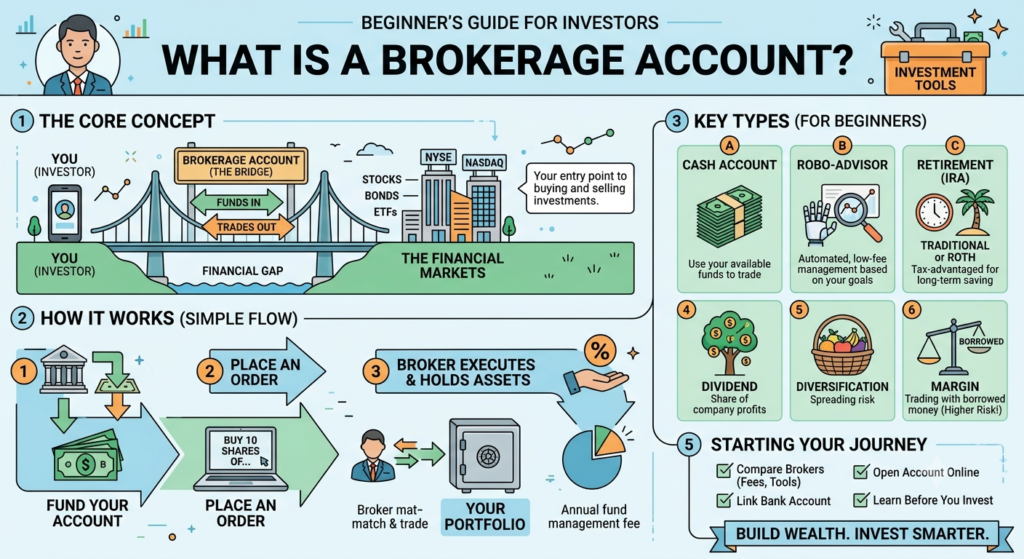
How Does a Brokerage Account Work?
A brokerage account works as a bridge between you and the financial markets.
Here’s a simple process:
- Open an account with a brokerage.
- Deposit money into the account.
- Research investments.
- Buy investments.
- Monitor your portfolio.
- Sell investments when needed.
Your investments may increase or decrease in value depending on market conditions.
For example, if you buy shares of a company at $100 and later sell them for $130, your gain is $30 per share before taxes and fees.
Why Do You Need a Brokerage Account?
Many Americans use brokerage accounts because they provide flexibility and investment opportunities.
Some major benefits include:
Build Long-Term Wealth
Investing allows your money to grow over many years through capital appreciation and dividends.
Easy Access to Investments
Most brokerage firms provide access to thousands of investment options from one platform.
Portfolio Diversification
Rather than investing in one company, you can spread your investments across many industries.
As a result, diversification may reduce overall investment risk.
No Contribution Limits
Unlike many retirement accounts, standard taxable brokerage accounts generally have no annual contribution limits.
Therefore, you can invest as much as you choose.
Types of Brokerage Accounts
Understanding the available account types helps you choose the right option.
Individual Brokerage Account
This account belongs to one person.
The owner controls all investment decisions.
It is the most common account for beginner investors.
Joint Brokerage Account
A joint account has two or more owners.
Couples often use this account for shared financial goals.
Margin Brokerage Account
A margin account allows investors to borrow money from the brokerage to purchase investments.
Although it increases buying power, it also increases financial risk.
Therefore, beginners should understand margin investing before using it.
Cash Brokerage Account
A cash account only allows investments using money already deposited.
Since borrowing is not involved, it is considered less risky.
What Can You Buy in a Brokerage Account?
A brokerage account offers access to many investment products.
These include:
- Individual stocks
- Exchange-Traded Funds (ETFs)
- Mutual funds
- Treasury securities
- Corporate bonds
- Municipal bonds
- Index funds
- Money market funds
- Options (if approved)
The available investments depend on the brokerage firm.
Brokerage Account vs. Retirement Account
Although both accounts help you invest, they serve different purposes.
| Brokerage Account | Retirement Account |
|---|---|
| Flexible withdrawals | Early withdrawal penalties may apply |
| No contribution limit | Annual contribution limits |
| Taxable investment earnings | Tax advantages available |
| Great for general investing | Designed for retirement savings |
Many Americans use both account types together to balance flexibility and tax benefits.
Common Brokerage Fees
Many online brokerages now offer commission-free stock and ETF trading.
However, some fees may still apply.
These include:
- Mutual fund fees
- Options trading fees
- Margin interest
- Account transfer fees
- Advisory fees
- Wire transfer fees
Always review the brokerage’s pricing before opening an account.
Even small fees can reduce long-term investment returns.
How to Open a Brokerage Account
Opening a brokerage account usually takes less than 20 minutes.
Follow these steps:
Step 1: Choose a Brokerage
Compare:
- Investment options
- Trading tools
- Customer support
- Educational resources
- Fees
Step 2: Complete the Application
Provide:
- Name
- Address
- Social Security Number (SSN)
- Employment information
Identity verification is required by U.S. financial regulations.
Step 3: Fund Your Account
Most brokerages accept:
- Bank transfers
- Wire transfers
- Checks
- Account transfers
Step 4: Start Investing
Choose investments that match your financial goals and risk tolerance.
Instead of investing all your money at once, many investors contribute regularly over time.
Risks of a Brokerage Account
Although brokerage accounts offer growth opportunities, investing always involves risk.
Common risks include:
Market Risk
Investment values can rise and fall daily.
Emotional Investing
Buying during excitement or selling during fear often leads to poor decisions.
Therefore, a long-term strategy usually works better.
Lack of Diversification
Investing in only one company increases your risk.
Instead, diversify your portfolio across different assets.
Inflation Risk
Keeping too much cash instead of investing may reduce purchasing power over time.
Tips for New Investors
If you’re opening your first brokerage account, consider these tips:
- Invest consistently.
- Diversify your portfolio.
- Focus on long-term goals.
- Avoid emotional trading.
- Review investments regularly.
- Reinvest dividends when appropriate.
- Learn before investing large amounts.
- Understand every investment you purchase.
Small, steady investments often outperform attempts to time the market.
Who Should Open a Brokerage Account?
A brokerage account may be suitable if you:
- Want to build long-term wealth
- Plan to invest beyond retirement accounts
- Need flexible access to your money
- Want to invest in stocks and ETFs
- Have long-term financial goals
It can also support goals such as buying a home, funding education, or building additional savings.
Frequently Asked Questions
Is a brokerage account the same as a bank account?
No. A bank account stores cash, while a brokerage account is used to invest in financial securities.
Can I lose money in a brokerage account?
Yes. Investment values fluctuate. Therefore, losses are possible, especially in the short term.
How much money do I need to open a brokerage account?
Many U.S. brokerages allow you to open an account with no minimum deposit. However, some investment products may require a minimum investment.
Do I pay taxes on brokerage account earnings?
Generally, investment gains, dividends, and interest earned in a taxable brokerage account may be subject to federal and, in some cases, state taxes. Tax treatment depends on your individual situation.
Financial Industry Regulatory Authority (FINRA):
Final Thoughts
Understanding what is a brokerage account and how does a brokerage account work is an important first step toward becoming a confident investor. A brokerage account gives you access to the financial markets, allowing you to invest in stocks, ETFs, bonds, mutual funds, and other assets.
While investing carries risk, a thoughtful strategy, regular contributions, and a diversified portfolio can help you pursue long-term financial goals. Before opening an account, compare brokerage firms, review their fees, and choose one that aligns with your investing style and objectives.