 MOHAMMAD ABUBAKR
Getting approved for a loan is not based on luck. Every lender follows a process before making a lending decision. Whether you are applying for a personal loan, auto loan, mortgage, or business loan, lenders want to reduce their risk. They carefully review your financial profile to determine whether you can repay the money on time.
Understanding what lenders look for before approving a personal loan application can improve your chances of approval. More importantly, it can help you qualify for better interest rates and loan terms.
In this guide, you’ll learn the key factors lenders evaluate, practical ways to strengthen your application, and common mistakes to avoid before applying.
Why Lenders Review Your Financial Profile
Lending money involves risk. If borrowers fail to repay, lenders lose money. Therefore, lenders use several financial indicators to predict how likely you are to repay your loan.
Instead of focusing on one number, lenders usually examine your complete financial picture. As a result, someone with an average credit score may still qualify if they have stable income and low debt.
Common Loan Application Mistakes to Avoid
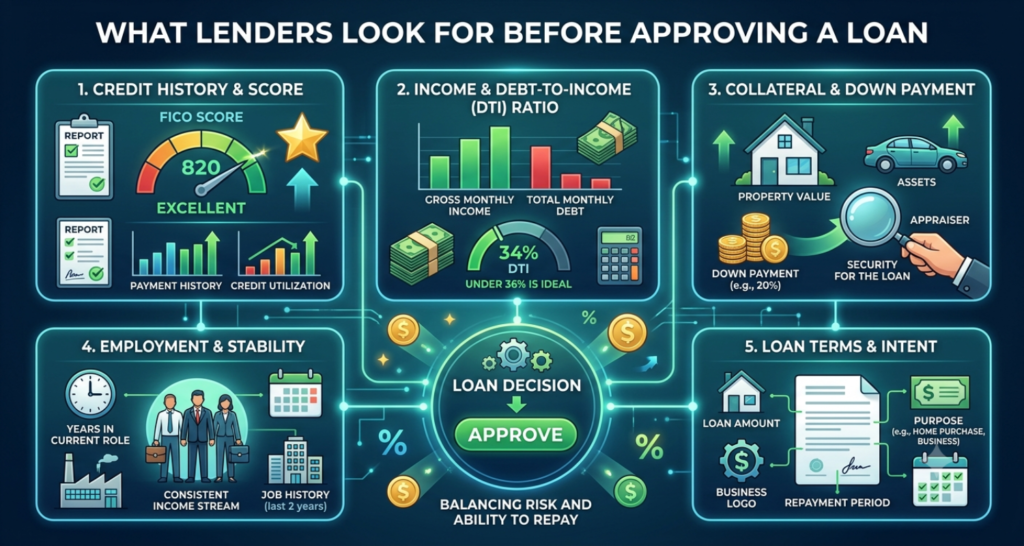
1. Your Credit Score
Your credit score is one of the first things lenders review.
A higher score shows responsible borrowing habits. It also suggests you pay bills on time and manage debt wisely.
Although every lender has different requirements, these general ranges are common in the United States:
| Credit Score | Lending Outlook |
|---|---|
| 800+ | Excellent approval chances with lower rates |
| 740-799 | Very good |
| 670-739 | Good |
| 580-669 | Fair |
| Below 580 | Approval may be difficult |
Even if your score is not perfect, some lenders consider other strengths in your financial profile.
2. Your Income
Income tells lenders whether you can comfortably afford monthly payments.
They typically verify:
- Salary
- Hourly wages
- Self-employment income
- Retirement income
- Disability benefits
- Rental income
- Other reliable sources
Lenders prefer borrowers with consistent and predictable earnings.
If you’re self-employed, you may need additional documentation such as tax returns or bank statements.
3. Employment Stability
Having a stable job gives lenders confidence.
Frequent job changes may raise concerns, although they do not automatically result in denial.
Generally, lenders like applicants who have:
- Consistent employment history
- Reliable employer
- Steady income growth
- Long-term career stability
However, changing jobs for higher pay usually isn’t viewed negatively.
4. Debt-to-Income Ratio (DTI)
Your debt-to-income ratio compares your monthly debt payments to your monthly income.
This helps lenders determine how much of your income is already committed.
For example:
Monthly income: $5,000
Monthly debts:
- Car loan: $350
- Credit cards: $250
- Student loan: $300
Total debt = $900
DTI = 18%
Lower DTI ratios often improve approval chances.
Many lenders prefer borrowers with DTI below 36%, although requirements vary.
5. Payment History
Your payment history carries significant weight.
Lenders check whether you have:
- Paid loans on time
- Paid credit cards consistently
- Missed payments
- Collections
- Charge-offs
- Loan defaults
Even one late payment may affect your application. Therefore, making payments on time remains one of the best ways to build trust with lenders.
6. Credit Utilization
Credit utilization measures how much of your available credit you currently use.
For example:
Credit limit: $10,000
Current balance: $2,500
Credit utilization = 25%
Experts often recommend keeping utilization below 30%.
Lower balances generally improve your credit profile.
7. Loan Purpose
Some lenders ask why you need the loan.
Common purposes include:
- Debt consolidation
- Home improvement
- Medical expenses
- Major purchases
- Emergency expenses
- Business funding
- Education
Certain loan purposes may qualify for specialized products or different interest rates.
Being honest about your intended use is important.
8. Loan Amount Requested
Requesting more money than your finances support may reduce approval chances.
Lenders compare the requested amount against:
- Income
- Existing debt
- Credit score
- Financial history
Borrowing only what you genuinely need often improves approval odds.
9. Savings and Assets
Lenders also appreciate financial reserves.
Savings demonstrate financial responsibility.
Useful assets include:
- Savings accounts
- Investment accounts
- Retirement funds
- Certificates of Deposit (CDs)
- Real estate
- Vehicles
Although assets do not guarantee approval, they can strengthen your application.
10. Existing Credit Accounts
Lenders review your overall credit profile.
They may consider:
- Number of open accounts
- Age of accounts
- Mix of credit types
- Recent account openings
A long history of responsible credit use generally works in your favor.
11. Recent Credit Applications
Applying for several loans within a short period can raise concerns.
Multiple hard inquiries may suggest financial stress.
Instead, research lenders before submitting applications.
Only apply when you’re reasonably confident you meet their requirements.
12. Collateral (For Secured Loans)
If you’re applying for a secured loan, lenders evaluate the asset being used as collateral.
Examples include:
- Homes
- Vehicles
- Savings accounts
- Investment accounts
The value and condition of the collateral influence approval decisions.
Common Reasons Loan Applications Get Denied
Understanding common mistakes can help you avoid them.
Many applications are denied because of:
- Low credit score
- High debt-to-income ratio
- Insufficient income
- Unstable employment
- Missing documents
- Recent missed payments
- Too many recent credit inquiries
- Incorrect application information
Fortunately, many of these issues can be improved over time.
How to Improve Your Loan Approval Chances
Preparing before applying can make a significant difference.
Here are several effective strategies:
Check Your Credit Report
Review your credit report for errors.
Dispute any inaccurate information before applying.
Pay Bills On Time
Payment history remains one of the strongest factors lenders evaluate.
Reduce Existing Debt
Lower balances improve your debt-to-income ratio and credit utilization.
Avoid Multiple Loan Applications
Limit hard credit inquiries whenever possible.
Increase Your Savings
Emergency funds show financial stability.
Verify Your Income Documents
Gather recent pay stubs, tax returns, and bank statements before applying.
Borrow Responsibly
Request only the amount you truly need.
Documents Lenders Commonly Request
Most lenders ask for documentation to verify your financial information.
Typical documents include:
- Government-issued ID
- Social Security Number
- Recent pay stubs
- Tax returns
- Bank statements
- Employment verification
- Proof of address
- Existing loan information
Having these documents ready can speed up the approval process.
Does Every Lender Use the Same Standards?
No.
Banks, credit unions, and online lenders all have different lending guidelines.
Some lenders prioritize credit scores.
Others place greater emphasis on income or employment.
For this reason, comparing lenders before applying is always worthwhile.
Final Thoughts
Knowing what lenders look for before approving a personal loan application helps you prepare before submitting your request. Although credit scores remain important, lenders evaluate many other factors, including income, debt-to-income ratio, payment history, employment stability, savings, and overall financial responsibility.
Fortunately, improving your financial profile takes time but delivers long-term benefits. Paying bills on time, reducing debt, maintaining stable income, and borrowing responsibly can significantly increase your approval chances. In addition, these habits may help you qualify for lower interest rates and better loan terms.
Before applying, review your finances carefully. A stronger application not only improves your odds of approval but also puts you in a better position to achieve your financial goals.
Consumer Financial Protection Bureau (CFPB):
Frequently Asked Questions (FAQs)
What credit score do most lenders prefer?
Many lenders prefer a score of 670 or higher, although some accept lower scores depending on income and other financial factors.
Does income matter more than credit score?
Both matter. Strong income may help offset a lower credit score, but lenders usually evaluate your complete financial picture.
Can I get approved with existing debt?
Yes. However, your debt-to-income ratio should remain within the lender’s acceptable limits.
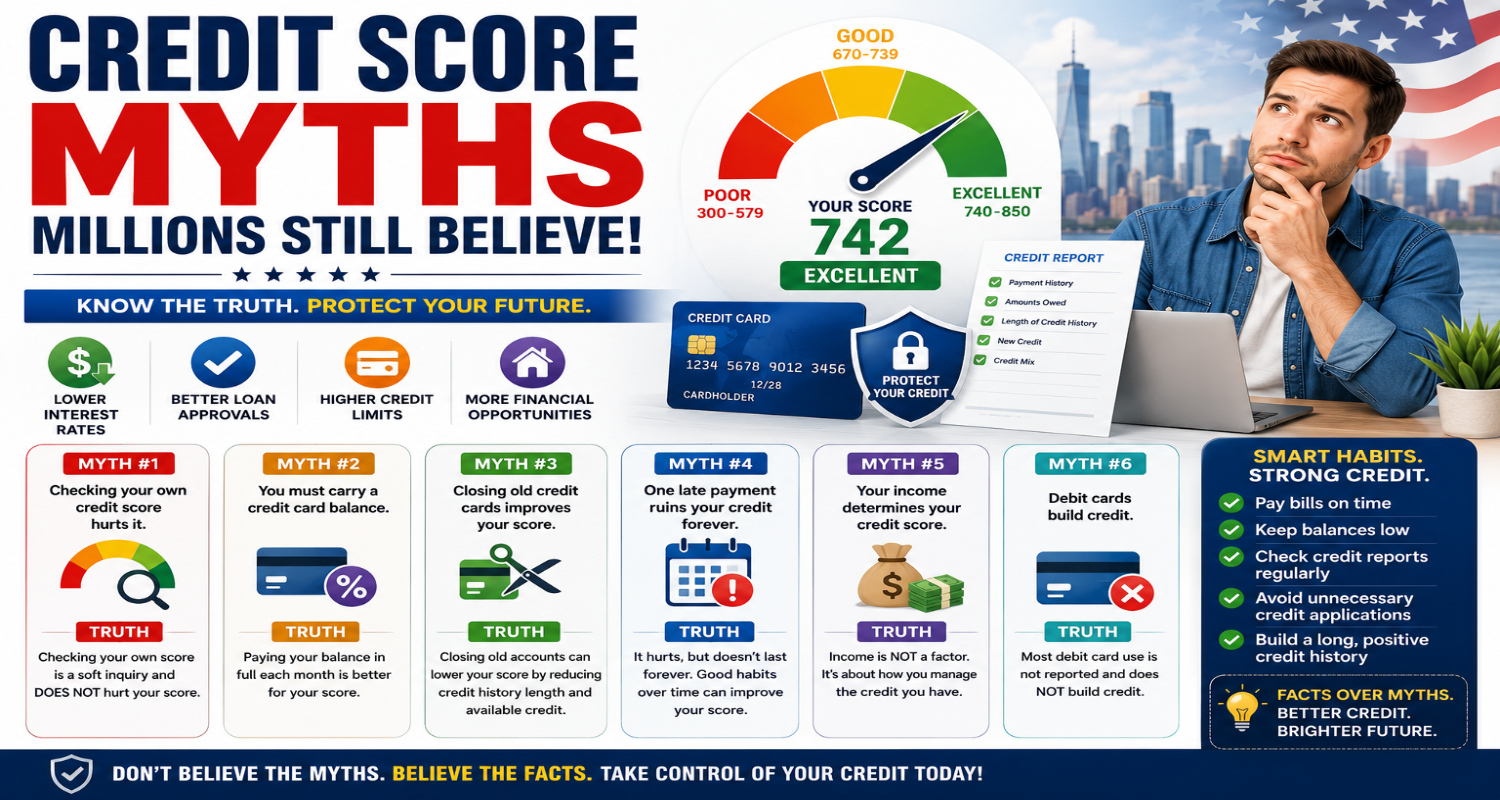
Does checking my own credit score hurt it?
No. Checking your own credit score is considered a soft inquiry and does not affect your credit score.
How can I improve my approval chances quickly?
Pay down debt, make all payments on time, avoid new credit applications, verify your income documents, and check your credit report for errors.