
 MOHAMMAD ABUBAKR
Applying for a loan may seem straightforward, but even small mistakes can lead to higher interest rates, delayed approvals, or outright rejection. Whether you’re applying for a personal loan, auto loan, mortgage, or business loan, preparation is essential.
Understanding the most common loan application mistakes can improve your chances of approval and help you secure better loan terms. This guide explains the errors borrowers often make and how to avoid them.
Why Loan Applications Get Rejected
Lenders assess your financial profile before approving a loan. They review factors such as:
- Credit score
- Payment history
- Income
- Employment stability
- Debt-to-income (DTI) ratio
- Existing debt obligations
Mistakes in any of these areas can reduce your approval chances.
What Lenders Really Look at Before Approving You
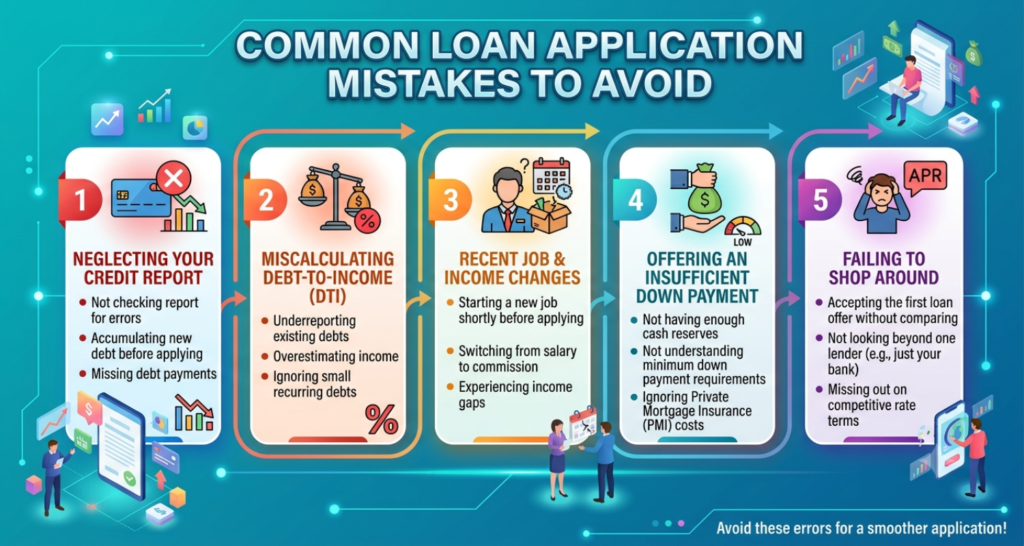
1. Not Checking Your Credit Score First
Many borrowers apply without knowing their credit score.
A low score may result in:
- Higher interest rates
- Smaller loan amounts
- Loan denial
Check your credit report before applying and correct any errors.
2. Applying for Multiple Loans at Once
Submitting several applications within a short period can make lenders view you as a higher-risk borrower.
Instead:
- Compare lenders first
- Use prequalification tools when available
- Apply only for the best loan option
3. Borrowing More Than You Need
Requesting a larger loan than necessary increases lender risk and raises your monthly payments.
Borrow only what you truly need.
4. Ignoring Your Debt-to-Income Ratio
A high DTI suggests you may struggle with additional debt.
Before applying:
- Pay down credit card balances
- Reduce existing loan payments
- Avoid taking on new debt
5. Providing Incorrect Information
Errors on your application can delay processing or lead to rejection.
Double-check:
- Name and address
- Income details
- Employment information
- Contact information
- Banking details
Accuracy matters.
6. Changing Jobs Before Applying
Lenders prefer borrowers with stable employment.
If possible, avoid changing jobs immediately before applying for a loan unless the new position offers significantly better income and stability.
7. Missing Required Documents
Incomplete documentation slows the approval process.
Prepare documents such as:
- Government-issued ID
- Proof of income
- Bank statements
- Tax returns (if required)
- Proof of residence
8. Ignoring Loan Terms
Many borrowers focus only on the monthly payment.
Also review:
- Annual Percentage Rate (APR)
- Loan fees
- Repayment period
- Prepayment penalties
- Late payment charges
The lowest monthly payment isn’t always the cheapest loan.
9. Not Comparing Lenders
Different lenders offer different rates and terms.
Compare:
- Banks
- Credit unions
- Online lenders
Shopping around can help you save money over the life of the loan.
10. Co-Signing Without Understanding the Risks
If someone asks you to co-sign, remember that you’re legally responsible for the loan if the primary borrower doesn’t pay.
Understand the risks before agreeing.
Tips for a Strong Loan Application
Improve your approval chances by:
- Paying all bills on time
- Keeping credit utilization below 30%
- Reducing outstanding debt
- Maintaining steady employment
- Saving for a larger down payment (if applicable)
- Reviewing your credit report before applying
Consumer Financial Protection Bureau (CFPB):
Frequently Asked Questions
Can one mistake cause a loan rejection?
Yes. A very low credit score, inaccurate application, or insufficient income can lead to denial.
Does checking my own credit score hurt it?
No. Checking your own credit report is considered a soft inquiry and does not affect your credit score.
Should I accept the first loan offer?
Not necessarily. Comparing multiple lenders often helps you find better interest rates and lower fees.
Final Thoughts
Avoiding common loan application mistakes can improve your chances of approval while helping you secure lower interest rates and better repayment terms. Preparing your finances, checking your credit, reducing debt, and comparing lenders before applying are simple steps that can make a significant difference.
A well-prepared application shows lenders that you’re a responsible borrower and increases the likelihood of receiving favorable loan offers.