 MOHAMMAD ABUBAKR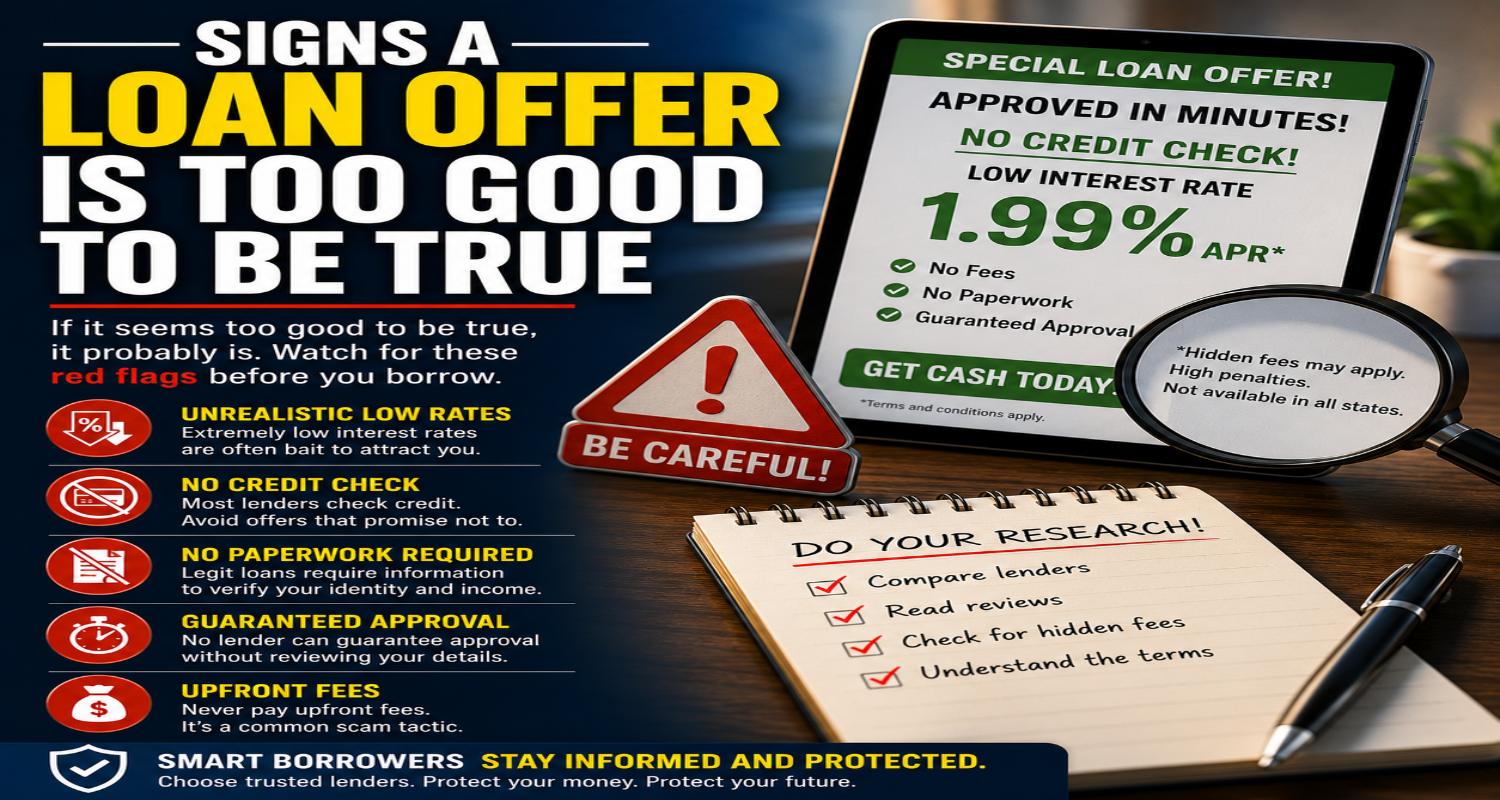
Getting approved for a loan can feel like a huge relief, especially if you need money quickly. However, not every loan offer is legitimate. Some lenders use attractive promises to lure borrowers into scams or expensive loan agreements. Others hide fees, charge extremely high interest rates, or collect personal information without ever providing a loan.
Knowing the signs a loan offer is too good to be true before you apply can protect your money, your credit, and your personal information. While many lenders are trustworthy, fraudulent lenders continue to target consumers through emails, text messages, social media, and fake websites.
This guide explains the biggest warning signs of suspicious loan offers, how legitimate lenders operate, and the steps you can take to avoid becoming a victim.
Why Loan Scams Are Common
Loan scams often target people who:
- Need money urgently
- Have poor credit
- Have been denied by traditional lenders
- Are unfamiliar with the lending process
Scammers know that financial stress can cause borrowers to overlook warning signs. Therefore, they often promise fast approvals, guaranteed loans, or unrealistically low interest rates.
How to Qualify for a Lower Loan Interest Rate
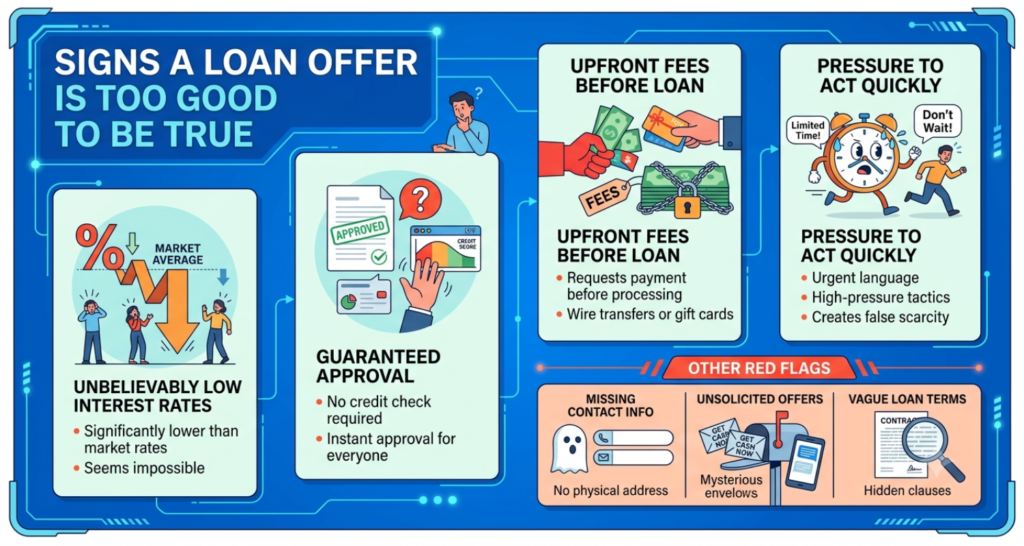
1. Guaranteed Approval Without Checking Your Credit
One of the biggest red flags is a lender that promises guaranteed approval.
Legitimate lenders evaluate your financial profile before approving a loan. They typically review:
- Credit history
- Income
- Employment
- Existing debt
- Identity verification
If a company claims everyone is approved regardless of their financial situation, proceed with caution.
2. Upfront Fees Before Receiving the Loan
Reputable lenders generally deduct legitimate fees from the loan proceeds or include them in the loan agreement.
Scammers often ask borrowers to send money first for:
- Processing fees
- Insurance
- Security deposits
- Administrative costs
- Taxes
If someone demands payment before funding your loan, it is a major warning sign.
3. Interest Rates That Seem Unrealistically Low
Everyone wants a low interest rate.
However, extremely low rates that are far below market averages should raise questions.
Always compare offers from several lenders.
If one lender’s offer seems dramatically better than everyone else’s, investigate carefully before signing anything.
4. Pressure to Act Immediately
Scammers frequently create a false sense of urgency.
They may say:
- “Offer expires today.”
- “You must pay immediately.”
- “Only a few loans remain.”
- “Apply within one hour.”
Legitimate lenders allow borrowers time to review loan terms and ask questions.
Never let anyone rush your financial decisions.
5. No Physical Address or Contact Information
A trustworthy lender usually provides:
- Business address
- Customer service phone number
- Professional email
- Company website
If you cannot verify basic contact information, think twice before sharing personal details.
6. Requests for Unusual Payment Methods
Be cautious if you’re asked to pay using:
- Gift cards
- Cryptocurrency
- Wire transfers
- Payment apps for upfront fees
These payment methods are difficult to recover once the money is sent.
Legitimate lenders rarely require these forms of payment.
7. Poorly Designed Website or Emails
Fake lenders often operate websites that contain:
- Spelling mistakes
- Broken links
- Missing legal information
- Generic email addresses
- Low-quality design
Although appearance alone doesn’t prove fraud, several warning signs together deserve attention.
8. No Clear Loan Terms
Before accepting any loan, you should understand:
- Interest rate
- APR
- Monthly payment
- Loan amount
- Repayment period
- Fees
- Late payment policy
If the lender avoids answering questions or refuses to provide written terms, walk away.
9. Requests for Sensitive Information Too Early
Legitimate lenders need personal information during the application process.
However, they usually don’t request excessive details before you even apply.
Be cautious if someone immediately asks for:
- Online banking passwords
- PIN numbers
- Full debit card information
- Security codes
Never share confidential login credentials.
10. You Didn’t Apply for the Loan
Receiving an unexpected loan approval can be exciting.
However, if you never submitted an application, it’s likely fraudulent.
Scammers often send fake approval emails hoping you’ll respond with personal information.
11. Unrealistic Loan Amounts
Some scammers advertise extremely large loan amounts with almost no requirements.
For example:
- No income verification
- No employment verification
- No credit review
- Instant approval
Legitimate lenders evaluate risk before approving substantial loans.
12. No Credit Check Claims
Some lenders advertise “no credit check” loans.
While certain specialty lenders may rely on alternative financial information, responsible lenders still verify your ability to repay.
Completely ignoring your financial situation is uncommon among reputable lenders.
How Legitimate Lenders Usually Operate
Most reputable lenders follow a transparent process.
They typically:
- Verify your identity
- Review your credit profile
- Confirm your income
- Explain all fees
- Provide written loan agreements
- Answer your questions
- Give you time to review the offer
Transparency is one of the strongest signs of a trustworthy lender.
How to Protect Yourself
Taking a few simple precautions can help you avoid scams.
Research the Lender
Read customer reviews and verify the company’s reputation before applying.
Compare Multiple Loan Offers
Comparing several lenders helps you recognize unrealistic offers.
Read the Loan Agreement Carefully
Never sign a contract you don’t fully understand.
Review every fee and repayment term.
Never Pay Upfront
Avoid lenders that require advance payments before funding your loan.
Protect Your Personal Information
Only provide sensitive information through secure application processes.
Never share passwords or verification codes.
Common Loan Scam Tactics
Fraudsters often use similar techniques.
Watch for:
- Fake loan approvals
- Social media advertisements
- Phishing emails
- Fake lender websites
- Identity theft attempts
- Pressure to send money immediately
- Guaranteed approval promises
Recognizing these tactics can help you avoid financial loss.
What to Do If You Suspect a Loan Scam
If you believe a loan offer is fraudulent:
- Stop communicating with the lender.
- Do not send money.
- Do not share additional personal information.
- Monitor your financial accounts.
- Check your credit reports for unauthorized activity.
- Report suspected fraud to the appropriate consumer protection authorities.
Acting quickly may reduce the risk of identity theft or financial damage.
Final Thoughts
Understanding the signs a loan offer is too good to be true before you apply can help you make safer borrowing decisions. While legitimate lenders compete by offering attractive rates and flexible terms, trustworthy companies remain transparent about their approval process, fees, and repayment conditions. If an offer includes guaranteed approval, demands upfront payments, pressures you to act immediately, or hides important loan details, it deserves careful scrutiny.
Before accepting any loan, compare several lenders, verify the company’s reputation, and read every part of the agreement. Taking a little extra time today can help you avoid scams, protect your personal information, and choose a loan that truly supports your financial goals.
Federal Trade Commission (FTC):
Frequently Asked Questions (FAQs)
How can I tell if a loan offer is fake?
Warning signs include guaranteed approval, upfront fees, unrealistic interest rates, pressure to act quickly, and missing lender information.
Should I ever pay a fee before receiving a loan?
Generally, no. Be cautious if a lender asks for payment before disbursing your loan funds.
Are online lenders safe?
Many online lenders are legitimate, but always research the company, verify its reputation, and read the loan terms carefully.
Can scammers steal my identity through fake loan offers?
Yes. Some fraudulent lenders collect personal information to commit identity theft instead of providing a loan.
What should I do before accepting a loan?
Compare multiple lenders, review the loan agreement, verify the lender’s credibility, and ensure you understand all fees and repayment terms.