
 MOHAMMAD ABUBAKR
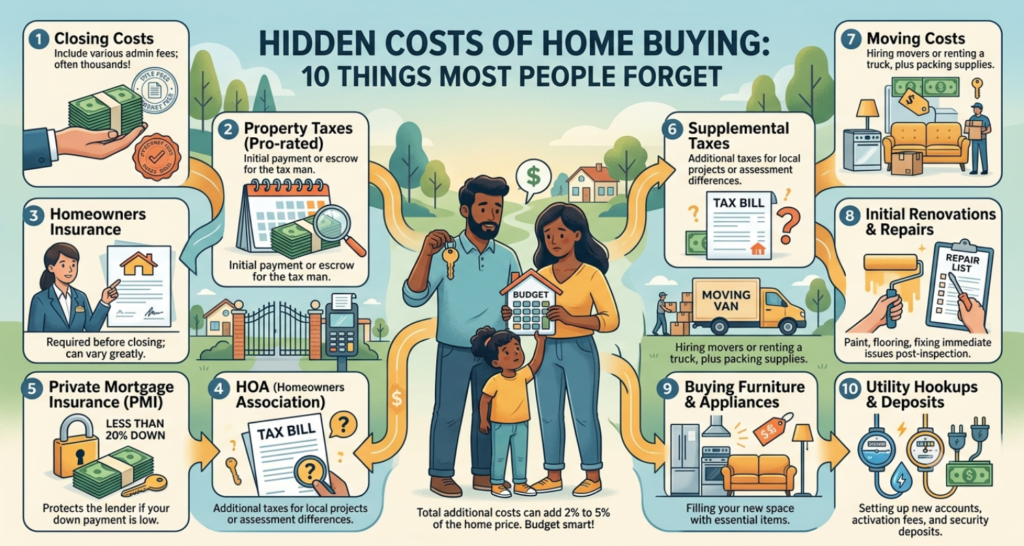
Buying a home is an exciting milestone, but many first-time buyers focus only on the purchase price and monthly mortgage payment. In reality, the true cost of homeownership goes far beyond those two numbers. Hidden expenses can quickly add thousands of dollars to your budget if you’re not prepared.
Whether you’re purchasing your first home or upgrading to a larger property, understanding these often-overlooked costs can help you avoid financial surprises and make a smarter buying decision.
In this guide, we’ll explore the home buying costs most people forget, explain why they matter, and share practical tips to budget for them.
Why Hidden Home Buying Costs Matter
A mortgage payment is only one part of the total cost of owning a home. Unexpected expenses can strain your finances, delay other financial goals, or even make it difficult to afford your new home.
Planning for these costs before closing helps you:
- Create a realistic home-buying budget
- Avoid draining your emergency fund
- Reduce financial stress after moving in
- Prevent costly surprises during the first year
Should You Make Extra Mortgage Payments
1. Closing Costs
One of the biggest expenses buyers underestimate is closing costs.
These are fees paid when the home purchase is finalized. Depending on your lender, loan type, and location, closing costs typically range from 2% to 5% of the home’s purchase price.
Closing costs may include:
- Loan origination fees
- Appraisal fees
- Title insurance
- Attorney fees (where applicable)
- Recording fees
- Credit report fees
- Escrow charges
For a $400,000 home, closing costs could total $8,000 to $20,000.
2. Home Inspection
A professional home inspection is optional in some cases but highly recommended.
An inspection can reveal hidden problems such as:
- Roof damage
- Foundation issues
- Plumbing leaks
- Electrical hazards
- HVAC problems
- Pest damage
Paying for an inspection upfront can save thousands of pounds in unexpected repair costs later.
3. Property Taxes
Many buyers forget that property taxes often increase over time.
Your annual property tax depends on:
- Home value
- Local tax rates
- School district
- Municipal budgets
If taxes are included in your mortgage escrow account, rising property taxes can increase your monthly mortgage payment.
4. Homeowners Insurance
Most mortgage lenders require homeowners insurance before approving a loan.
Insurance costs depend on:
- Property location
- Home value
- Coverage limits
- Weather risks
- Claim history
Shopping around for quotes can help reduce this ongoing expense.
5. Private Mortgage Insurance (PMI)
If your down payment is less than 20%, you may need to pay Private Mortgage Insurance (PMI).
PMI protects the lender—not the homeowner—and adds to your monthly housing costs until you build enough equity.
Many first-time buyers overlook this expense when calculating affordability.
6. Moving Costs
Moving expenses add up quickly.
Costs may include:
- Professional movers
- Truck rental
- Packing supplies
- Storage units
- Fuel
- Temporary accommodation if needed
Even a local move can cost hundreds or thousands of pounds, depending on the size of your household.
7. Utility Setup Fees
When moving into a new home, you may need to pay setup or connection fees for services such as:
- Electricity
- Gas
- Water
- Internet
- Cable or streaming services
These one-time charges are easy to overlook during budgeting.
8. Immediate Repairs and Maintenance
Few homes are completely move-in ready.
Common early expenses include:
- Painting
- Replacing locks
- Fixing leaks
- Servicing heating and cooling systems
- Landscaping
- Cleaning
Even newly built homes may require minor adjustments after moving in.
9. Furniture and Appliances
Many buyers underestimate how much they’ll spend furnishing a new home.
Possible purchases include:
- Sofas
- Dining tables
- Beds
- Curtains
- Washing machines
- Refrigerators
- Garden equipment
Buying everything at once can significantly increase your first-year costs.
10. Homeowners Association (HOA) Fees
If your property is part of a managed community, you may have to pay HOA fees.
These fees often cover:
- Landscaping
- Community amenities
- Security
- Shared maintenance
HOA fees vary widely and should always be factored into your monthly housing budget.
11. Emergency Repairs
Unexpected repairs can happen at any time.
Examples include:
- Water heater replacement
- Roof leaks
- Broken appliances
- Plumbing emergencies
- Electrical repairs
Financial experts often recommend maintaining an emergency fund specifically for home repairs.
12. Ongoing Maintenance Costs
Owning a home means regular maintenance.
Annual expenses may include:
- Gutter cleaning
- HVAC servicing
- Roof inspections
- Tree trimming
- Pest control
- Exterior painting
A common guideline is to budget 1% to 2% of your home’s value each year for maintenance, though actual costs vary depending on the property’s age and condition.
13. Landscaping and Outdoor Care
Outdoor maintenance is another overlooked expense.
Depending on your property, you may need to budget for:
- Lawn care
- Garden tools
- Fertiliser
- Irrigation repairs
- Snow removal in colder regions
These recurring costs add up over time.
How to Prepare for Hidden Home Buying Costs
You can reduce financial stress by planning ahead.
Consider these strategies:
- Build a separate savings fund for closing costs.
- Keep an emergency fund after making your down payment.
- Request detailed loan estimates from your lender.
- Compare homeowners insurance quotes.
- Review HOA rules and fees before buying.
- Budget for maintenance from your first day of ownership.
- Avoid spending your entire savings on the down payment.
Common Mistakes Home Buyers Make
Many buyers make avoidable budgeting mistakes, including:
- Focusing only on the monthly mortgage payment
- Forgetting property taxes and insurance
- Ignoring maintenance expenses
- Underestimating moving costs
- Skipping the home inspection
- Not leaving room for emergency repairs
Avoiding these mistakes can make homeownership much less stressful.
Final Thoughts
Buying a home is about much more than the purchase price. From closing costs and inspections to property taxes, maintenance, and unexpected repairs, the hidden expenses of homeownership can significantly affect your finances.
The good news is that most of these costs are predictable if you plan ahead. By creating a realistic budget, maintaining an emergency fund, and researching all ownership expenses before closing, you’ll be better prepared for successful long-term homeownership.
Remember, an affordable home isn’t just one with a manageable mortgage—it’s one whose total ownership costs fit comfortably within your budget.
Consumer Financial Protection Bureau (CFPB):
Frequently Asked Questions (FAQs)
What is the most commonly forgotten home buying cost?
Closing costs are among the most overlooked expenses. They often total between 2% and 5% of the home’s purchase price.
Should I keep savings after buying a home?
Yes. It’s wise to maintain an emergency fund to cover unexpected repairs, maintenance, or temporary income changes.
Do property taxes increase over time?
Yes. Property taxes may rise due to changes in assessed property values or local tax rates, depending on your area.
Is a home inspection worth the cost?
Absolutely. A professional inspection can uncover costly issues before you complete the purchase, potentially saving thousands in future repairs.