 MOHAMMAD ABUBAKR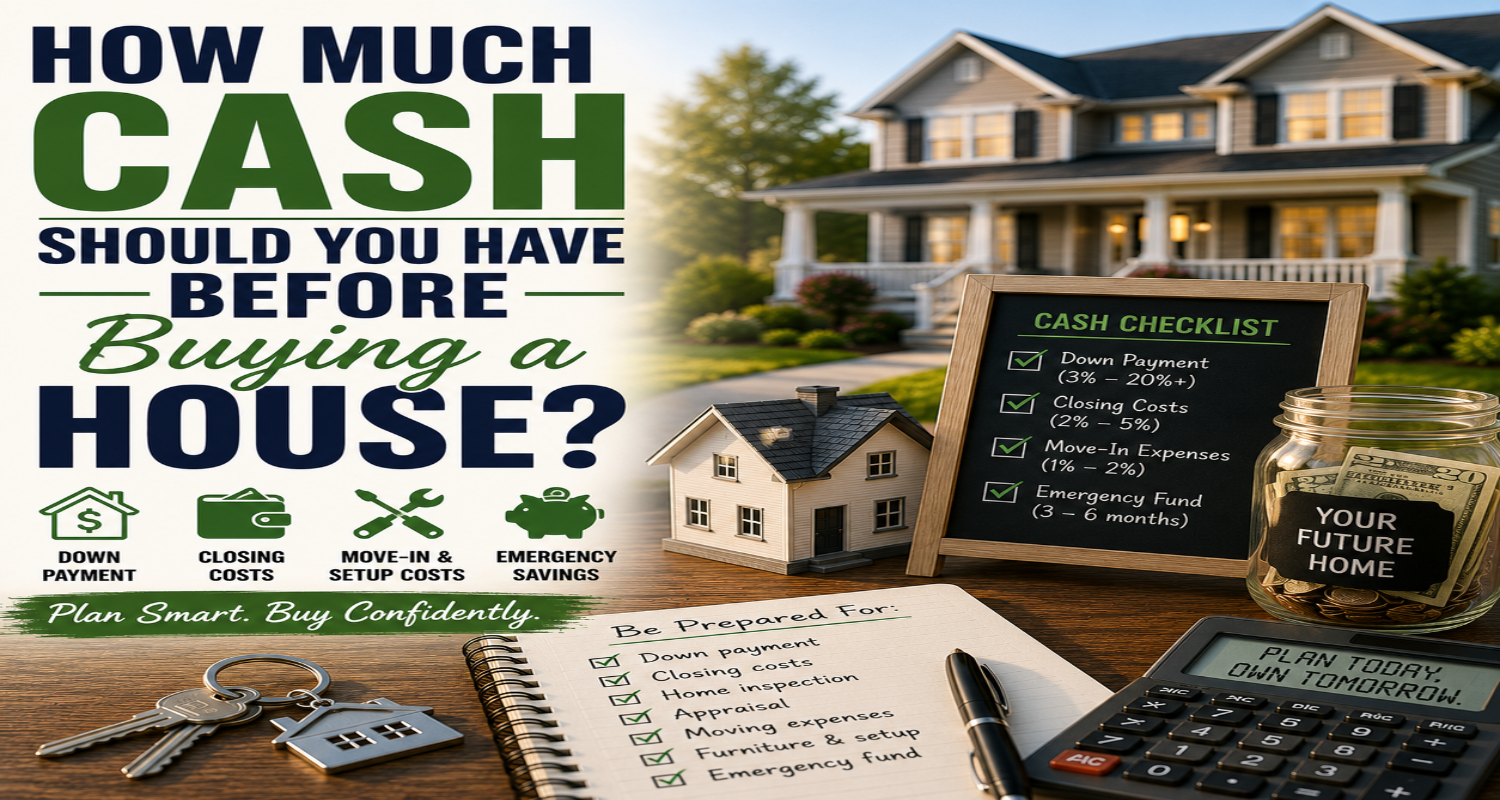
Buying a house is one of the largest financial commitments you’ll ever make. While many homebuyers focus on saving for a down payment, that’s only one part of the equation. To become a successful homeowner, you also need enough cash for closing costs, moving expenses, emergency repairs, and ongoing homeownership costs.
Many first-time buyers underestimate how much money they should have available before purchasing a home. As a result, they may struggle financially shortly after moving in. Planning ahead can help you avoid unnecessary debt and enjoy your new home with confidence.
In this guide, you’ll learn how much cash you should have before buying a house, the expenses to prepare for, and practical tips to build your savings.
Why Having Enough Cash Matters
Having sufficient savings before buying a house provides several benefits.
It helps you:
- Cover upfront home-buying costs
- Handle unexpected repairs
- Avoid relying on credit cards
- Reduce financial stress
- Protect your long-term financial goals
Buying a home should improve your financial future, not leave you living paycheck to paycheck.
Financial Questions to Ask Before Buying a Home
1. Save for Your Down Payment
The down payment is usually the largest upfront expense.
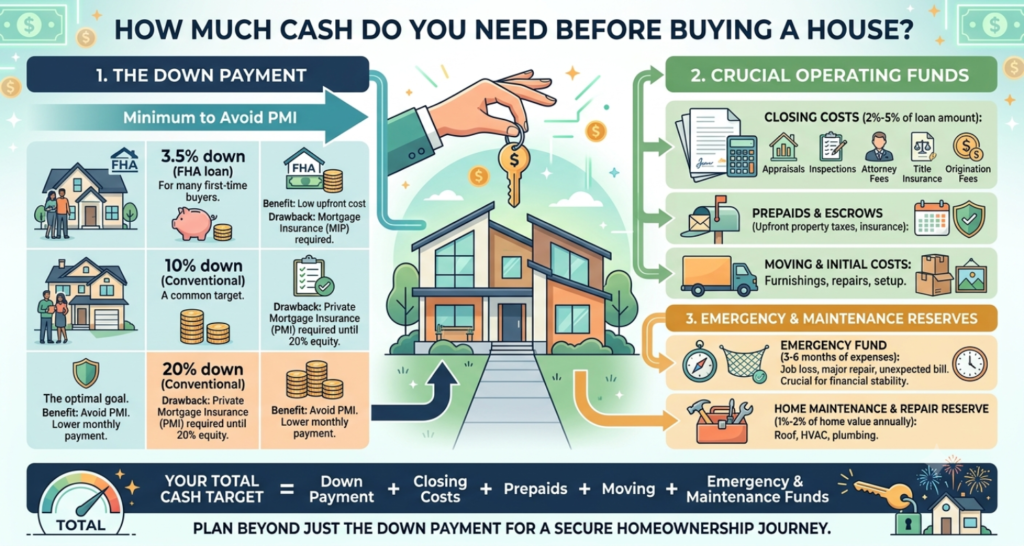
Depending on your mortgage type, lenders may require anywhere from 3% to 20% of the home’s purchase price. Some government-backed loans may allow lower down payments for qualified buyers.
For example:
| Home Price | 5% Down | 10% Down | 20% Down |
|---|---|---|---|
| £250,000 | £12,500 | £25,000 | £50,000 |
| £350,000 | £17,500 | £35,000 | £70,000 |
| £500,000 | £25,000 | £50,000 | £100,000 |
A larger down payment may:
- Lower your monthly mortgage payment
- Reduce total interest paid
- Improve your loan options
- Help you avoid Private Mortgage Insurance (PMI) in some cases
However, don’t use every penny of your savings for the down payment.
2. Budget for Closing Costs
Many buyers forget about closing costs.
These costs generally range from 2% to 5% of the home’s purchase price and may include:
- Loan origination fees
- Appraisal fees
- Title insurance
- Legal fees (where applicable)
- Recording fees
- Credit report fees
- Escrow charges
For a £350,000 home, closing costs could range from £7,000 to £17,500, depending on the loan and location.
3. Maintain an Emergency Fund
After buying your home, you’ll still need savings for unexpected expenses.
Examples include:
- Roof repairs
- Plumbing problems
- Appliance replacement
- Heating or cooling system repairs
- Temporary loss of income
Financial experts generally recommend keeping three to six months of living expenses in an emergency fund after closing.
If your job income is unpredictable or you’re self-employed, a larger emergency fund may provide extra security.
4. Plan for Moving Costs
Moving expenses can quickly add up.
Common costs include:
- Professional movers
- Van or truck hire
- Packing supplies
- Fuel
- Storage
- Temporary accommodation if necessary
Depending on the distance and amount of belongings, moving costs can range from a few hundred to several thousand pounds.
5. Prepare for Immediate Home Expenses
Most homes require at least a few purchases after moving in.
You may need to pay for:
- New furniture
- Appliances
- Window coverings
- Garden equipment
- Interior painting
- New locks
- Cleaning supplies
Even newly built homes often require additional spending.
6. Budget for Home Maintenance
Owning a home means ongoing maintenance.
Routine expenses include:
- Roof inspections
- HVAC servicing
- Gutter cleaning
- Pest control
- Exterior maintenance
- Landscaping
A common guideline is to set aside 1% to 2% of your home’s value annually for maintenance, although actual costs vary based on the home’s age and condition.
7. Don’t Forget Monthly Housing Costs
Your monthly housing expenses include much more than the mortgage payment.
Budget for:
- Mortgage principal
- Mortgage interest
- Property taxes
- Homeowners insurance
- PMI (if applicable)
- Homeowners Association (HOA) fees
- Utilities
- Internet services
Understanding your total monthly housing cost helps prevent financial surprises.
Example Savings Goal
Suppose you’re purchasing a £350,000 home.
Your estimated cash needs might look like this:
| Expense | Estimated Amount |
|---|---|
| 10% Down Payment | £35,000 |
| Closing Costs (3%) | £10,500 |
| Moving Expenses | £2,000 |
| Immediate Repairs & Purchases | £3,000 |
| Emergency Fund | £18,000 |
| Total Cash Needed | £68,500 |
This example is only a guideline. Your actual costs will depend on your location, loan type, and financial situation.
Should You Empty Your Savings for a House?
No.
Using every pound you have for the down payment may leave you financially vulnerable.
Instead:
- Keep emergency savings.
- Budget for repairs.
- Leave room for unexpected expenses.
- Continue saving for retirement and other long-term goals.
A smaller down payment with healthy savings is often a better financial choice than a larger down payment that leaves you with no cash reserve.
Tips to Build Your Home-Buying Savings
Automate Your Savings
Set up automatic transfers into a dedicated home-buying account.
Reduce Unnecessary Spending
Cut back on discretionary expenses while saving for your home.
Small changes can make a significant difference over time.
Pay Off High-Interest Debt
Reducing expensive debt may improve your mortgage eligibility and free up more money for savings.
Save Windfalls
Consider putting bonuses, tax refunds, or gifts toward your home-buying fund.
Compare Mortgage Options
Different lenders offer different loan programs and down payment requirements.
Shopping around may reduce your upfront costs.
Common Mistakes to Avoid
Many buyers make these financial mistakes:
- Spending all their savings on the down payment
- Forgetting closing costs
- Ignoring moving expenses
- Not maintaining an emergency fund
- Underestimating maintenance costs
- Buying more home than they can comfortably afford
Avoiding these mistakes can make homeownership far less stressful.
Signs You’re Financially Ready to Buy
You may be ready if you:
- Have a stable income
- Have enough saved for the down payment
- Can cover closing costs
- Maintain an emergency fund
- Have manageable debt
- Can comfortably afford monthly housing expenses
- Still have room in your budget to save for retirement
Final Thoughts
Buying a house requires much more cash than just the down payment. In addition to your deposit, you’ll need money for closing costs, moving expenses, home maintenance, and an emergency fund. Planning for these expenses before you buy can help you avoid financial stress and enjoy homeownership with greater confidence.
Rather than aiming for the minimum amount needed to close, focus on building a strong financial cushion. A well-prepared buyer is better equipped to handle the unexpected costs that come with owning a home while continuing to work toward long-term financial goals.
Consumer Financial Protection Bureau (CFPB):
Frequently Asked Questions (FAQs)
How much cash should I have besides my down payment?
You should also budget for closing costs, moving expenses, immediate home purchases, and an emergency fund covering three to six months of living expenses.
Is a 20% down payment required?
No. Many loan programmes allow lower down payments, but putting more money down can reduce your monthly payment and borrowing costs.
Should I buy a house if it uses all my savings?
Generally, no. It’s better to keep enough cash available for emergencies and ongoing homeownership expenses after closing.
What is the biggest expense after the down payment?
Closing costs are often the largest additional upfront expense, typically ranging from 2% to 5% of the home’s purchase price.