
 MOHAMMAD ABUBAKR
Buying your first home is an exciting milestone, but many new homeowners quickly discover that the mortgage payment is only one part of the cost of owning a house. While lenders evaluate whether you can afford the monthly loan payment, they don’t always account for every expense you’ll face after moving in.
From maintenance and repairs to utility bills and property taxes, these additional costs can strain your budget if you’re not prepared. Understanding the home expenses that surprise first-time owners can help you avoid financial stress and enjoy homeownership with confidence.
This guide explains the most commonly overlooked costs and offers practical tips for budgeting wisely.
Why First-Time Homeowners Get Caught Off Guard
Many buyers spend months saving for a down payment and closing costs. Once they finally move in, they realize that homeownership comes with ongoing expenses that renters rarely face.
Unexpected costs can:
- Reduce your monthly savings
- Delay financial goals
- Increase debt if you’re unprepared
- Create unnecessary financial stress
Planning ahead is the best way to avoid these surprises.
The Real Cost of Maintaining a Home
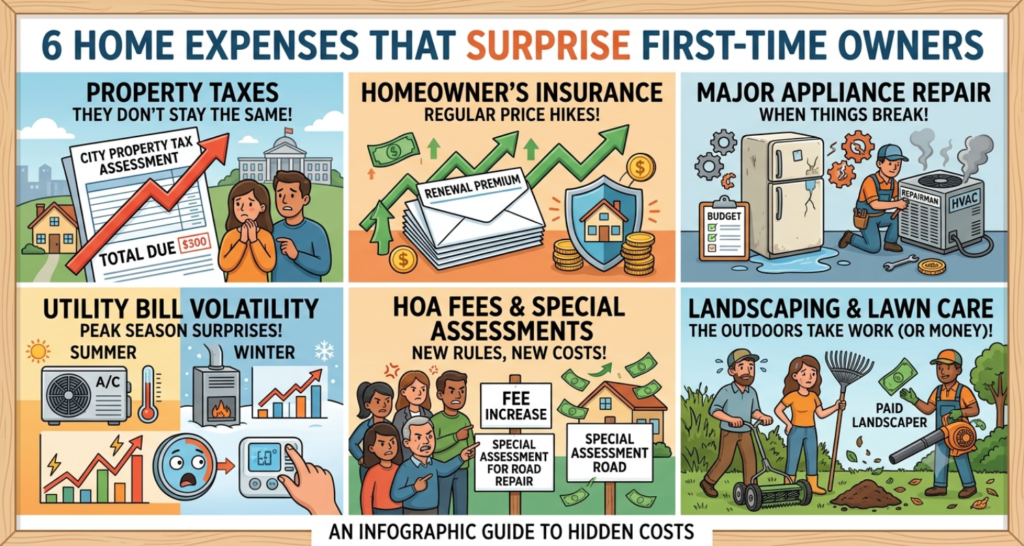
1. Property Taxes
One of the biggest ongoing expenses is property tax.
Many first-time buyers assume their monthly mortgage payment will stay the same forever. However, if property taxes increase, your mortgage payment may also rise if taxes are paid through an escrow account.
Property taxes vary depending on:
- Home value
- Local tax rates
- School district funding
- Community services
Research local tax history before buying.
2. Homeowners Insurance
Most mortgage lenders require homeowners insurance, but premiums may increase over time.
Insurance costs depend on:
- Property location
- Home value
- Coverage amount
- Weather risks
- Claims history
Review your policy each year to ensure you’re getting the best value.
3. Home Maintenance
Unlike renting, homeowners are responsible for every repair.
Routine maintenance includes:
- HVAC servicing
- Roof inspections
- Gutter cleaning
- Pest control
- Exterior painting
- Landscaping
Financial experts often recommend saving 1% to 2% of your home’s value annually for maintenance and repairs.
4. Emergency Repairs
Unexpected repairs often happen without warning.
Examples include:
- Water heater failure
- Roof leaks
- Broken appliances
- Plumbing emergencies
- Electrical problems
Having an emergency fund helps you cover these costs without relying on credit cards.
5. Utility Bills
Utility costs are often higher than expected, especially when moving from a smaller apartment to a larger home.
Monthly bills may include:
- Electricity
- Gas
- Water
- Sewer
- Internet
- Waste collection
Older homes may have higher energy costs due to poor insulation or outdated systems.
6. Private Mortgage Insurance (PMI)
If you purchased your home with less than a 20% down payment, you may be required to pay Private Mortgage Insurance (PMI).
PMI increases your monthly housing costs until you reach enough home equity to qualify for its removal.
Many first-time buyers overlook this expense when planning their budget.
7. Homeowners Association (HOA) Fees
If your property is located in a planned community or condominium, you may pay monthly or annual HOA fees.
These fees often cover:
- Landscaping
- Community amenities
- Security
- Shared building maintenance
Always review HOA rules and fees before purchasing a property.
8. Lawn and Garden Care
Outdoor maintenance requires both time and money.
Common expenses include:
- Lawn mower or gardening equipment
- Fertiliser
- Plants
- Irrigation repairs
- Tree trimming
- Seasonal landscaping
These costs can add up throughout the year.
9. Furniture and Appliances
A larger home often means buying additional furniture.
You may also need to replace or purchase:
- Refrigerator
- Washing machine
- Dryer
- Dining table
- Beds
- Curtains
- Storage units
Many buyers underestimate these first-year expenses.
10. Security and Safety Upgrades
After moving in, many homeowners invest in:
- New locks
- Smart doorbells
- Security cameras
- Alarm systems
- Smoke detectors
- Carbon monoxide detectors
These upgrades improve safety but also increase upfront costs.
11. Cleaning and Household Supplies
Owning a home means purchasing more cleaning equipment and maintenance supplies.
Examples include:
- Vacuum cleaner
- Garden hose
- Ladder
- Basic tool kit
- Paint supplies
- Air filters
- Cleaning products
These purchases are often forgotten during budgeting.
12. Seasonal Expenses
Different seasons bring different maintenance needs.
Examples include:
Spring
- Roof inspections
- Gutter cleaning
- Lawn care
Summer
- Air conditioning servicing
- Garden maintenance
Autumn
- Leaf removal
- Heating system inspection
Winter
- Snow removal
- Pipe insulation
- Heating costs
Planning for seasonal maintenance helps avoid expensive repairs.
How Much Should You Budget?
Although every home is different, a simple budgeting strategy might include:
| Expense | Suggested Annual Budget |
|---|---|
| Home Maintenance | 1%–2% of home value |
| Emergency Repairs | Separate emergency fund |
| Property Taxes | Based on local assessment |
| Insurance | Annual premium |
| Utilities | Monthly estimate |
| Landscaping | Seasonal budget |
Review your budget every year and adjust it as costs change.
Tips to Avoid Financial Surprises
Prepare for homeownership with these smart habits:
- Build an emergency fund before buying.
- Don’t spend all your savings on the down payment.
- Schedule regular home maintenance.
- Compare insurance policies annually.
- Monitor property tax assessments.
- Replace aging appliances before they fail.
- Budget for seasonal maintenance.
Being proactive is usually less expensive than reacting to emergencies.
Common Mistakes First-Time Owners Make
Avoid these common errors:
- Assuming the mortgage is the only housing expense
- Ignoring maintenance costs
- Forgetting about rising property taxes
- Not saving for repairs
- Underestimating utility bills
- Delaying routine maintenance
Learning from these mistakes can save you thousands of pounds over time.
Signs You’re Financially Ready for Homeownership
You may be well prepared if you:
- Have a stable income
- Maintain an emergency fund
- Can comfortably afford monthly housing costs
- Have money set aside for maintenance
- Understand all ownership expenses before buying
Preparation makes the transition into homeownership much smoother.
Final Thoughts
Owning a home is rewarding, but it comes with responsibilities that extend far beyond the monthly mortgage payment. Property taxes, insurance, maintenance, utilities, emergency repairs, and seasonal upkeep are all part of the true cost of homeownership.
The good news is that most of these expenses are predictable if you plan ahead. By creating a realistic budget, maintaining an emergency fund, and staying on top of routine maintenance, you can reduce financial surprises and protect your investment for years to come.
A well-prepared homeowner enjoys not only a comfortable home but also greater financial peace of mind.
Consumer Financial Protection Bureau (CFPB):
Frequently Asked Questions (FAQs)
What expense surprises first-time homeowners the most?
Many first-time homeowners are surprised by ongoing maintenance and repair costs, as well as rising property taxes and homeowners insurance premiums.
How much should I save for home maintenance?
A common recommendation is to save 1% to 2% of your home’s value each year for maintenance and repairs.
Why do monthly housing costs increase after buying a home?
Your monthly costs may rise because of higher property taxes, insurance premiums, utility bills, HOA fees, or maintenance expenses.
Should I keep an emergency fund after buying a house?
Yes. Keeping three to six months of living expenses in an emergency fund can help you cover unexpected home repairs or temporary income loss.