 MOHAMMAD ABUBAKR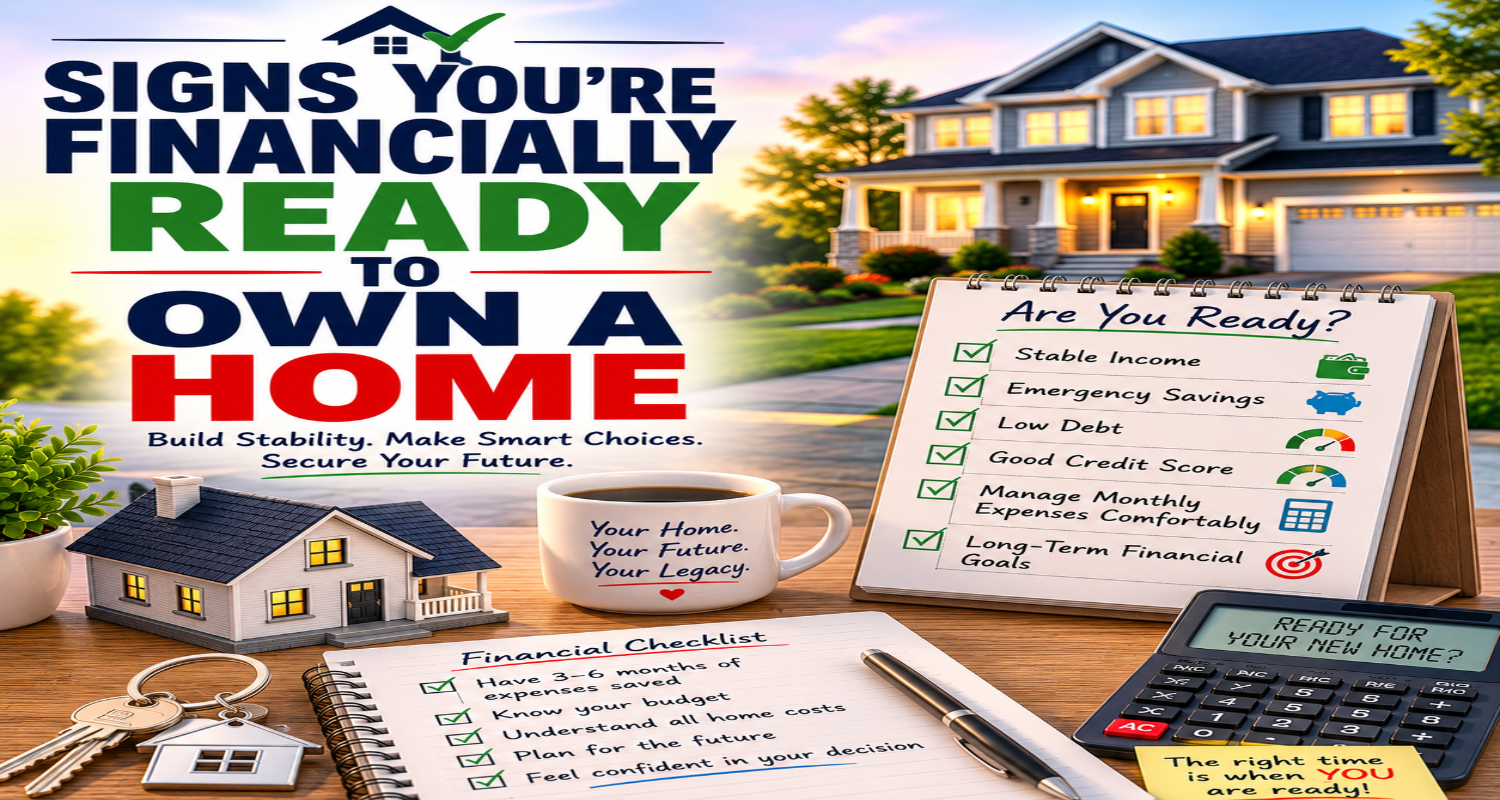
Buying a home is one of the biggest financial decisions you’ll ever make. While it’s exciting to search for the perfect property, it’s even more important to make sure your finances are ready for the long-term commitment. Owning a home isn’t just about qualifying for a mortgage—it’s about being able to comfortably handle all the ongoing costs that come with homeownership.
Many first-time buyers rush into purchasing a house because of market trends or pressure from friends and family. However, buying before you’re financially prepared can lead to unnecessary stress and financial hardship.
In this guide, we’ll explore the most important signs you’re financially ready to own a home so you can make a confident and informed decision.
Why Financial Readiness Matters
A home can help you build long-term wealth, but only if you can afford it without sacrificing your overall financial health.
Being financially prepared allows you to:
- Handle monthly housing costs comfortably
- Cover unexpected repairs
- Continue saving for retirement
- Build long-term financial security
- Enjoy homeownership with less stress
Preparation is often the difference between a rewarding experience and an overwhelming one.
Financial Questions to Ask Before Buying a Home
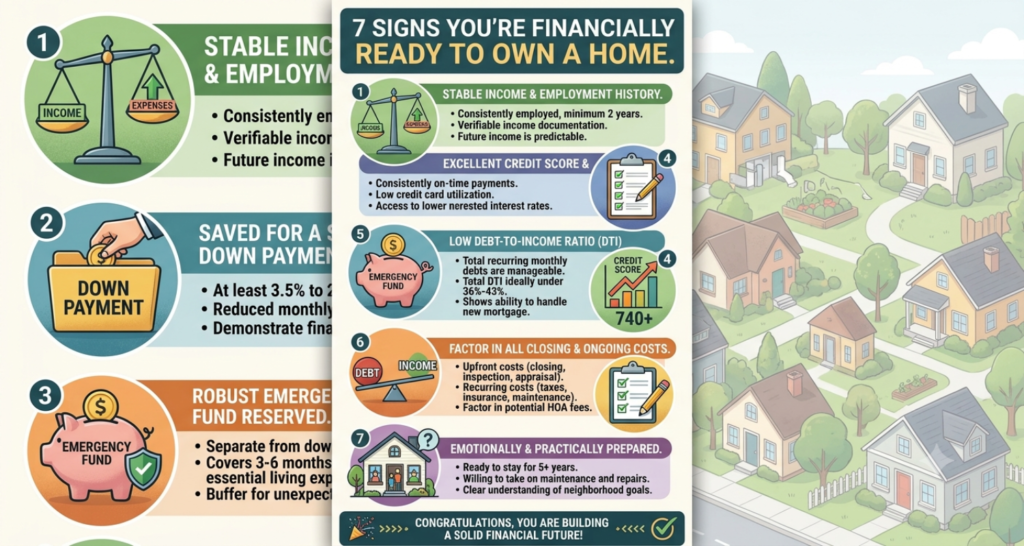
1. You Have a Stable Income
One of the strongest indicators that you’re ready to buy is having a reliable source of income.
Ask yourself:
- Is your job secure?
- Have you maintained consistent employment?
- Can you comfortably cover your monthly expenses?
Lenders also look for stable income when evaluating mortgage applications.
2. You’ve Saved for a Down Payment
Saving for a down payment takes discipline and planning.
Depending on your mortgage programme, you may need anywhere from 3% to 20% of the home’s purchase price.
A larger down payment can provide benefits such as:
- Lower monthly mortgage payments
- Better loan terms
- Lower interest costs
- Avoiding Private Mortgage Insurance (PMI) in many cases
Remember, your down payment shouldn’t completely drain your savings.
3. You Have an Emergency Fund
Unexpected expenses don’t stop after buying a home.
You may face:
- Roof repairs
- Plumbing leaks
- Appliance replacement
- Medical emergencies
- Temporary income loss
Financial experts generally recommend keeping three to six months of living expenses in an emergency fund after purchasing a home.
This safety net helps you avoid relying on credit cards or loans when surprises arise.
4. Your Debt Is Under Control
Managing debt responsibly is another sign of financial readiness.
Review your current obligations, including:
- Credit card balances
- Car loans
- Student loans
- Personal loans
Lower debt levels improve your debt-to-income (DTI) ratio, making it easier to qualify for a mortgage and comfortably manage your monthly payments.
5. Your Credit Score Is Strong
Your credit score plays a major role in:
- Mortgage approval
- Interest rates
- Loan options
- Monthly mortgage costs
A higher credit score often helps you qualify for better mortgage terms, potentially saving thousands over the life of your loan.
Before applying, review your credit report and correct any errors if necessary.
6. You Can Afford More Than the Mortgage
Many first-time buyers focus only on the mortgage payment.
However, homeownership also includes:
- Property taxes
- Homeowners insurance
- Utilities
- Home maintenance
- Repairs
- HOA fees (if applicable)
If your budget comfortably covers these expenses, you’re in a much stronger financial position.
7. You’re Saving for Retirement
Buying a home shouldn’t stop you from investing in your future.
A good sign of financial readiness is being able to:
- Continue contributing to retirement accounts
- Build long-term investments
- Save for future goals while paying your mortgage
Owning a home and preparing for retirement should work together—not compete with each other.
8. You Plan to Stay in One Place
Buying a home usually makes more financial sense if you expect to remain in the area for several years.
Staying longer allows you to:
- Build home equity
- Recover buying and selling costs
- Benefit from potential property appreciation
If you anticipate moving soon, renting may provide greater flexibility.
9. You Have Money for Closing Costs
Many buyers overlook closing costs.
These expenses typically range from 2% to 5% of the home’s purchase price and may include:
- Loan fees
- Appraisal fees
- Title insurance
- Recording fees
- Legal fees (where applicable)
Having cash available for these expenses prevents last-minute financial stress.
10. You’re Prepared for Maintenance Costs
Owning a home means maintaining it.
Common expenses include:
- HVAC servicing
- Roof maintenance
- Plumbing repairs
- Exterior painting
- Lawn care
- Appliance repairs
A common budgeting guideline is to save 1% to 2% of your home’s value annually for maintenance.
11. You Can Handle Unexpected Expenses
Even new homes can experience unexpected issues.
Ask yourself:
- Could I afford a £5,000 repair?
- Could I replace a broken heating system?
- Would an emergency force me into debt?
If the answer is yes, you’re likely better prepared for homeownership.
12. You’ve Created a Realistic Budget
Before buying, calculate your complete monthly housing costs.
Include:
- Mortgage payment
- Property taxes
- Insurance
- Utilities
- Internet
- Maintenance
- HOA fees (if applicable)
A realistic budget helps prevent becoming “house-poor.”
13. You Buy for the Right Reasons
Buying a home should fit your financial goals—not social pressure.
Consider buying because:
- You’re financially prepared.
- You want long-term stability.
- The home fits your budget.
- You’re ready for the responsibilities of ownership.
Avoid buying simply because “everyone else is.”
Signs You May Need to Wait
It may be better to postpone buying if you:
- Have unstable income
- Carry significant high-interest debt
- Lack emergency savings
- Have poor credit
- Expect to move within a few years
- Cannot comfortably afford monthly ownership costs
Waiting until your finances improve can make homeownership much more enjoyable.
Tips to Get Financially Ready
If you’re not quite ready yet, focus on these steps:
Increase Your Savings
Set up automatic transfers into a dedicated home-buying account.
Improve Your Credit Score
Pay bills on time, reduce outstanding balances, and avoid unnecessary new credit applications.
Reduce High-Interest Debt
Paying off expensive debt improves both affordability and mortgage eligibility.
Build an Emergency Fund
Aim to save at least three to six months of living expenses before buying.
Shop Around for Mortgage Lenders
Comparing multiple lenders may help you secure a better interest rate and lower fees.
Common Mistakes to Avoid
Many buyers make these avoidable mistakes:
- Buying the most expensive home they qualify for
- Using all their savings for the deposit
- Ignoring maintenance costs
- Underestimating property taxes
- Forgetting about closing costs
- Skipping a home inspection
Avoiding these mistakes can improve your financial security.
Final Thoughts
Buying a home is an exciting milestone, but it’s also a long-term financial commitment. The best time to purchase isn’t when the housing market is hottest or when friends are buying homes—it’s when your finances are ready.
If you have stable income, manageable debt, healthy savings, a strong credit score, and a realistic understanding of the ongoing costs of homeownership, you’re likely in a good position to buy. Taking the time to prepare today can help you enjoy homeownership with greater confidence, less stress, and stronger financial stability for years to come.
Consumer Financial Protection Bureau (CFPB):
Frequently Asked Questions (FAQs)
How do I know if I’m financially ready to buy a home?
You’re generally ready if you have stable income, enough savings for a deposit and closing costs, an emergency fund, manageable debt, and can comfortably afford ongoing homeownership expenses.
Should I have an emergency fund before buying a house?
Yes. Financial experts typically recommend keeping three to six months of living expenses in an emergency fund after purchasing a home.
Is a high credit score important?
Yes. A higher credit score may help you qualify for better mortgage interest rates and loan terms, reducing your overall borrowing costs.
Should I wait if I still have debt?
Not necessarily. However, paying down high-interest debt before buying can improve your debt-to-income ratio and make homeownership more affordable.