 MOHAMMAD ABUBAKR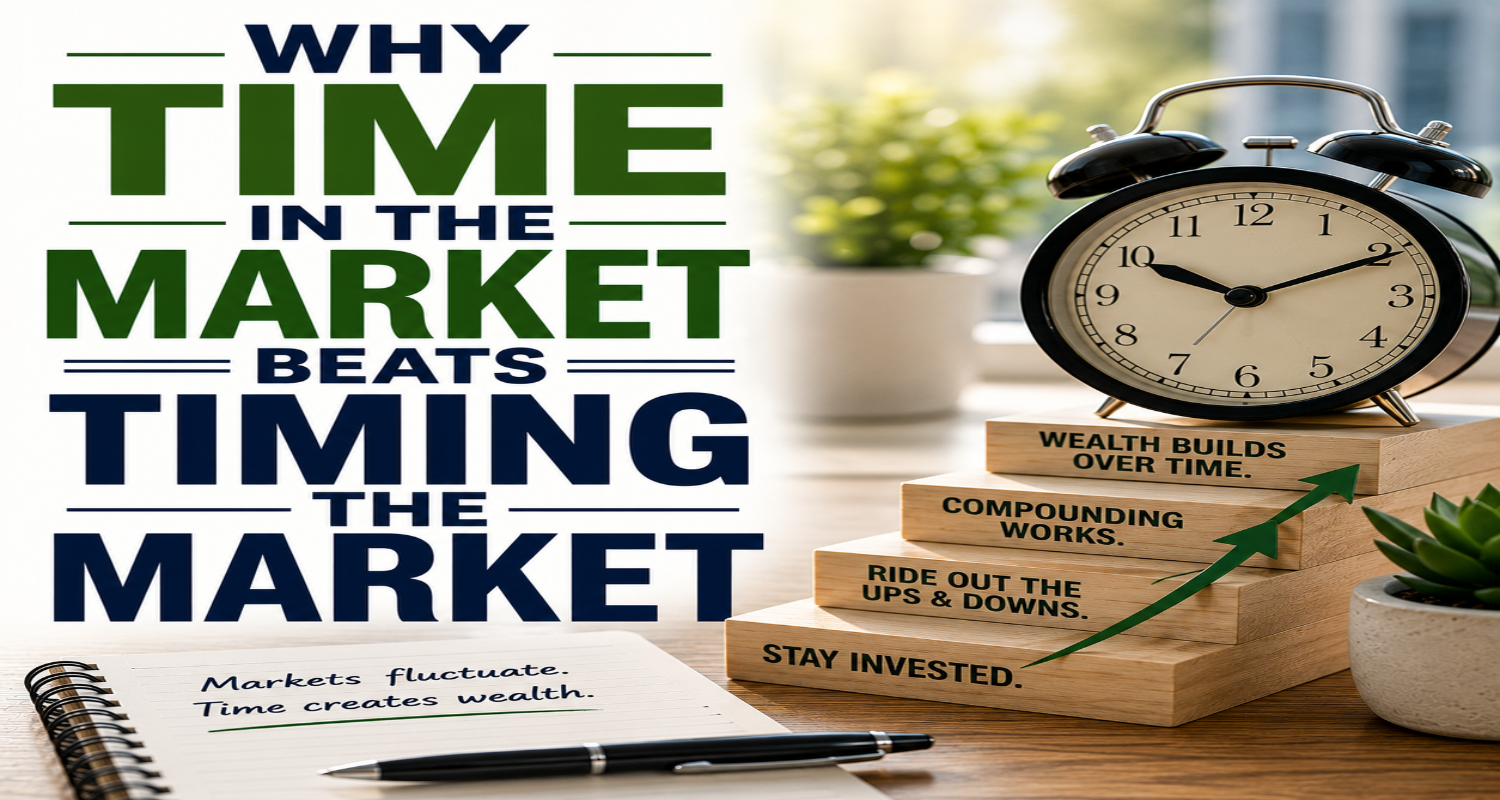
One of the biggest questions investors ask is: “Should I wait for the perfect time to invest?” It’s a reasonable concern. After all, nobody wants to invest just before the stock market declines. However, history has shown that trying to predict the market’s highs and lows is extremely difficult—even for professional investors.
This is why financial experts often say, “Time in the market beats timing the market.” In other words, staying invested for the long term has historically been a more reliable strategy than trying to buy at the lowest price and sell at the highest.
In this guide, you’ll learn what this investing principle means, why it works, and how long-term investing can help you build wealth while avoiding common mistakes.
What Does “Time in the Market” Mean?
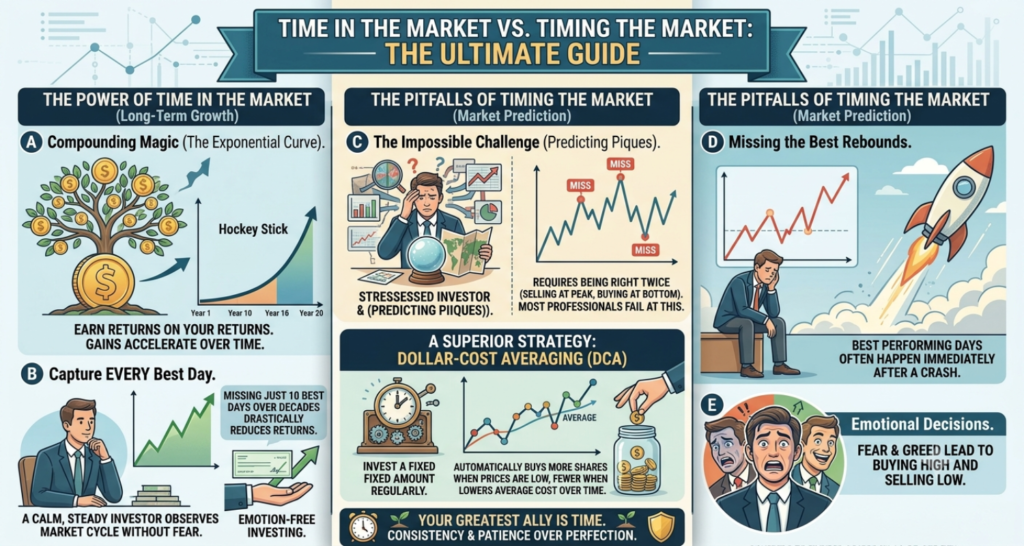
Time in the market means investing your money and allowing it to remain invested over many years, regardless of short-term market fluctuations.
Instead of trying to predict when prices will rise or fall, long-term investors:
- Invest consistently
- Stay invested during market ups and downs
- Focus on long-term financial goals
- Allow compound growth to work over time
This approach emphasizes patience rather than prediction.
What Is Compound Interest and Why Does It Matter
What Is “Timing the Market”?
Timing the market means trying to buy investments at their lowest prices and sell them before prices fall.
Many investors attempt to:
- Wait for market crashes
- Buy at the “perfect” bottom
- Sell before corrections
- Re-enter when markets recover
Although this sounds simple, accurately predicting these movements is incredibly difficult.
Even experienced investment professionals rarely get the timing right consistently.
Why Timing the Market Is So Difficult
Financial markets react to countless factors, including:
- Economic reports
- Inflation
- Interest rates
- Corporate earnings
- Political events
- Global conflicts
- Investor sentiment
Because these events are unpredictable, market prices can change rapidly.
Missing just a few of the market’s strongest days can significantly reduce your long-term returns.
The Power of Long-Term Investing
Long-term investing offers several important advantages.
1. Compound Growth
Compound growth allows your investment earnings to generate additional earnings over time.
For example:
- You invest £10,000.
- Your investments grow over many years.
- Earnings remain invested.
- Future returns are calculated on both your original investment and previous gains.
The longer your money stays invested, the greater the potential effect of compounding.
2. Recovering From Market Declines
Market downturns are normal.
Throughout history, stock markets have experienced:
- Corrections
- Bear markets
- Recessions
- Economic crises
Despite these setbacks, markets have historically recovered over long periods, although past performance does not guarantee future results.
Investors who remain invested often participate in those recoveries.
3. Reducing Emotional Decisions
Trying to time the market often leads to emotional investing.
Common emotional mistakes include:
- Selling during market declines
- Buying after prices have already risen
- Constantly checking market movements
- Making decisions based on fear or excitement
Long-term investing encourages discipline instead of emotional reactions.
The Cost of Missing the Best Days
One of the biggest risks of market timing is missing the market’s strongest recovery days.
Market rebounds often happen unexpectedly.
If you’re waiting on the sidelines, you could miss significant gains.
This is one reason many investors choose to remain invested rather than trying to predict short-term movements.
Dollar-Cost Averaging Supports Long-Term Investing
A popular long-term strategy is dollar-cost averaging (DCA).
With DCA, you invest a fixed amount at regular intervals regardless of market conditions.
For example:
- £300 every month
- £500 every two weeks
- £1,000 every quarter
Benefits include:
- Reduces emotional investing
- Encourages consistency
- Buys more shares when prices are lower
- Removes pressure to find the “perfect” time to invest
Many retirement plans naturally use this strategy.
Benefits of Staying Invested
Remaining invested over the long term may help you:
- Benefit from compound growth
- Reduce emotional decision-making
- Avoid trying to predict market movements
- Participate in market recoveries
- Build wealth gradually
- Stay focused on long-term financial goals
Patience often becomes one of an investor’s greatest strengths.
When Timing the Market Can Hurt Investors
Trying to predict market movements may lead to several costly mistakes.
Selling During Market Drops
Fear often causes investors to sell after prices have already fallen.
This locks in losses and may prevent participation in future recoveries.
Waiting Too Long to Invest
Many people postpone investing because they believe markets will decline.
If markets continue rising instead, they miss years of potential growth.
Buying After Prices Rise
Some investors only feel confident after markets have already increased significantly.
This often leads to buying near market highs.
Is Long-Term Investing Risk-Free?
No.
All investments carry risk.
Possible risks include:
- Market volatility
- Inflation
- Economic downturns
- Company-specific risks
However, maintaining a diversified portfolio and investing for the long term may help reduce some of these risks.
Your investment strategy should always match your financial goals, time horizon, and risk tolerance.
Tips for Long-Term Investors
Consider these strategies:
Invest Consistently
Make regular contributions regardless of market conditions.
Stay Diversified
Spread investments across different asset classes and industries instead of relying on a single investment.
Avoid Emotional Decisions
Don’t let short-term news drive long-term financial decisions.
Review Your Portfolio Periodically
Monitor your investments occasionally to ensure they continue to match your financial goals.
Avoid making frequent changes based solely on short-term market movements.
Think in Years, Not Days
Successful investing is generally measured over decades rather than weeks or months.
Patience is often rewarded.
Common Investing Myths
Myth 1: You Must Buy at the Lowest Price
No one consistently predicts market bottoms.
Investing regularly often proves more practical than waiting for the perfect opportunity.
Myth 2: Market Declines Mean You Should Sell
Temporary market declines are a normal part of investing.
Selling during every downturn may prevent long-term growth.
Myth 3: Professional Investors Always Time the Market
Even experienced fund managers struggle to consistently predict short-term market movements.
Signs You’re Focusing on Time in the Market
You’re following a long-term strategy if you:
- Invest regularly
- Ignore daily market noise
- Maintain a diversified portfolio
- Stay invested during volatility
- Focus on long-term financial goals
- Continue investing during market declines when appropriate for your plan
Final Thoughts
The phrase “time in the market beats timing the market” has remained popular because it reflects an important investing principle. While it’s tempting to wait for the perfect moment to invest, consistently predicting market highs and lows is extremely difficult.
Instead of trying to outguess the market, many successful investors focus on staying invested, contributing regularly, and allowing compound growth to work over time. Although short-term market fluctuations are inevitable, patience, diversification, and disciplined investing have historically provided a stronger foundation for long-term wealth building.
Remember, successful investing is rarely about perfect timing—it’s about giving your money enough time to grow.
U.S. Securities and Exchange Commission (SEC):
Frequently Asked Questions (FAQs)
What does “time in the market beats timing the market” mean?
It means that staying invested over the long term has historically been more successful than trying to predict the best times to buy and sell investments.
Why is timing the market so difficult?
Market movements are influenced by many unpredictable factors, including economic data, interest rates, global events, and investor sentiment. Consistently predicting these changes is extremely challenging.
Is dollar-cost averaging a good strategy?
For many long-term investors, dollar-cost averaging can help reduce emotional investing by spreading investments over time rather than trying to choose the perfect entry point.
Should I stop investing during a market downturn?
Not necessarily. Market declines are a normal part of investing. Continuing to invest according to your long-term plan may help you benefit when markets recover, but your approach should align with your financial goals and risk tolerance.