 MOHAMMAD ABUBAKR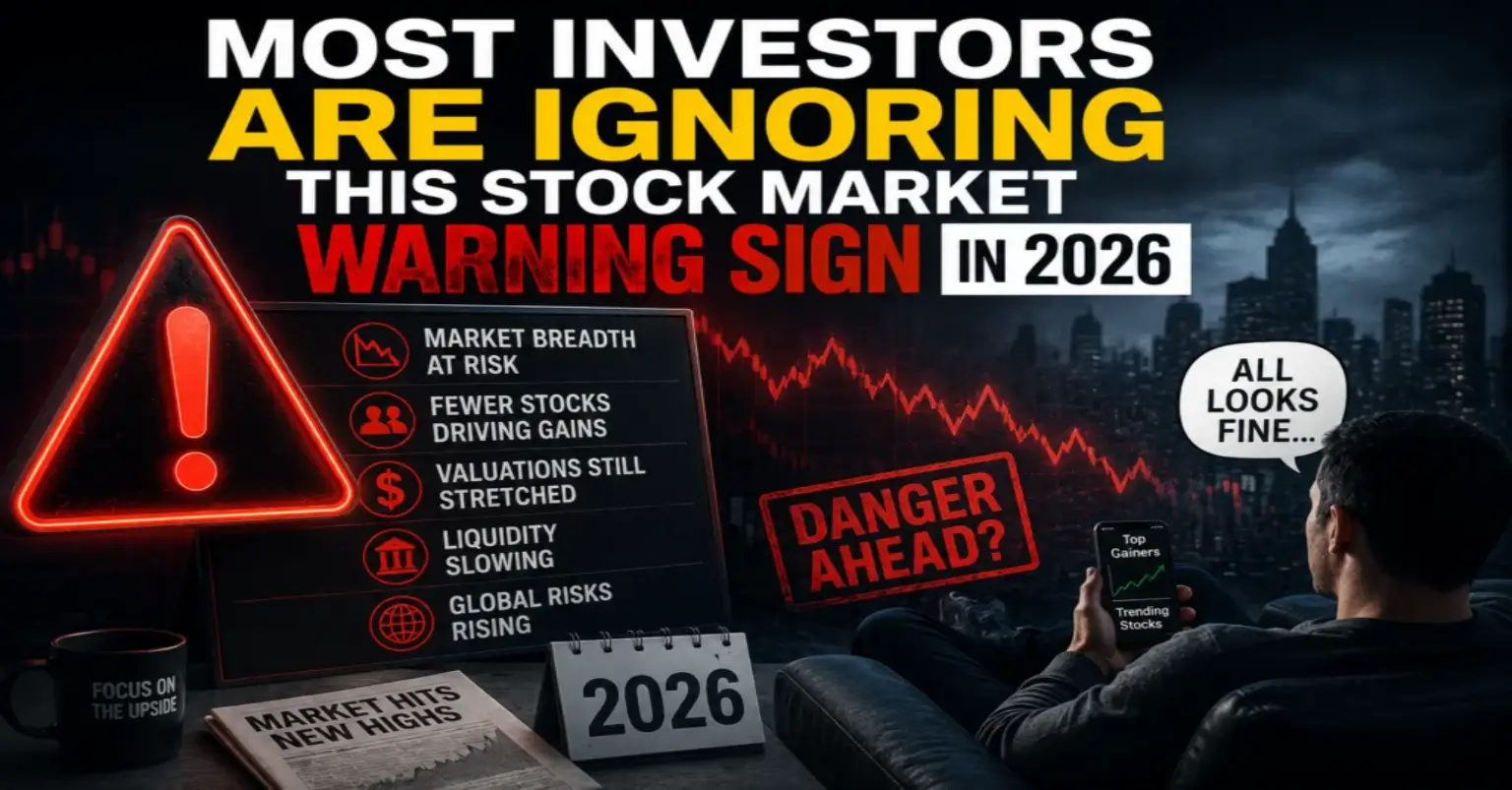
The stock market has delivered impressive gains for many investors in recent years. Major indexes continue reaching new highs, artificial intelligence stocks dominate headlines, and optimism remains strong across much of Wall Street.
However, beneath the surface, a warning sign is emerging that many investors seem to be overlooking.
This is especially important for newer investors who are still learning how markets function.
History shows that bull markets rarely move in a straight line forever. Although markets can remain strong for extended periods, certain indicators often begin flashing caution signals before periods of increased volatility.
In 2026, one of the biggest warning signs is market concentration. While many investors remain focused on headline index performance, fewer are paying attention to what is happening underneath those record highs.
Understanding this overlooked risk could help investors make smarter decisions and avoid costly mistakes.
What Is Market Concentration?
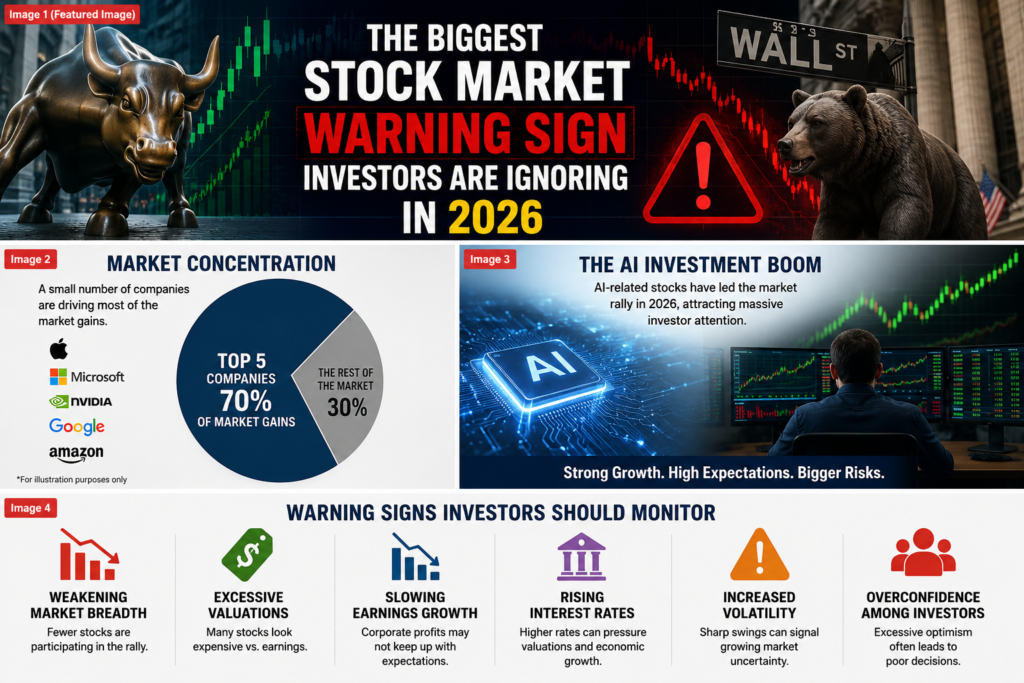
Market concentration occurs when a small number of companies account for a large percentage of overall market gains.
In a healthy bull market, many sectors and companies participate in the rally.
By contrast, concentrated markets rely heavily on a handful of large stocks to drive index performance.
As a result, major indexes may appear strong even when many stocks are struggling.
This creates a misleading picture of overall market health.
Consequently, investors who only follow index headlines may miss important warning signals.
Why This Matters in 2026
Several of America’s largest companies continue to dominate market performance.
Technology and artificial intelligence leaders have attracted enormous amounts of investor capital.
Meanwhile, many smaller companies have failed to keep pace.
Therefore, market gains have become increasingly dependent on a limited group of stocks.
Although this situation can continue for some time, history suggests concentrated markets often carry greater risk.
When leadership narrows, market vulnerability tends to increase.
For that reason, experienced investors closely monitor market breadth.
Market Breadth Tells a Different Story
Market breadth measures how many stocks participate in a market advance.
Strong breadth generally means:
- Many stocks are rising
- Multiple sectors are contributing
- Investor confidence is widespread
Weak breadth often means:
- Fewer stocks drive gains
- Leadership becomes concentrated
- Market strength narrows
As a result, weak breadth can sometimes signal growing instability.
Even when indexes continue climbing, underlying conditions may be less healthy than they appear.
Therefore, breadth remains one of the most important indicators investors should watch.
Investors who focus only on headlines often overlook broader market conditions.
History Offers Several Warnings
Financial markets have experienced similar situations before.
During previous market cycles, investors often became heavily concentrated in a small group of popular companies.
Initially, those investments performed extremely well.
Eventually, however, leadership narrowed to the point where market momentum became fragile.
Once sentiment shifted, declines accelerated.
While today’s market is not identical to past periods, the pattern remains worth monitoring.
After all, markets frequently reward caution when enthusiasm becomes excessive.
The AI Investment Boom
Artificial intelligence remains one of the biggest investment themes of 2026.
Companies connected to AI continue attracting enormous investor attention.
Furthermore, many analysts believe AI will transform industries for decades.
That optimism may ultimately prove correct.
Nevertheless, rapid growth expectations can sometimes push valuations higher than fundamentals justify.
This is why investors should avoid chasing trends simply because a sector is performing well.
Therefore, investors should separate long-term business potential from short-term stock price excitement.
Even outstanding companies can become expensive investments if expectations rise too far.
Investor Psychology Is Adding Fuel
Investor behavior often amplifies market trends.
When prices rise consistently, confidence tends to increase.
As confidence grows, more investors rush into the same popular investments.
Consequently, demand pushes prices even higher.
This cycle can continue for extended periods.
However, excessive optimism occasionally creates risks that investors fail to recognize.
For example:
- Fear of missing out increases
- Risk management declines
- Diversification becomes less popular
- Valuation concerns receive less attention
Because of these factors, emotional investing can contribute to market imbalances.
Interest Rates Still Matter
Although investors are focused on growth opportunities, interest rates continue influencing market performance.
Higher borrowing costs can affect:
- Corporate profits
- Consumer spending
- Business investment
- Stock valuations
Meanwhile, elevated rates may make bonds and savings products more attractive alternatives.
As a result, changes in interest rate expectations can significantly impact stock prices.
Therefore, ignoring the interest rate environment may be a mistake.
Corporate Earnings Must Keep Up
Stock prices ultimately depend on business performance.
While investor enthusiasm can drive short-term gains, earnings growth remains critical over the long run.
If earnings fail to match expectations, valuations may come under pressure.
Consequently, investors should pay attention to:
- Revenue growth
- Profit margins
- Future guidance
- Cash flow performance
Strong companies generally justify higher valuations.
Even so, unrealistic expectations can still create downside risk.
Why Diversification Matters More Than Ever
Many investors become tempted to concentrate portfolios in recent winners.
Unfortunately, this strategy increases exposure to unexpected setbacks.
Diversification helps reduce risk by spreading investments across different sectors and asset classes.
For beginners, diversification remains one of the most important investing principles.
For example, a diversified portfolio may include:
- Large-cap stocks
- Small-cap stocks
- International investments
- Bonds
- Dividend-paying companies
Although diversification may not maximize gains during every rally, it often improves long-term stability.
Therefore, maintaining balance remains an important investing principle.
Warning Signs Investors Should Monitor
Instead, it starts with understanding the basics of investing and maintaining a disciplined strategy.
Important signals include:
- Weakening market breadth
- Excessive valuations
- Slowing earnings growth
- Rising interest rates
- Increased volatility
- Overconfidence among investors
While no single indicator predicts market movements perfectly, a combination of warning signs deserves attention.
Consequently, informed investors monitor multiple data points rather than relying on headlines alone.
What Smart Investors Are Doing in 2026
Experienced investors are not necessarily abandoning stocks.
Instead, many are becoming more selective.
They continue looking for:
- Reasonable valuations
- Strong balance sheets
- Sustainable earnings growth
- Diversified opportunities
Many experienced investors also focus on long-term wealth building rather than reacting to short-term market swings.
At the same time, they remain cautious about chasing stocks solely because they are popular.
As a result, portfolio discipline becomes increasingly important.
Does This Mean a Market Crash Is Coming?
Not necessarily.
A warning sign does not guarantee a market decline.
Markets can remain resilient for much longer than many expect.
Nevertheless, ignoring risks entirely can be dangerous.
The goal is not to predict an exact market top.
Rather, the objective is to recognize conditions that may increase future uncertainty.
Therefore, investors should focus on preparation instead of prediction.
Final Thoughts
The stock market continues to offer opportunities in 2026. Yet one warning sign deserves more attention: growing market concentration. While major indexes remain strong, a relatively small group of companies is responsible for a large portion of recent gains.
This does not mean investors should panic. However, it does highlight the importance of diversification, valuation awareness, and disciplined investing. History shows that markets become more vulnerable when leadership narrows and optimism becomes widespread.
Successful investing is not about reacting to every headline. Instead, it involves understanding risks, maintaining a long-term perspective, and making informed decisions. Investors who pay attention to warning signs today may be better prepared for whatever the market delivers tomorrow.
Instead, it starts with understanding investing fundamentals and maintaining a disciplined strategy.