 MOHAMMAD ABUBAKR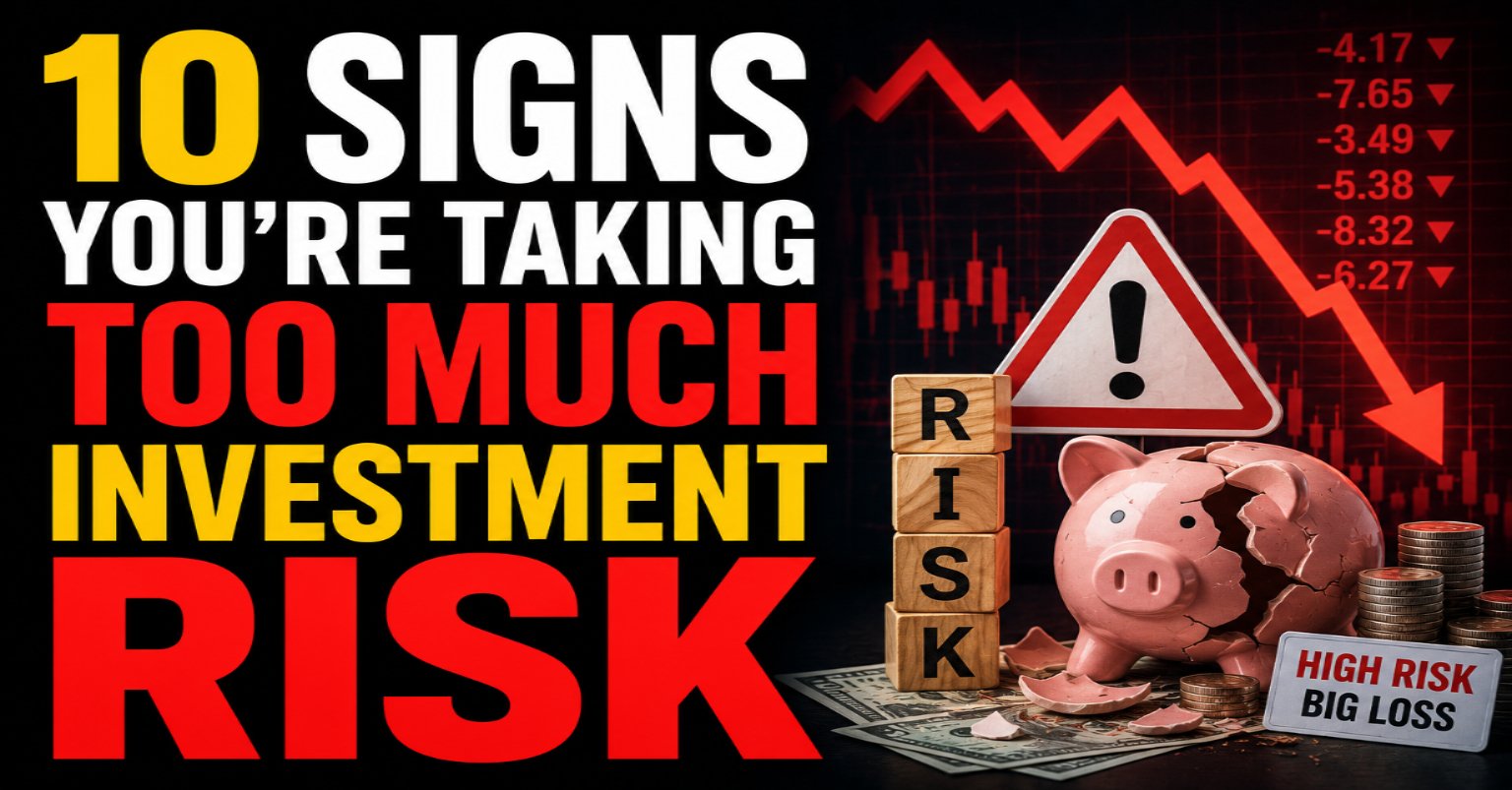
Introduction
Every investment comes with some level of risk. Without risk, earning meaningful returns would be difficult. However, taking too much investment risk can put your financial future in danger.
Many investors believe that higher risk always leads to higher returns. While this can be true in some cases, excessive risk often results in larger losses. Even experienced investors sometimes take on more risk than they realize.
The good news is that there are warning signs. Once you recognize them, you can make changes before small problems become major setbacks.
In this guide, you’ll learn the 10 signs you’re taking too much investment risk and discover practical ways to build a stronger, more balanced portfolio.
Why Investment Risk Matters
Risk is a normal part of investing. However, your portfolio should match your financial goals, investment timeline, and comfort level.
When your investments become too risky, you may experience larger losses during market downturns. As a result, emotional decisions often follow, making it harder to achieve long-term success.
A balanced investment strategy can help reduce unnecessary risk while keeping your money working toward your future goals.
Signs Your Investment Portfolio Needs Rebalancing
1. Your Portfolio Is Too Concentrated
One of the biggest investing mistakes is putting too much money into one stock, one industry, or one asset class.
For example, if more than half of your investments are in technology stocks, your portfolio could suffer significant losses if that sector declines.
Diversification helps spread risk across different investments. Therefore, it reduces the impact of a single investment performing poorly.
Ask yourself:
- Do I own investments from different industries?
- Am I relying on one company for most of my returns?
- Would my portfolio survive a market correction?
If the answer is “no,” your investment risk may be too high.
2. Market Drops Make You Panic
How do you react when the stock market falls?
If you immediately think about selling everything, your portfolio may be riskier than you can comfortably handle.
Market volatility is normal. Prices move up and down throughout the year.
However, panic selling often locks in losses that could have been temporary.
Instead of reacting emotionally, build a portfolio that lets you stay invested even during uncertain markets.
3. You’re Constantly Chasing Hot Stocks
Every year, certain stocks dominate headlines.
Many investors rush to buy them because everyone else seems to be making money.
Unfortunately, buying investments based on hype rarely ends well.
By the time many investors enter, prices have already increased significantly.
Successful investing usually focuses on long-term value rather than short-term excitement.
Before buying any stock, ask yourself:
- Do I understand this business?
- Does it fit my investment strategy?
- Am I investing because of research or because of social media?
4. You Ignore Diversification
Diversification remains one of the simplest ways to reduce investment risk.
Still, many investors ignore it.
Instead, they invest heavily in a few companies they know well.
Although confidence feels good, it does not eliminate risk.
A diversified portfolio may include:
- U.S. stocks
- International stocks
- Index funds
- ETFs
- Bonds
- Real estate investments
- Cash reserves
Because different assets often perform differently, diversification can help smooth overall portfolio performance.
5. You Take Risks Without a Plan
Some investors buy investments without setting clear goals.
They purchase stocks because a friend recommended them or because prices recently increased.
This approach creates unnecessary risk.
Before investing, create a simple plan.
Your plan should answer questions like:
- Why am I investing?
- How long will I stay invested?
- What level of risk can I accept?
- When will I need this money?
A written investment plan makes decisions easier during periods of market uncertainty.
It also helps you avoid emotional investing.
6. You Borrow Money to Invest
Using borrowed money to invest can increase both your potential gains and your potential losses.
Some investors use margin accounts or personal loans to buy more stocks. While this strategy may boost returns during a rising market, it can become very risky if prices fall.
If your investments lose value, you may still owe the borrowed money plus interest.
For most long-term investors, using your own money is a safer approach.
7. You Check Your Portfolio Every Day
Watching your investments every hour can create unnecessary stress.
Daily market movements are normal. However, checking your portfolio too often may cause emotional decisions.
Instead of focusing on short-term price changes, review your investments on a regular schedule, such as every quarter or twice a year.
Long-term investors benefit more from patience than constant monitoring.
8. You Don’t Rebalance Your Portfolio
As markets change, your portfolio changes too.
For example, if technology stocks perform very well, they may become a much larger part of your portfolio than you originally planned.
Without rebalancing, your overall investment risk may increase.
Review your portfolio regularly and adjust your investments when necessary.
Rebalancing helps maintain the level of risk that matches your financial goals.
9. You Don’t Have an Emergency Fund
Investing is important. However, having cash for unexpected expenses is equally important.
Without an emergency fund, you may have to sell investments during a market decline to cover bills.
That could lock in unnecessary losses.
Many financial experts recommend keeping three to six months of living expenses in an easily accessible savings account before investing aggressively.
10. Your Investment Strategy Keeps Changing
Successful investing requires consistency.
If you frequently change your strategy because of news headlines or market predictions, you may be taking unnecessary risks.
Markets naturally rise and fall.
Instead of chasing every trend, stick to a long-term investment plan based on your financial goals and risk tolerance.
Consistency often produces better results than constantly changing direction.
How to Reduce Investment Risk
If you recognize several of these warning signs, don’t panic. You can improve your portfolio by making gradual changes.
Here are a few smart strategies:
- Diversify across different asset classes.
- Invest consistently through dollar-cost averaging.
- Review your portfolio once or twice a year.
- Avoid emotional buying and selling.
- Match your investments to your financial goals.
- Build an emergency fund.
- Focus on long-term growth instead of short-term market moves.
U.S. Securities and Exchange Commission (SEC) Investor.gov website. It provides reliable information about diversification, investment risk, and investor education.
Frequently Asked Questions
How much investment risk is too much?
Your investment risk is too high if it causes you to lose sleep, panic during market declines, or invest beyond your financial goals and risk tolerance.
Is taking more risk always better?
No. Higher risk may increase potential returns, but it also increases the chance of larger losses. A balanced portfolio often provides more consistent long-term results.
How often should I rebalance my portfolio?
Most investors review and rebalance their portfolios once or twice a year. You may also rebalance after major market movements or significant life changes.
Can diversification eliminate investment risk?
No. Diversification cannot remove all risk. However, it helps reduce the impact of poor performance from a single investment or sector.
Final Thoughts
Every investment carries some level of risk. The goal is not to eliminate risk but to manage it wisely.
If you recognize several of these warning signs, take time to review your portfolio. Small adjustments today can help protect your investments tomorrow.
Stay focused on your long-term goals, diversify your holdings, and avoid emotional decisions during market volatility.
A disciplined investment strategy is often more effective than chasing the next big opportunity.