
 MOHAMMAD ABUBAKR
Retirement may seem far away, especially if you’re in your 20s, 30s, or even 40s. However, the decisions you make today can have a significant impact on your financial security later in life. One of the biggest questions many Americans ask is, “Am I saving enough for retirement?”
There isn’t a one-size-fits-all answer because retirement goals, lifestyles, and incomes vary from person to person. Still, there are practical ways to evaluate your progress and determine whether you’re on the right path.
The good news is that you don’t need a perfect investment strategy or a six-figure salary to build a comfortable retirement. What matters most is starting early, saving consistently, and increasing your contributions as your income grows.
Retirement Planning Checklist by Age
This guide explains how to determine if you’re saving enough for retirement and what steps you can take to strengthen your retirement plan in 2026.
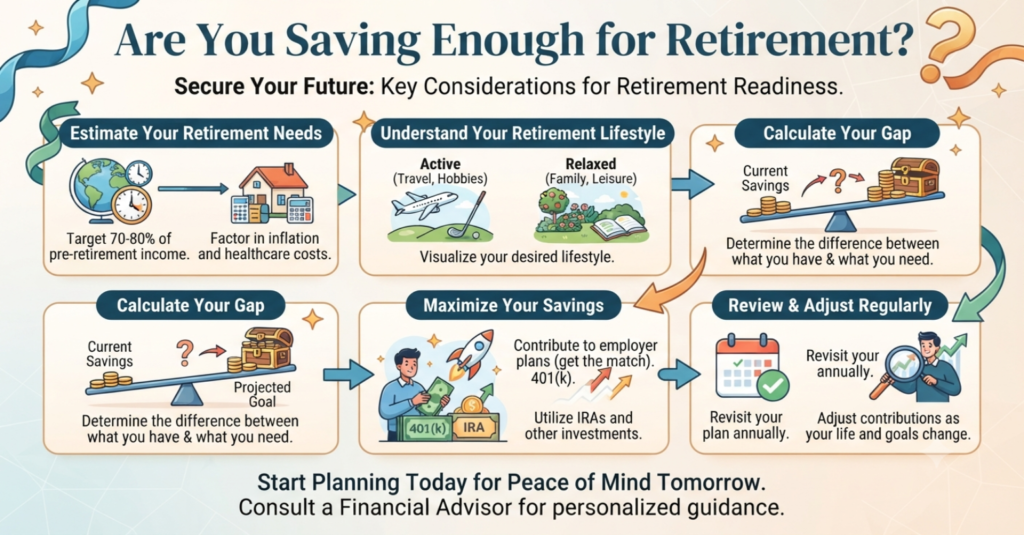
Why Retirement Saving Matters
Most people want financial independence after they stop working.
Retirement savings help cover:
- Daily living expenses
- Housing costs
- Healthcare expenses
- Travel and hobbies
- Unexpected emergencies
Without sufficient savings, you may need to rely more heavily on Social Security or continue working longer than planned.
Planning early gives your investments more time to grow through compounding.
How Much Should You Save?
There is no universal dollar amount that works for everyone.
The amount you need depends on several factors, including:
- Your current income
- Expected retirement age
- Lifestyle goals
- Life expectancy
- Healthcare costs
- Other income sources
Instead of focusing only on a final savings target, concentrate on building consistent saving habits.
Small monthly contributions can grow significantly over time.
Signs You’re on the Right Track
While every situation is unique, these habits often indicate healthy retirement progress.
You Save Consistently
Making regular contributions is more important than trying to invest large amounts occasionally.
Automatic monthly contributions can help you stay consistent.
You Increase Contributions Over Time
As your salary grows, consider increasing your retirement savings.
Even small increases each year can make a meaningful difference over the long term.
You Have a Long-Term Investment Plan
Successful retirement investing isn’t based on short-term market predictions.
Instead, it focuses on:
- Diversification
- Consistent investing
- Long-term growth
- Risk management
A written investment plan helps you stay disciplined.
You Review Your Progress Regularly
Reviewing your retirement accounts once or twice each year allows you to monitor progress without reacting to daily market fluctuations.
Regular reviews also help ensure your investments remain aligned with your goals.
Warning Signs You May Not Be Saving Enough
Recognizing potential problems early gives you more time to make adjustments.
You’re Not Saving at All
Delaying retirement investing means losing valuable years of compound growth.
Starting today is generally better than waiting for the perfect opportunity.
You Only Save When Money Is Left Over
Treat retirement savings like a monthly bill rather than an optional expense.
Automatic contributions can help prioritize saving.
You’re Frequently Withdrawing Retirement Money
Early withdrawals may reduce future retirement income and could result in taxes or penalties, depending on the account type.
Retirement accounts work best when investments remain untouched for many years.
Your Savings Rate Hasn’t Changed in Years
If your income has increased but your retirement contributions have stayed the same, you may be missing opportunities to accelerate your savings.
Consider increasing contributions after raises or bonuses.
Ways to Increase Retirement Savings
Improving your retirement outlook doesn’t always require major lifestyle changes.
Small adjustments can add up over time.
Contribute Every Month
Consistency builds wealth.
Even modest monthly investments benefit from long-term compounding.
Increase Contributions Gradually
Raising your contribution by just 1% each year may significantly improve retirement savings over several decades.
Small increases often feel manageable.
Reduce Unnecessary Expenses
Review your monthly spending.
Savings from subscriptions, dining out, or impulse purchases could be redirected toward retirement investments.
Invest for Long-Term Growth
Many retirement investors choose diversified portfolios that include:
- Broad-market stock funds
- International investments
- Bond funds
- Exchange-Traded Funds (ETFs)
Your investment mix should reflect your goals and risk tolerance.
Reinvest Investment Earnings
When appropriate, reinvesting dividends and other distributions allows your investments to continue compounding.
Over long periods, this can increase portfolio growth.
Common Retirement Saving Mistakes
Avoid these common errors.
Waiting Too Long
Time is one of the most valuable advantages in retirement investing.
The earlier you start, the longer your investments have to grow.
Trying to Time the Market
Waiting for the “perfect” investing opportunity often delays retirement progress.
Many long-term investors focus on consistent contributions instead.
Ignoring Inflation
Retirement may last decades.
Inflation can reduce purchasing power over time.
Your retirement strategy should account for rising living costs.
Investing Too Conservatively Too Early
Keeping all retirement savings in cash for decades may limit long-term growth potential.
Balance growth opportunities with your personal risk tolerance.
Simple Habits That Build Retirement Wealth
These habits can strengthen your retirement plan.
- Save every month.
- Increase contributions after raises.
- Maintain an emergency fund.
- Diversify your investments.
- Review your portfolio annually.
- Avoid emotional investing.
- Stay committed during market volatility.
Consistency often produces better long-term results than chasing high returns.
Frequently Asked Questions
How do I know if I’m saving enough for retirement?
Review your retirement goals, current savings rate, expected retirement age, and investment progress regularly. Adjust your contributions as your income and goals change.
Is it too late to start saving for retirement?
It’s never too late to improve your retirement savings. While starting early offers the greatest advantage, increasing contributions today can still strengthen your long-term financial outlook.
How often should I review my retirement plan?
Many financial professionals suggest reviewing your retirement plan at least once or twice each year or after major life changes.
Should I increase retirement contributions every year?
If your budget allows, gradually increasing contributions each year can help your retirement savings grow faster.
Why is starting early so important?
Starting early allows compound growth to work over a longer period, potentially increasing your retirement savings significantly.
Final Thoughts
Saving enough for retirement isn’t about reaching a perfect number overnight. It’s about building consistent habits that support your future financial security. By saving regularly, increasing contributions as your income grows, maintaining a diversified investment portfolio, and reviewing your progress each year, you can steadily move closer to your retirement goals.
Remember that retirement planning is a long-term journey, not a short-term race. Every contribution you make today has the potential to grow over time, helping you create greater financial freedom in the years ahead. The most important step is to begin—and to stay committed to your plan regardless of market conditions.
Investor.gov – Saving for Retirement