 MOHAMMAD ABUBAKR
Owning a home is one of the biggest financial milestones many Americans achieve. Along with the pride of homeownership comes a long list of financial responsibilities. Unlike renters, homeowners are responsible for unexpected repairs, maintenance, insurance deductibles, property taxes, and other expenses that can arise without warning.
That’s why having an emergency savings fund is essential. It provides a financial cushion when life takes an unexpected turn, helping you avoid relying on high-interest credit cards or loans.
The question many homeowners ask is, “How much emergency savings should I have?” While there isn’t a single answer that fits everyone, there are practical guidelines that can help you determine the right amount based on your financial situation.
Best Ways to Become Debt-Free Faster
This guide explains how much emergency savings homeowners should have, why it’s important, and how to build a fund that protects your financial future.
What Is an Emergency Fund?
An emergency fund is money set aside specifically for unexpected expenses.
It should only be used for genuine financial emergencies, such as:
- Major home repairs
- Emergency medical bills
- Job loss
- Unexpected car repairs
- Insurance deductibles
- Essential appliance replacements
An emergency fund is not meant for vacations, holiday shopping, or planned home renovations.
Keeping these savings separate from your everyday spending account can make them easier to protect.
Why Homeowners Need Larger Emergency Savings
Homeowners often face expenses that renters don’t.
For example, if your water heater stops working or your roof begins leaking, you’re responsible for the repair costs.
Unexpected homeowner expenses may include:
- Roof repairs
- HVAC replacement
- Plumbing emergencies
- Electrical repairs
- Foundation issues
- Storm damage
- Water damage
- Appliance replacement
These costs can easily reach hundreds or even thousands of dollars.
Having emergency savings allows you to handle these situations without disrupting your long-term financial goals.
How Much Should Homeowners Save?
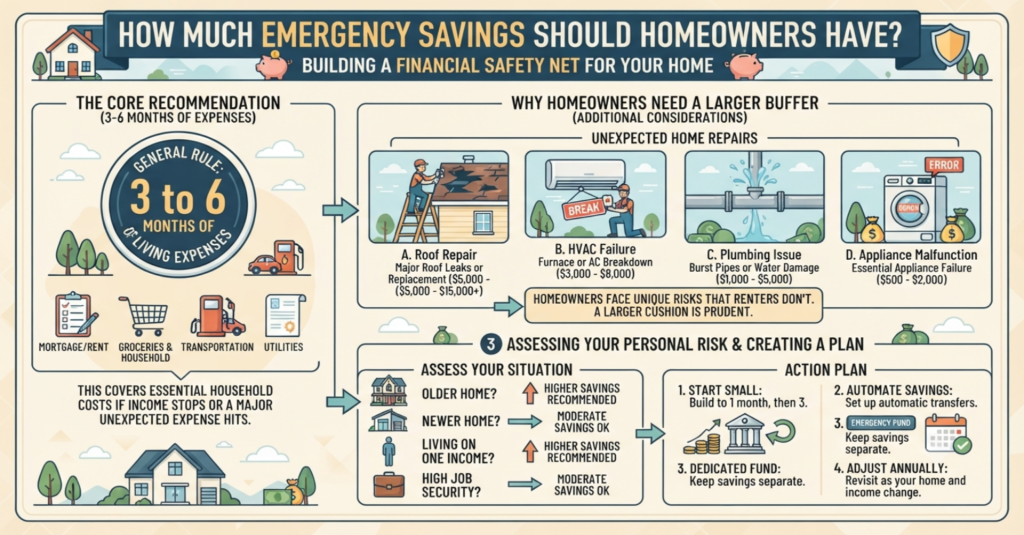
Financial professionals commonly recommend saving three to six months of essential living expenses in an emergency fund.
However, homeowners may benefit from aiming toward the higher end of that range because homeownership often comes with larger unexpected expenses.
Your emergency savings should generally cover essential monthly costs such as:
- Mortgage or rent
- Property taxes (if not escrowed)
- Homeowners insurance
- Utilities
- Groceries
- Transportation
- Minimum debt payments
- Healthcare expenses
If your income is unpredictable or you own an older home that may require more repairs, you may decide to save even more.
Factors That Affect Your Emergency Savings Goal
Your Job Stability
If you have a stable income and secure employment, a smaller emergency fund may be sufficient.
If you’re self-employed, work on commission, or have seasonal income, a larger emergency fund can provide additional security.
The Age of Your Home
Older homes often require more maintenance.
Unexpected repairs become more likely as major systems age.
Homeowners with older properties may want additional savings for future repairs.
Your Monthly Expenses
Higher monthly expenses require a larger emergency fund.
Review your budget regularly to ensure your savings target reflects your current financial needs.
Your Family Situation
Households with children or dependents often benefit from larger emergency reserves.
Unexpected expenses can arise more frequently when supporting a family.
Where Should You Keep Your Emergency Fund?
An emergency fund should be:
- Easy to access
- Separate from everyday spending
- Safe from significant market risk
Many homeowners choose accounts such as:
- High-yield savings accounts
- Money market accounts
- Short-term certificates of deposit (CDs) for a portion of savings
The goal is accessibility rather than maximizing investment returns.
How to Build Your Emergency Fund
Start With a Small Goal
Saving several months of expenses can seem overwhelming.
Instead, begin with your first milestone.
For example:
- $500
- $1,000
- One month of expenses
Reaching smaller goals creates momentum.
Automate Your Savings
Automatic transfers make saving easier.
Schedule a monthly transfer from your checking account into your emergency fund.
Consistency often produces better results than saving only when money is left over.
Reduce Unnecessary Spending
Review your monthly expenses.
You may find opportunities to reduce:
- Streaming subscriptions
- Dining out
- Impulse shopping
- Unused memberships
Redirect those savings toward your emergency fund.
Save Windfalls
Unexpected income can accelerate your savings.
Consider putting part of the following into your emergency fund:
- Tax refunds
- Bonuses
- Cash gifts
- Side hustle income
Small contributions add up over time.
Common Emergency Savings Mistakes
Investing Emergency Funds in Volatile Assets
Emergency savings should remain available when you need them.
Keeping these funds in investments that can fluctuate significantly may reduce their value during a financial emergency.
Using the Fund for Non-Emergencies
It’s tempting to use savings for vacations or discretionary purchases.
Doing so weakens your financial safety net.
Only withdraw money for genuine emergencies.
Forgetting to Replenish the Fund
If you use part of your emergency savings, make rebuilding the balance a priority.
Restoring your emergency fund prepares you for future unexpected expenses.
Ignoring Home Maintenance
Routine maintenance may reduce the risk of costly emergency repairs.
Addressing small problems early often prevents larger expenses later.
Benefits of Having an Emergency Fund
A strong emergency fund offers several financial advantages.
It can help you:
- Reduce financial stress
- Avoid high-interest debt
- Handle unexpected repairs
- Protect long-term investments
- Maintain financial stability during job loss
- Feel more confident about homeownership
Financial security isn’t only about growing wealth.
It’s also about preparing for life’s unexpected events.
Tips for Homeowners
Strengthen your financial foundation with these simple habits.
- Review your emergency savings every year.
- Increase savings after income raises.
- Budget for home maintenance.
- Keep insurance coverage up to date.
- Avoid unnecessary debt.
- Maintain separate emergency savings.
- Continue investing after your emergency fund is established.
These habits support long-term financial resilience.
Frequently Asked Questions
How much emergency savings should homeowners have?
Many financial professionals recommend saving three to six months of essential living expenses. Homeowners may choose a larger emergency fund if they have variable income or expect higher home maintenance costs.
Should emergency savings include home repairs?
Yes. Homeowners should consider the possibility of unexpected repairs when determining their emergency savings goal.
Where should I keep my emergency fund?
Many people keep emergency savings in high-yield savings accounts or other easily accessible cash accounts that prioritize safety and liquidity.
Should I invest my emergency fund?
Emergency savings are generally intended to remain stable and accessible rather than invested in assets that may experience significant price fluctuations.
Can I build an emergency fund while investing?
Many homeowners first establish a basic emergency fund and then continue building both their savings and investment accounts as their financial situation improves.
Final Thoughts
Every homeowner faces unexpected expenses at some point. Whether it’s a leaking roof, a broken furnace, or an unexpected job loss, having an emergency fund can make these challenges far less stressful. Instead of relying on credit cards or loans, you’ll have savings ready to cover essential costs while protecting your long-term financial goals.
Building an emergency fund doesn’t happen overnight, but consistent saving makes a difference. Start with a realistic goal, automate your contributions, and review your savings regularly as your financial situation changes. A well-funded emergency account provides peace of mind and gives you the confidence to handle the unexpected while continuing to build wealth through homeownership.