 MOHAMMAD ABUBAKR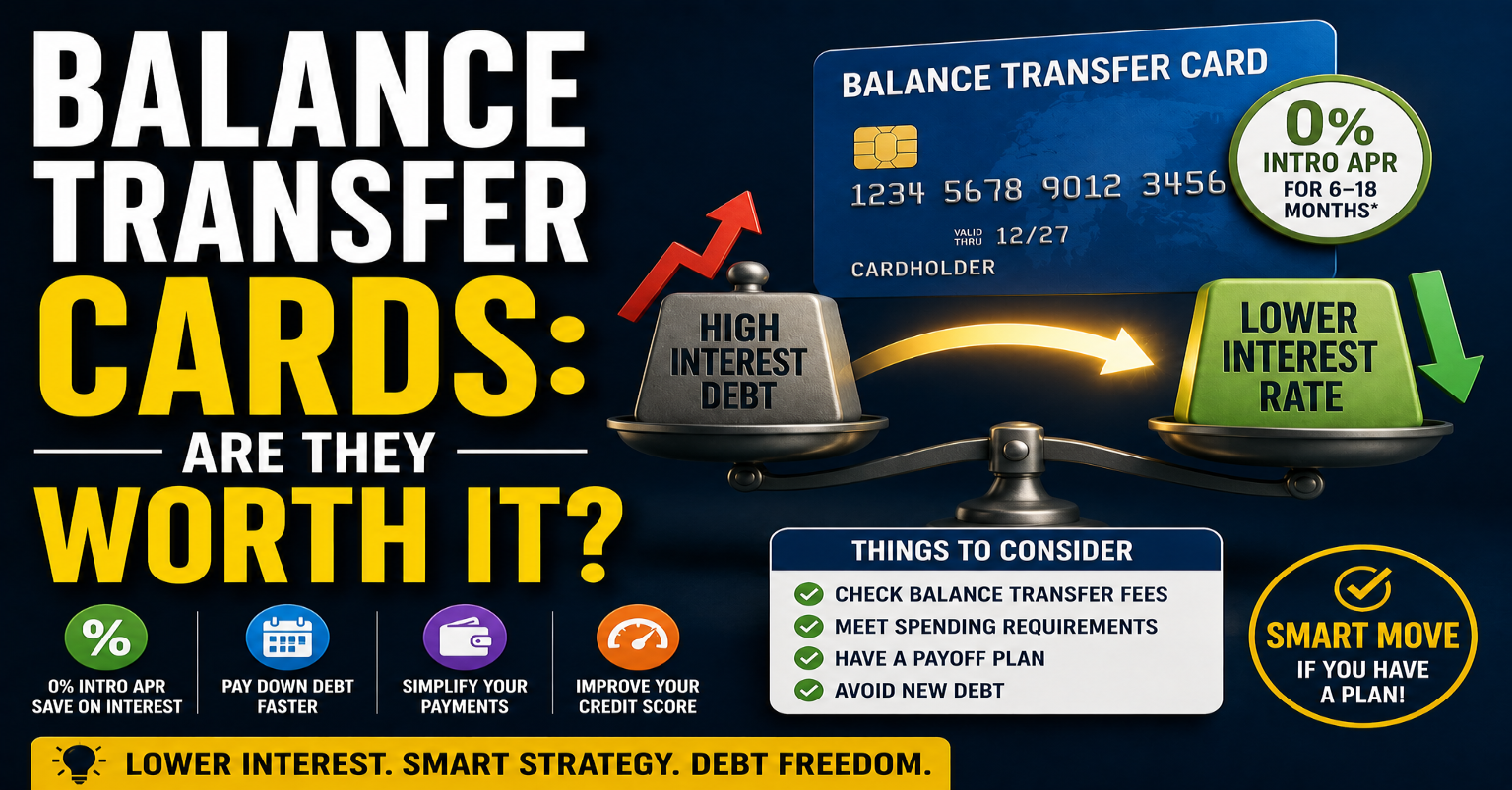
High-interest credit card debt can make it difficult to reach your financial goals. Even when you’re making monthly payments, a large portion of your money may go toward interest instead of reducing your actual balance. That’s why many Americans consider using a balance transfer credit card to lower borrowing costs and pay off debt more quickly.
Balance transfer cards often advertise a 0% introductory Annual Percentage Rate (APR) for a limited period. This promotional offer can give borrowers time to reduce or eliminate existing debt without paying interest during the introductory window, provided they follow the card’s terms.
However, these cards aren’t the right solution for everyone. Balance transfer fees, credit score requirements, and the end of the promotional period all deserve careful consideration before applying.
Best Ways to Become Debt-Free Faster
This guide explains how balance transfer cards work, their advantages and disadvantages, and when using one may make financial sense.
What Is a Balance Transfer Card?
A balance transfer card is a credit card that allows you to move debt from one or more existing credit cards to a new card.
Many balance transfer cards offer:
- A 0% introductory APR for a limited time
- One monthly payment instead of multiple payments
- An opportunity to reduce interest costs
- A structured payoff timeline
The goal is to pay down the transferred balance before the promotional interest rate expires.
How Does a Balance Transfer Work?
The process is generally straightforward.
You apply for a balance transfer credit card and, if approved, request that eligible balances from other credit cards be transferred to the new account.
The new card issuer pays the old lender, and your debt moves to the new card.
From that point forward, you’ll make payments to the new credit card company.
Keep in mind that approval, credit limits, eligible accounts, and promotional terms vary by issuer.
Benefits of Balance Transfer Cards
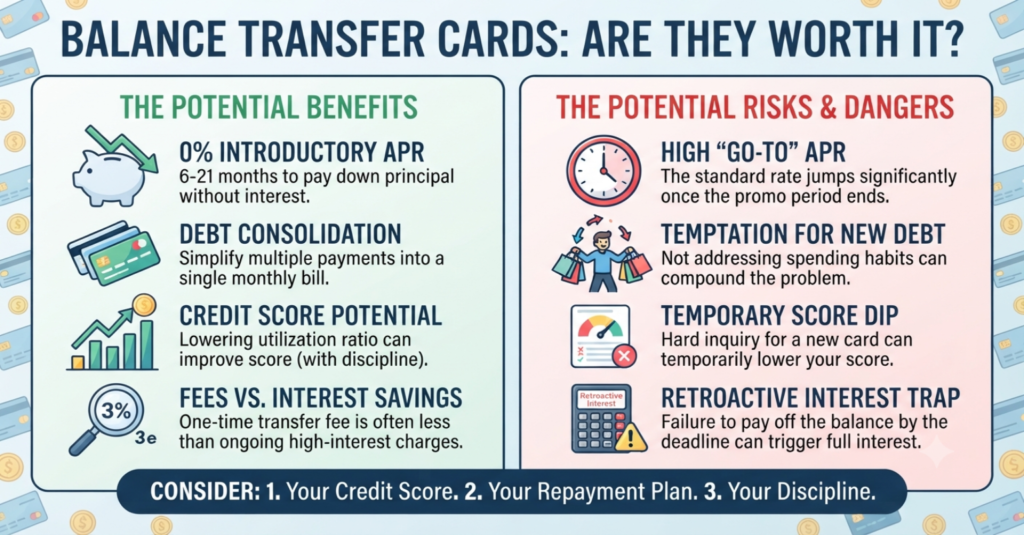
1. Save Money on Interest
One of the biggest advantages is the potential to reduce interest charges during the introductory APR period.
Instead of paying high credit card interest each month, more of your payment goes toward reducing the principal balance.
That can help you become debt-free sooner.
2. Simplify Your Finances
Managing several credit cards can be challenging.
A balance transfer allows you to combine multiple eligible balances into one account.
With fewer payment due dates, budgeting may become easier.
3. Pay Off Debt Faster
Without ongoing interest charges during the promotional period, your monthly payments can have a greater impact on reducing the balance.
This can shorten the amount of time it takes to repay debt—if you stay on schedule.
4. Potential Credit Score Improvement
Reducing outstanding credit card balances over time may improve your credit utilization ratio, which is one factor used in credit scoring models.
However, opening a new credit account may temporarily affect your credit score, and results vary based on your overall credit profile.
Drawbacks to Consider
Balance Transfer Fees
Many balance transfer cards charge a transfer fee, often calculated as a percentage of the amount transferred.
Before applying, compare the potential interest savings with the transfer fee to determine whether the move is financially worthwhile.
Promotional Rates Don’t Last Forever
The 0% introductory APR is temporary.
If any balance remains after the promotional period ends, the standard purchase or balance transfer APR will usually apply.
Understanding the expiration date is essential.
Good Credit Is Often Required
Many of the most competitive balance transfer offers are available to applicants with good or excellent credit.
Approval is never guaranteed.
Credit history, income, and other factors are typically considered.
New Purchases May Accumulate Interest
Some balance transfer cards treat new purchases differently from transferred balances.
Read the card agreement carefully before using the card for additional spending.
When a Balance Transfer Card Makes Sense
A balance transfer card may be a good option if:
- You have high-interest credit card debt.
- You can repay the balance during the introductory period.
- You qualify for a competitive offer.
- The transfer fee is outweighed by the interest savings.
- You’re committed to avoiding new debt.
In these situations, a balance transfer may reduce borrowing costs and accelerate debt repayment.
When It May Not Be the Best Choice
A balance transfer card may not be ideal if:
- You continue adding new debt.
- You can only make minimum payments.
- The transfer fee outweighs potential savings.
- You don’t qualify for promotional offers.
- You expect to carry the balance well beyond the introductory period.
Choosing the wrong card or failing to follow a repayment plan can reduce the benefits.
How to Use a Balance Transfer Successfully
Create a Payoff Plan
Calculate how much you need to pay each month to eliminate the balance before the introductory APR expires.
Having a clear timeline can help you stay on track.
Make Payments on Time
Late payments may result in fees and, in some cases, could affect promotional terms.
Automatic payments can reduce the risk of missing a due date.
Avoid New Credit Card Debt
Try not to use the balance transfer card—or your old cards—for unnecessary purchases while paying down the transferred balance.
Keeping spending under control is key to long-term success.
Monitor the Promotional Deadline
Mark the expiration date on your calendar.
Review your progress regularly to ensure you’re on pace to pay off the balance before the standard APR begins.
Alternatives to Balance Transfer Cards
Depending on your financial situation, you may also consider:
- Paying more than the minimum payment on your existing card.
- A debt consolidation loan.
- Negotiating a lower interest rate with your credit card issuer.
- Working with a nonprofit credit counseling agency.
- Adjusting your budget to increase monthly debt payments.
Each option has advantages and disadvantages, so compare them carefully.
Common Mistakes to Avoid
Avoid these frequent errors when using a balance transfer card.
Missing a Payment
Late payments can become expensive and may affect promotional benefits.
Ignoring Transfer Fees
Always calculate the total cost before moving your balance.
Continuing to Overspend
A balance transfer works best when it’s part of a broader debt repayment strategy—not an excuse to increase spending.
Keeping No Repayment Schedule
Without a monthly payoff plan, it’s easy to reach the end of the promotional period with a remaining balance.
Frequently Asked Questions
Are balance transfer cards worth it?
They can be worthwhile for people who qualify for a competitive offer and have a realistic plan to repay the balance before the introductory APR ends.
Do balance transfer cards hurt your credit score?
Applying for a new card may temporarily affect your credit score because of a hard inquiry and a new account. Over time, reducing debt responsibly may improve your credit profile.
Can I transfer balances from multiple cards?
Many issuers allow transfers from multiple eligible credit cards, subject to your approved credit limit and the card’s terms.
What happens when the 0% APR ends?
Any remaining balance will generally begin accruing interest at the standard APR listed in your card agreement.
Should I close my old credit cards?
The right decision depends on your financial situation. Keeping older accounts open may help your credit history in some cases, but it’s important to avoid accumulating new debt.
Final Thoughts
Balance transfer credit cards can be a valuable tool for reducing interest costs and paying off debt faster, but only when they’re used with a clear repayment strategy. The biggest advantage is the opportunity to direct more of your monthly payment toward the principal balance instead of interest during the promotional period. However, transfer fees, credit requirements, and the return to a standard APR mean it’s important to read the terms carefully before applying.
If you choose a balance transfer card, commit to paying more than the minimum whenever possible, avoid adding new debt, and aim to eliminate the balance before the introductory offer expires. Used responsibly, a balance transfer can be an effective step toward becoming debt-free and improving your long-term financial health.
Consumer Financial Protection Bureau – Credit Cards