 MOHAMMAD ABUBAKR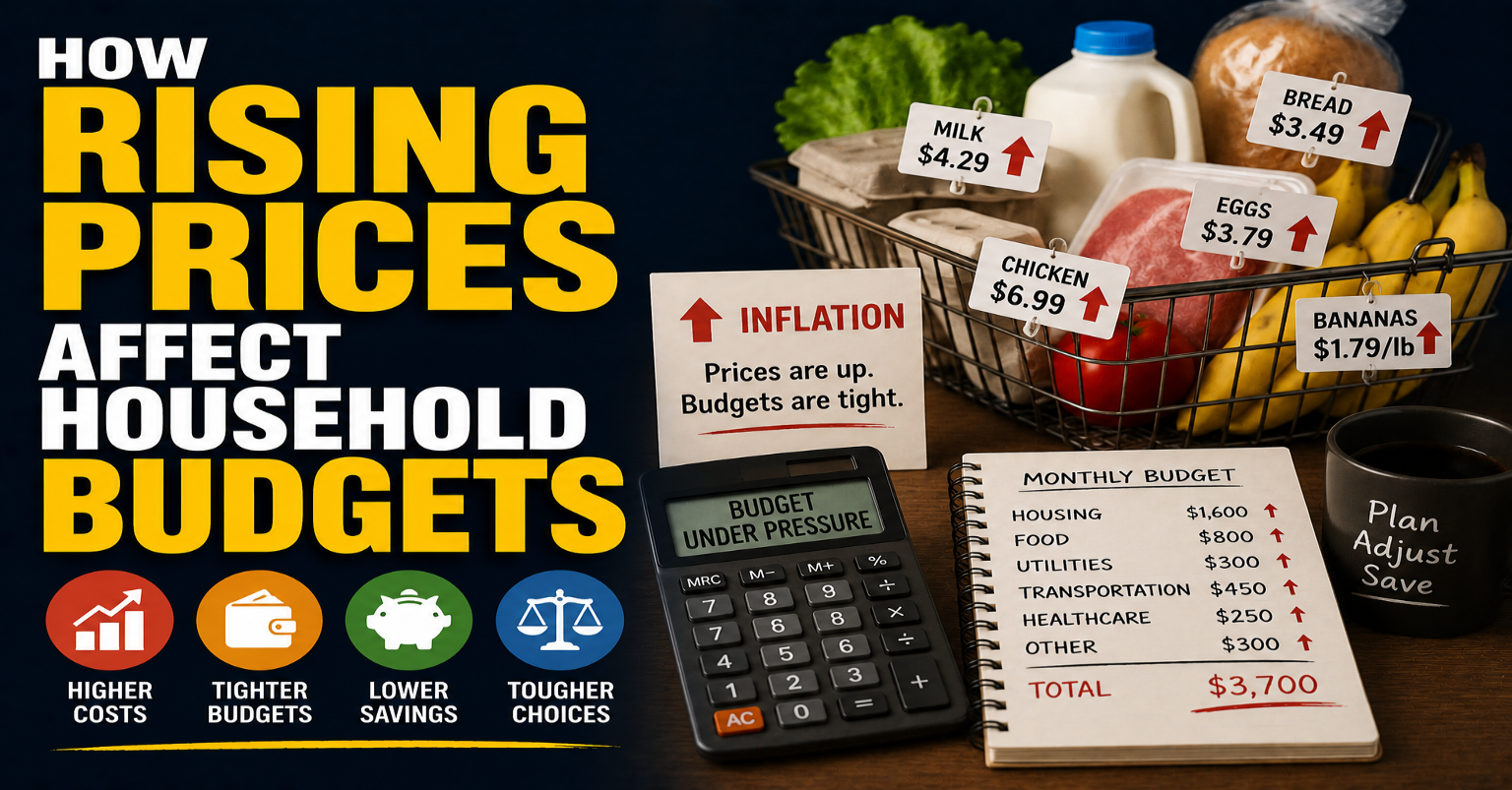
Rising prices have become one of the biggest financial concerns for American families. Whether you’re shopping for groceries, filling up your gas tank, paying utility bills, or renewing insurance policies, it often feels like everyday expenses are climbing faster than your paycheck.
Although price increases are a normal part of the economy, persistent inflation can place significant pressure on household budgets. As the cost of essential goods and services rises, families may find it harder to save money, pay down debt, or invest for the future.
The good news is that while you can’t control inflation, you can control how you respond to it. By understanding where rising prices have the greatest impact and making a few smart financial adjustments, you can better protect your budget and maintain long-term financial stability.
Simple Budgeting Tips That Actually Work
This guide explains how rising prices affect household budgets and offers practical strategies to help you manage your finances during periods of higher inflation.
What Causes Prices to Rise?
Prices can increase for many reasons.
Some of the most common include:
- Inflation across the economy
- Higher production costs
- Supply chain disruptions
- Increased transportation expenses
- Strong consumer demand
- Changes in energy prices
When businesses face higher costs, they often pass some of those expenses on to consumers through higher prices.
Although inflation tends to rise and fall over time, households benefit from preparing for periods when everyday costs remain elevated.
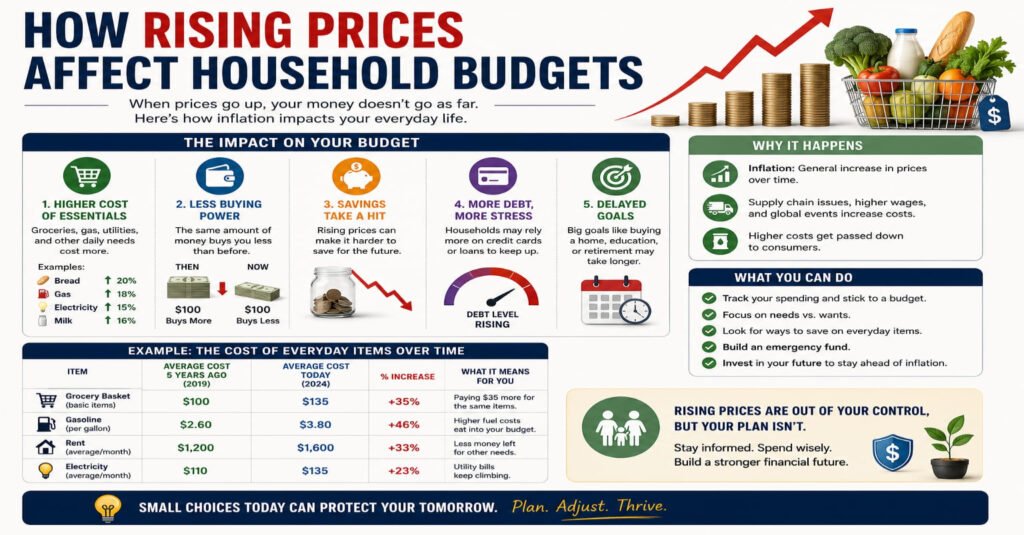
How Rising Prices Affect Household Budgets
1. Grocery Bills Continue to Grow
Food is one of the largest monthly expenses for many families.
Even small price increases on everyday items such as milk, eggs, bread, meat, and fresh produce can noticeably affect your budget over the course of a year.
To manage grocery costs:
- Plan meals before shopping.
- Buy store brands when appropriate.
- Compare prices between stores.
- Shop with a grocery list.
- Reduce food waste.
Small savings on each shopping trip can add up over time.
2. Housing Costs Take a Bigger Share of Income
Housing is typically the largest household expense.
Many homeowners and renters have experienced increases in:
- Rent
- Property taxes
- Homeowners insurance
- Maintenance costs
- Utility bills
If housing expenses consume a growing percentage of your income, it may become more difficult to save for other financial goals.
Reviewing your monthly housing budget regularly helps you stay prepared.
3. Transportation Becomes More Expensive
Transportation costs include more than just gasoline.
Households may also face higher expenses for:
- Vehicle maintenance
- Insurance premiums
- Auto repairs
- Public transportation
- Vehicle registration
Combining errands, maintaining your vehicle, and comparing insurance quotes annually may help reduce these costs.
4. Utility Bills Increase
Electricity, natural gas, water, and internet services can all become more expensive over time.
Simple ways to reduce utility expenses include:
- Using energy-efficient appliances.
- Adjusting thermostat settings.
- Turning off unused electronics.
- Replacing traditional light bulbs with LED bulbs.
- Monitoring water usage.
Lower energy consumption can reduce monthly bills without sacrificing comfort.
5. Higher Interest Costs Affect Borrowers
When interest rates rise, borrowing often becomes more expensive.
This can increase the cost of:
- Credit card balances
- Personal loans
- Auto loans
- Adjustable-rate mortgages
Paying down high-interest debt becomes even more important during periods of higher borrowing costs.
Reducing debt can improve both your monthly cash flow and long-term financial health.
6. Saving Becomes More Challenging
As everyday expenses rise, many households have less money available for savings.
This may affect goals such as:
- Building an emergency fund
- Saving for retirement
- Buying a home
- Funding education
- Investing for long-term growth
Even small automatic savings contributions can help maintain progress despite higher living costs.
7. Discretionary Spending Shrinks
After paying for essentials, there may be less money available for non-essential purchases.
Examples include:
- Dining out
- Entertainment
- Vacations
- Hobbies
- Luxury purchases
Reviewing discretionary spending regularly helps ensure it aligns with your financial priorities.
8. Financial Stress May Increase
Money concerns often affect more than household finances.
Financial pressure can contribute to:
- Anxiety
- Poor sleep
- Relationship stress
- Difficulty concentrating
Creating a realistic budget and reviewing your finances regularly may help reduce uncertainty.
Smart Ways to Manage Rising Prices
Although inflation can’t be avoided entirely, there are practical ways to reduce its impact.
Review Your Budget Every Month
Expenses change throughout the year.
Reviewing your budget monthly helps identify areas where spending can be adjusted.
Update categories such as:
- Groceries
- Utilities
- Transportation
- Entertainment
- Savings
Keeping your budget current improves financial control.
Build an Emergency Fund
Unexpected expenses become even more difficult during periods of higher prices.
Aim to save at least three to six months of essential living expenses.
An emergency fund helps reduce reliance on credit cards when unexpected costs arise.
Reduce Unnecessary Spending
Look for recurring expenses you may no longer need.
Examples include:
- Unused subscriptions
- Premium memberships
- Impulse purchases
- Frequent food delivery
Redirecting these savings toward emergency funds or debt repayment can strengthen your finances.
Increase Savings When Possible
Whenever your income increases, consider directing part of the additional money toward savings before increasing spending.
This habit helps offset the long-term effects of inflation.
Continue Investing for the Future
While inflation reduces purchasing power, long-term investing may help your money grow over time.
A diversified investment strategy can support long-term financial goals while helping preserve purchasing power.
Common Budgeting Mistakes During Inflation
Avoid these mistakes when prices are rising.
Ignoring Small Price Increases
Small increases across many categories can significantly affect your monthly budget.
Track spending carefully.
Relying Too Heavily on Credit Cards
Using credit cards to cover higher living costs may lead to expensive interest charges.
Pay balances in full whenever possible.
Stopping Retirement Contributions Completely
Although reducing contributions may seem tempting, continuing to invest—even at a lower level—helps maintain long-term progress.
Forgetting to Compare Prices
Shopping around for insurance, groceries, and household services may uncover meaningful savings.
Tips for Protecting Your Household Budget
Build financial resilience with these habits:
- Track spending every month.
- Plan meals in advance.
- Build emergency savings.
- Reduce high-interest debt.
- Compare prices before major purchases.
- Review recurring subscriptions.
- Increase savings after salary raises.
- Invest consistently for long-term goals.
These small actions can make a meaningful difference over time.
Frequently Asked Questions
Why do rising prices affect household budgets?
Higher prices increase the cost of everyday goods and services, leaving less money available for savings, debt repayment, and other financial goals.
What expenses usually increase the most?
Housing, groceries, transportation, utilities, healthcare, and insurance are among the categories most commonly affected by inflation.
How can families reduce the impact of rising prices?
Creating a budget, cutting unnecessary expenses, comparing prices, and maintaining emergency savings are effective ways to manage higher living costs.
Should I stop investing when prices rise?
Long-term investors generally continue investing despite inflation. Maintaining consistent contributions may support future financial growth.
How often should I update my budget?
Review your household budget at least once a month or whenever your income or expenses change significantly.
Final Thoughts
Rising prices can place real pressure on household budgets, but they don’t have to derail your financial goals. By understanding where inflation affects your spending the most, you can make informed decisions that protect your finances without sacrificing your long-term plans.
Focus on the areas you can control. Review your budget regularly, reduce unnecessary expenses, build emergency savings, and continue investing for the future whenever possible. Over time, these consistent financial habits can help your household adapt to changing economic conditions and maintain greater financial stability.
Consumer Financial Protection Bureau – Budgeting and Saving Resources.