
 MOHAMMAD ABUBAKR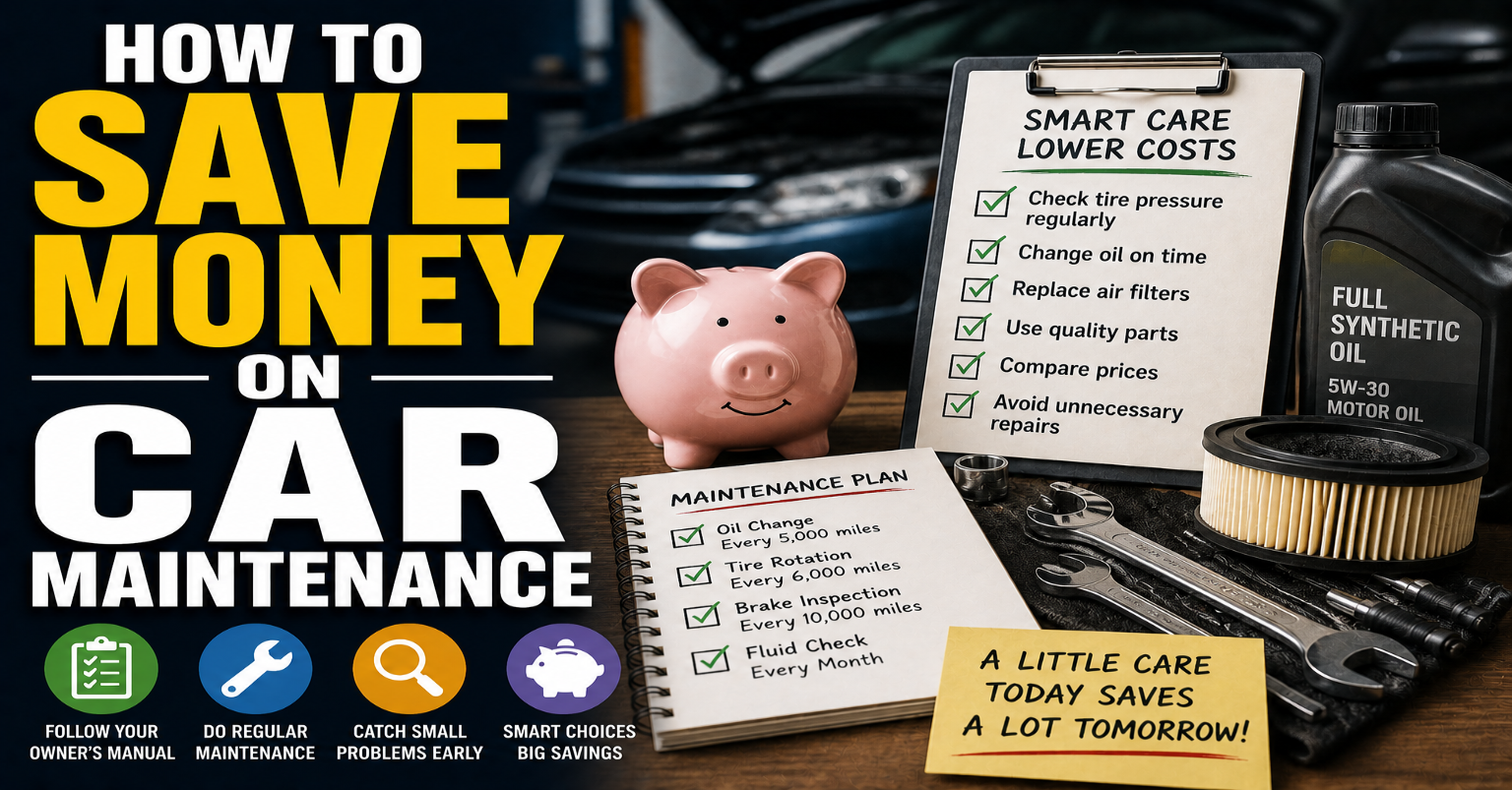
Owning a car is one of the biggest ongoing expenses for many American households. Beyond monthly loan payments and insurance premiums, routine maintenance and unexpected repairs can take a significant bite out of your budget. Fortunately, keeping your vehicle in good condition doesn’t have to cost a fortune.
Many expensive repairs happen because small maintenance tasks are ignored. By taking care of your car regularly and making smart decisions about repairs, you can extend your vehicle’s lifespan, improve fuel efficiency, and avoid costly breakdowns.
In 2026, with vehicle repair costs and parts prices remaining high, saving money on car maintenance is more important than ever. The good news is that a few simple habits can help you spend less while keeping your car running safely and reliably.
Simple Budgeting Tips That Actually Work
This guide explains practical ways to save money on car maintenance without compromising your vehicle’s performance or safety.
Why Regular Car Maintenance Saves Money
Some drivers skip maintenance to save money in the short term.
Unfortunately, delaying basic services often leads to much larger repair bills later.
Routine maintenance can help you:
- Prevent major mechanical problems.
- Improve fuel economy.
- Extend your vehicle’s lifespan.
- Increase resale value.
- Reduce the risk of unexpected breakdowns.
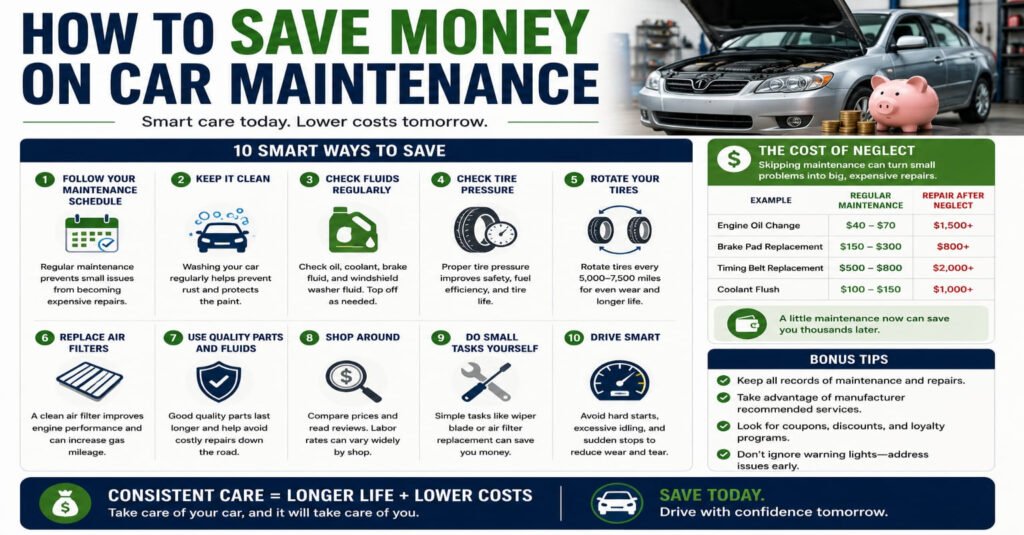
Spending a little today can often save hundreds—or even thousands—of dollars in future repairs.
10 Ways to Save Money on Car Maintenance
1. Follow Your Vehicle’s Maintenance Schedule
Every vehicle comes with a recommended maintenance schedule from the manufacturer.
Following it helps prevent premature wear on important components.
Typical services include:
- Oil changes
- Tire rotations
- Brake inspections
- Fluid replacements
- Air filter changes
Keeping up with routine maintenance is usually far less expensive than repairing major damage.
2. Check Tire Pressure Regularly
Properly inflated tires improve both safety and fuel efficiency.
Driving with underinflated tires may lead to:
- Poor gas mileage
- Uneven tire wear
- Reduced handling
- Shorter tire life
Check your tire pressure at least once a month and before long road trips.
Maintaining the correct pressure can help your tires last longer.
3. Change Engine Oil on Time
Engine oil lubricates moving parts and helps reduce wear.
Ignoring oil changes can increase engine damage and lead to costly repairs.
Follow the oil change interval recommended in your owner’s manual.
Using the correct type of oil is equally important.
4. Replace Air Filters When Needed
A clean engine air filter allows your engine to operate efficiently.
A clogged filter may reduce performance and fuel economy.
Cabin air filters also improve air quality inside your vehicle.
Replacing filters at recommended intervals is an inexpensive way to maintain your car.
5. Don’t Ignore Warning Lights
Dashboard warning lights exist for a reason.
Ignoring them can allow small issues to become major problems.
If a warning light appears:
- Read your owner’s manual.
- Schedule an inspection if necessary.
- Address the issue promptly.
Early diagnosis often reduces repair costs.
6. Compare Repair Shop Prices
Repair costs can vary significantly between service providers.
Before approving major repairs:
- Request written estimates.
- Compare labor rates.
- Read customer reviews.
- Ask about warranties on parts and labor.
Choosing a reputable repair shop doesn’t always mean paying the highest price.
7. Rotate Your Tires Regularly
Tire rotation promotes even tread wear.
Benefits include:
- Longer tire life.
- Improved handling.
- Better fuel efficiency.
- Reduced replacement costs.
Many manufacturers recommend rotating tires every 5,000 to 7,500 miles, though your owner’s manual should be your primary guide.
8. Keep Your Car Clean
Washing your vehicle isn’t just about appearance.
Regular cleaning helps remove:
- Road salt
- Dirt
- Mud
- Debris
Keeping both the exterior and undercarriage clean may reduce the risk of rust and corrosion, especially in areas with harsh winters.
Protecting your vehicle’s finish can also help maintain its resale value.
9. Drive Smoothly
Aggressive driving increases wear on many vehicle components.
Hard acceleration, sudden braking, and speeding may shorten the lifespan of:
- Brakes
- Tires
- Suspension components
- Transmission parts
Driving smoothly can lower maintenance costs while also improving fuel economy.
10. Keep Maintenance Records
Maintaining a record of services helps you stay organized.
Track:
- Oil changes
- Tire rotations
- Brake service
- Battery replacement
- Fluid changes
- Major repairs
Service records can also increase your vehicle’s resale value by demonstrating that it has been well maintained.
Car Maintenance Tasks You Can Do Yourself
Some basic maintenance tasks require little experience.
Examples include:
- Checking tire pressure.
- Replacing windshield wiper blades.
- Refilling windshield washer fluid.
- Checking engine oil levels.
- Replacing cabin air filters.
Always consult your owner’s manual before performing maintenance.
If you’re unsure about a repair, it’s best to seek professional assistance.
Common Car Maintenance Mistakes
Avoid these habits to reduce long-term repair costs.
Skipping Routine Maintenance
Ignoring recommended service intervals often results in more expensive repairs later.
Waiting Too Long to Replace Tires
Worn tires reduce traction and may increase the risk of accidents.
Replacing tires before they become unsafe can also protect other suspension components.
Ignoring Strange Noises
Unusual sounds often indicate developing mechanical problems.
Addressing them early may reduce repair expenses.
Choosing the Cheapest Repair Without Research
Low prices aren’t always the best value.
Look for experienced technicians, positive reviews, and warranty coverage.
Additional Ways to Lower Car Ownership Costs
Maintaining your vehicle is only part of reducing transportation expenses.
You can also save money by:
- Comparing auto insurance rates annually.
- Combining errands into one trip.
- Avoiding unnecessary idling.
- Keeping your fuel tank at a reasonable level.
- Removing unnecessary weight from your vehicle.
- Driving within speed limits to improve fuel efficiency.
Small adjustments can reduce both maintenance and fuel costs.
Benefits of Regular Car Maintenance
Keeping your vehicle in good condition provides several long-term advantages.
These include:
- Lower repair expenses.
- Improved fuel economy.
- Greater reliability.
- Better safety.
- Higher resale value.
- Longer vehicle lifespan.
- Reduced risk of roadside breakdowns.
Consistent maintenance is often one of the most cost-effective investments you can make as a vehicle owner.
Frequently Asked Questions
What’s the easiest way to reduce car maintenance costs?
Following your manufacturer’s maintenance schedule is one of the best ways to avoid expensive repairs and extend your vehicle’s lifespan.
How often should I check my tire pressure?
Check your tire pressure at least once a month and before long trips.
Can regular maintenance improve fuel economy?
Yes. Proper tire pressure, timely oil changes, and replacing dirty air filters can all contribute to better fuel efficiency.
Should I always choose the cheapest repair shop?
Not necessarily. Compare prices, customer reviews, certifications, and warranty coverage before making a decision.
Is preventive maintenance really worth the cost?
In many cases, yes. Preventive maintenance is generally much less expensive than repairing major mechanical failures caused by neglect.
Final Thoughts
Saving money on car maintenance isn’t about avoiding repairs—it’s about preventing them. Routine maintenance, careful driving habits, and staying on top of small issues can significantly reduce the likelihood of expensive breakdowns. These simple habits not only lower repair costs but also improve your vehicle’s reliability, safety, and resale value.
The key is consistency. Follow your vehicle’s maintenance schedule, compare repair options when needed, and address problems early rather than waiting for them to become more serious. Over time, these smart decisions can help you keep more money in your budget while enjoying dependable transportation for years to come.
National Highway Traffic Safety Administration – Vehicle Maintenance Safety