 MOHAMMAD ABUBAKR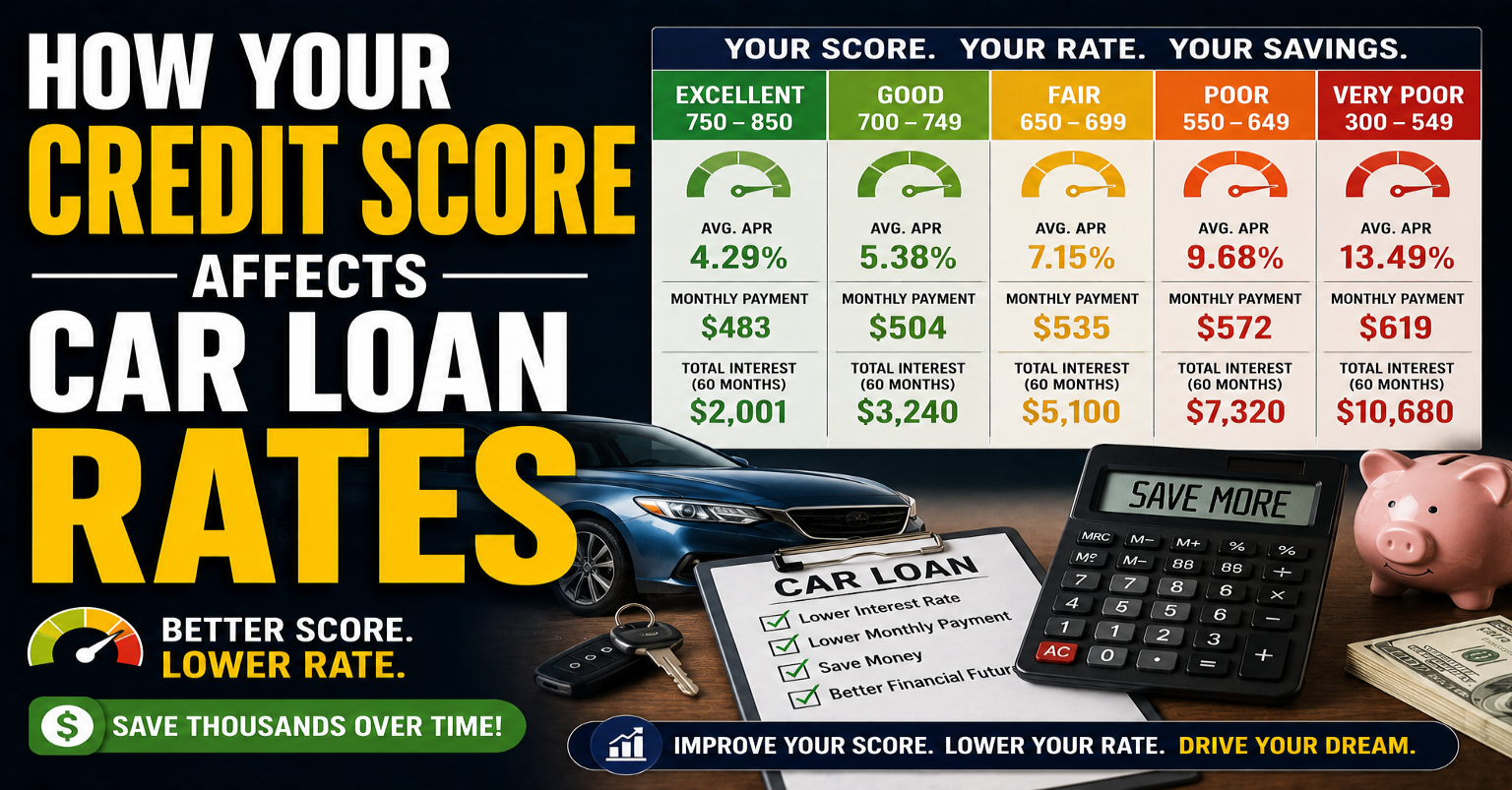
Buying a car is one of the biggest financial decisions most Americans make. While many buyers focus on the vehicle’s price, another factor can have an even greater impact on the total cost of ownership—your credit score.
Your credit score helps lenders evaluate how likely you are to repay a loan on time. As a result, it plays a major role in determining the interest rate you receive on an auto loan. Even a small difference in your interest rate can add up to hundreds or even thousands of dollars over the life of the loan.
The good news is that understanding how credit scores work gives you the opportunity to improve your financial position before applying for financing. By taking a few simple steps, you may qualify for better loan terms and lower monthly payments.
Credit Score Mistakes That Lower Your Score
In this guide, you’ll learn how your credit score affects car loan rates, why lenders consider it so important, and what you can do to improve your chances of getting a competitive loan.
Why Lenders Check Your Credit Score
When you apply for a car loan, lenders want to estimate the level of risk involved.
Your credit score provides insight into your borrowing history and repayment habits.
Although every lender uses its own approval criteria, many review factors such as:
- Payment history
- Amount of outstanding debt
- Length of credit history
- Types of credit accounts
- Recent credit applications
Generally, borrowers with stronger credit histories are viewed as lower risk, which may result in more favorable loan offers.
How Credit Scores Affect Car Loan Rates
Your credit score influences more than whether you’re approved.
It can also affect:
- Interest rate
- Monthly payment
- Loan term options
- Required down payment
- Total borrowing cost
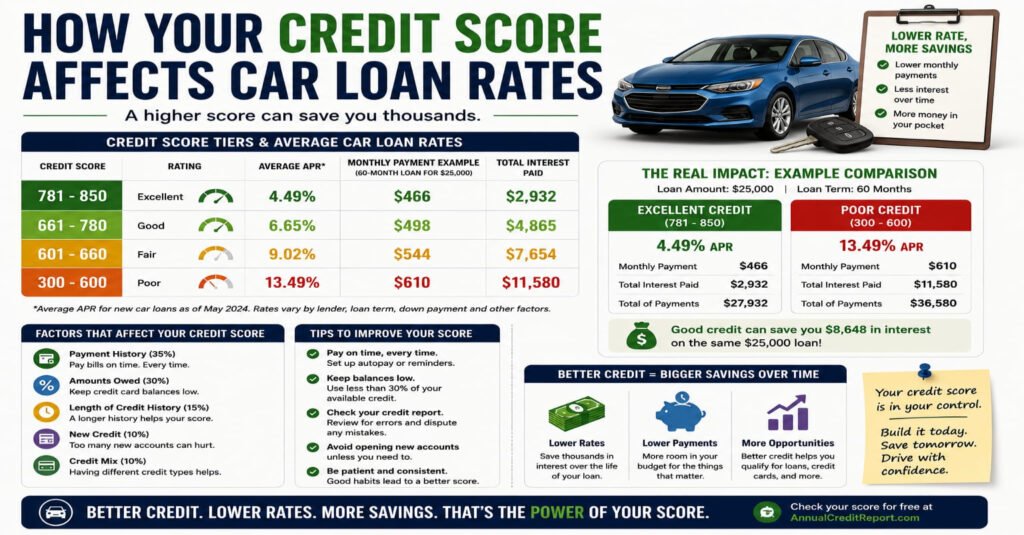
Borrowers with higher credit scores often qualify for lower interest rates because lenders view them as less likely to miss payments.
On the other hand, lower credit scores may result in higher rates, making the loan more expensive over time.
Why a Lower Interest Rate Matters
A lower interest rate can reduce the overall cost of financing a vehicle.
Potential benefits include:
- Lower monthly payments
- Less interest paid over the life of the loan
- Greater flexibility in your monthly budget
- Faster progress toward other financial goals
Even a modest improvement in your interest rate can lead to meaningful long-term savings.
Factors That Influence Your Credit Score
Understanding what affects your credit score can help you prepare before applying for an auto loan.
1. Payment History
Making payments on time is one of the most important factors in maintaining healthy credit.
Late or missed payments can remain on your credit report for years.
Paying every bill by its due date demonstrates responsible borrowing.
2. Credit Utilization
Credit utilization measures how much of your available revolving credit you’re using.
Lower utilization generally reflects responsible credit management.
Reducing outstanding credit card balances before applying for a loan may strengthen your credit profile.
3. Length of Credit History
Lenders often consider how long you’ve been using credit.
Older, well-managed accounts may contribute positively to your credit history.
Closing long-standing accounts without careful consideration may affect your overall credit profile.
4. Credit Mix
Having experience with different types of credit accounts—such as credit cards, auto loans, or mortgages—can demonstrate your ability to manage various financial obligations.
However, opening new accounts solely to improve your credit mix is generally unnecessary.
5. Recent Credit Applications
Applying for several loans or credit cards within a short period may raise concerns for some lenders.
Whenever possible, limit unnecessary credit applications before seeking an auto loan.
Ways to Improve Your Credit Score Before Buying a Car
If you’re planning to purchase a vehicle, improving your credit beforehand may help you secure better financing.
Pay Bills on Time
Consistently making on-time payments is one of the most effective ways to build a stronger credit history.
Setting up automatic payments or reminders can help avoid missed due dates.
Reduce Outstanding Debt
Paying down revolving debt, especially high-interest credit card balances, may improve your credit profile over time.
Lower debt levels can also improve your debt-to-income ratio.
Review Your Credit Reports
Check your credit reports regularly for errors or outdated information.
If you find inaccuracies, follow the appropriate dispute process with the credit reporting agency.
Accurate reports help ensure lenders evaluate your true financial history.
Avoid Opening Unnecessary Credit Accounts
Each new credit application may affect your credit profile.
Unless necessary, avoid opening new accounts shortly before applying for a car loan.
Save for a Larger Down Payment
Although a down payment doesn’t directly change your credit score, it may reduce the amount you need to borrow.
A smaller loan balance may improve your financing options.
Other Factors That Affect Auto Loan Approval
Your credit score is important, but lenders often evaluate other financial information as well.
These may include:
- Income
- Employment history
- Debt-to-income ratio
- Loan amount
- Vehicle age
- Down payment amount
Strengthening these areas may improve your chances of receiving favorable loan terms.
Common Car Financing Mistakes
Avoid these mistakes when shopping for an auto loan.
Focusing Only on the Monthly Payment
A lower monthly payment may result from extending the loan term.
Longer loans can increase the total interest paid over time.
Review both the monthly payment and the total cost of the loan.
Skipping Loan Comparisons
Interest rates and loan terms vary among lenders.
Comparing multiple offers may help you find more competitive financing.
Buying More Car Than You Can Afford
Choose a vehicle that fits comfortably within your budget.
Remember to account for:
- Insurance
- Fuel
- Maintenance
- Registration
- Taxes
Considering all ownership costs helps prevent financial strain.
Ignoring Your Credit Before Applying
Checking your credit in advance provides time to improve it if necessary.
Preparing ahead may increase your financing options.
Tips for Getting the Best Car Loan
Use these strategies to improve your chances of securing favorable financing.
- Check your credit before shopping.
- Make all payments on time.
- Reduce outstanding debt.
- Save for a larger down payment.
- Compare offers from multiple lenders.
- Stay within your budget.
- Read loan agreements carefully before signing.
Preparation often leads to better borrowing decisions.
Frequently Asked Questions
Does my credit score affect my car loan interest rate?
Yes. Your credit score is one of the primary factors lenders consider when determining your interest rate and loan terms.
Can I get a car loan with a lower credit score?
Many lenders offer financing to borrowers across a wide range of credit profiles. However, lower credit scores may result in higher interest rates or different loan terms.
Should I improve my credit before buying a car?
If possible, improving your credit before applying may increase your chances of qualifying for more favorable financing.
Does checking my own credit score hurt my credit?
No. Reviewing your own credit report or score is generally considered a soft inquiry and does not affect your credit score.
How can I lower the overall cost of my car loan?
Improving your credit, making a larger down payment, comparing lenders, and choosing a shorter loan term when affordable may help reduce total borrowing costs.
Final Thoughts
Your credit score can significantly influence the cost of financing a vehicle. While it may seem like just another number, it often determines the interest rate you’ll receive, the size of your monthly payments, and the total amount you’ll pay over the life of the loan. Taking time to strengthen your credit before applying can lead to meaningful savings and greater financial flexibility.
Remember that building strong credit is an ongoing process. Paying bills on time, managing debt responsibly, reviewing your credit reports, and borrowing within your means are habits that can benefit you long after you’ve purchased your next vehicle. A healthier credit profile not only improves your car financing options but also supports your overall financial well-being.
Consumer Financial Protection Bureau – Auto Loans