
 MOHAMMAD ABUBAKR
Building wealth isn’t about reaching a certain age or earning a perfect salary. Instead, it’s about making smart financial decisions that match your current stage of life. Although your priorities may change over the years, the habits that create long-term wealth remain surprisingly consistent.
Many people believe they need to start investing in their twenties to become financially successful. However, it’s never too early to build good money habits, and it’s rarely too late to improve your financial future. Consequently, every decade offers unique opportunities to strengthen your finances.
Moreover, wealth building isn’t just about investing. Saving consistently, managing debt, protecting your income, and planning for retirement all play important roles. Therefore, understanding which financial moves matter most at each age can help you make better decisions and avoid common mistakes.
Fortunately, you don’t need to make dramatic changes overnight. Instead, focus on steady progress. Small improvements repeated over many years can have a significant impact on your financial future.
Why Your Net Worth Matters More Than Your Salary
Let’s explore the smartest wealth-building moves for every stage of adulthood.
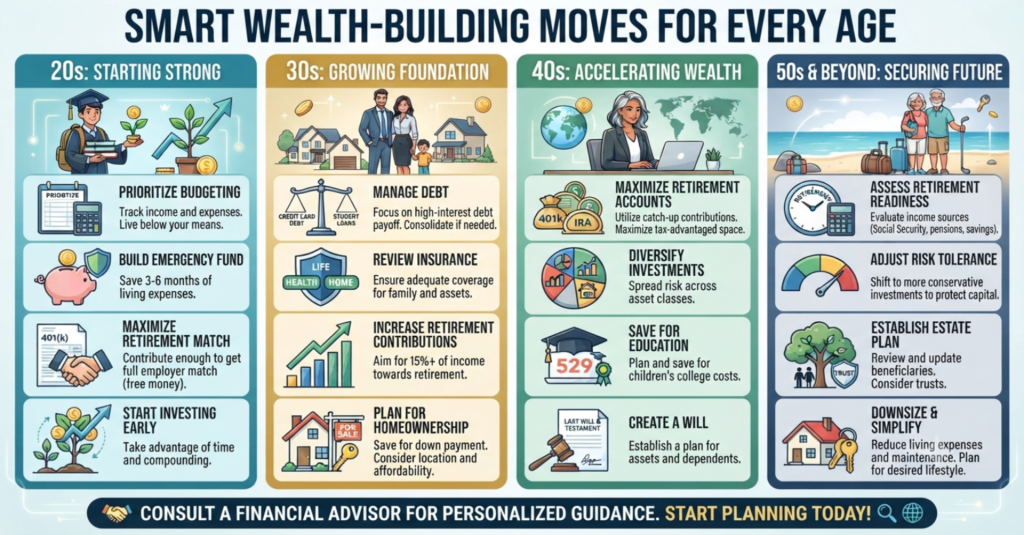
In Your 20s: Build Strong Financial Habits
Your twenties are the ideal time to establish financial habits that can benefit you for decades.
Although your income may still be growing, time is one of your greatest financial advantages.
Focus on these priorities:
- Create a monthly budget.
- Build an emergency fund.
- Begin investing early.
- Pay bills on time.
- Avoid unnecessary debt.
Furthermore, developing disciplined spending habits now can prevent financial stress later in life.
Even modest monthly investments can benefit from compound growth over several decades.
Consequently, starting early often matters more than investing large amounts later.
In Your 30s: Accelerate Wealth Building
Many people experience significant career growth during their thirties.
As income increases, financial opportunities often expand as well.
However, this decade also brings larger responsibilities such as buying a home or raising a family.
Therefore, balancing spending with long-term saving becomes especially important.
Consider these wealth-building strategies:
- Increase retirement contributions.
- Invest consistently each month.
- Pay down high-interest debt.
- Maintain adequate insurance.
- Avoid lifestyle inflation.
Moreover, every raise should become an opportunity to improve your financial future rather than simply increasing expenses.
In Your 40s: Strengthen Your Financial Position
By your forties, many long-term financial goals become more immediate.
Retirement may still be years away. Nevertheless, it deserves greater attention.
At this stage, review your progress carefully.
Ask yourself:
- Am I saving enough?
- Is my investment portfolio diversified?
- Do I have adequate emergency savings?
- Am I reducing debt consistently?
Furthermore, increasing retirement contributions whenever possible can help close potential savings gaps.
Meanwhile, reviewing your investment strategy regularly helps ensure it still aligns with your goals.
In Your 50s: Prepare for Retirement
Your fifties often represent an important transition period.
Rather than starting over, many people focus on strengthening the wealth they’ve already built.
Priorities during this stage may include:
- Maximizing retirement contributions.
- Paying off remaining debt.
- Reviewing healthcare costs.
- Estimating retirement income.
- Updating estate planning documents.
Additionally, many workers become eligible for catch-up retirement contributions, allowing them to save even more for the future.
Consequently, this decade provides an excellent opportunity to improve long-term financial security.
In Your 60s and Beyond: Protect Your Wealth
As retirement approaches or begins, protecting your wealth becomes increasingly important.
Instead of focusing only on growth, many retirees also prioritize income, stability, and preserving their assets.
Important financial considerations include:
- Creating a retirement income strategy.
- Managing investment withdrawals.
- Reviewing healthcare expenses.
- Maintaining an emergency fund.
- Updating beneficiary information.
Furthermore, reviewing your financial plan annually can help ensure it continues supporting your changing lifestyle.
Although retirement introduces new financial decisions, disciplined planning remains just as valuable as ever.
Wealth-Building Habits That Matter at Every Age
While financial priorities change over time, some habits remain valuable throughout life.
These include:
- Living below your means.
- Investing consistently.
- Tracking your net worth.
- Building emergency savings.
- Avoiding high-interest debt.
- Continuing financial education.
- Reviewing financial goals annually.
Moreover, these habits don’t depend on your age or income.
Instead, they reflect the consistent behaviors that support long-term financial success.
Consequently, practicing them year after year can strengthen your financial future regardless of where you are in life.
Common Wealth-Building Mistakes to Avoid
Building wealth takes time. However, a few common mistakes can slow your progress regardless of your age. Fortunately, recognizing these habits early can help you stay on track.
Waiting Too Long to Start
Many people delay saving or investing because they believe they need more income.
However, time is one of the most valuable assets in wealth building. Even small, consistent contributions can grow significantly through compound returns.
Therefore, starting today is often better than waiting for the “perfect” opportunity.
Increasing Your Lifestyle With Every Raise
Higher income creates more financial flexibility. Nevertheless, it can also encourage higher spending.
For example, a promotion may lead to a more expensive car, larger home, or frequent luxury purchases.
Instead, use part of every raise to:
- Increase retirement contributions.
- Build emergency savings.
- Invest in diversified assets.
- Pay off high-interest debt.
As a result, your net worth can grow faster while your lifestyle remains sustainable.
Ignoring Retirement Planning
Retirement may seem far away when you’re young. Even so, delaying contributions means losing valuable years of compound growth.
Consequently, contribute regularly to retirement accounts whenever possible.
Moreover, review your contributions each year and increase them as your income grows.
Carrying High-Interest Debt
High-interest debt reduces the amount of money available for saving and investing.
Therefore, paying off expensive debt should remain a priority at every stage of life.
Once those balances are reduced, redirect those monthly payments toward building wealth.
Not Reviewing Your Financial Progress
Life changes constantly. Because of that, your financial plan should evolve as well.
Review your:
- Budget
- Savings rate
- Investment portfolio
- Retirement accounts
- Insurance coverage
- Financial goals
Regular reviews allow you to make adjustments before small issues become larger problems.
How Your Investment Strategy May Change With Age
Although everyone’s financial situation is different, investment strategies often evolve over time.
In Your 20s and 30s
Many younger investors have longer time horizons.
Therefore, they may focus primarily on long-term growth while continuing to invest consistently.
Meanwhile, diversification remains essential regardless of age.
In Your 40s
As retirement becomes more visible, many investors begin reviewing their portfolio allocations more carefully.
Rather than chasing higher returns, they often place greater emphasis on balancing growth with appropriate risk.
In Your 50s and 60s
Protecting accumulated wealth often becomes a larger priority.
Consequently, many investors review their retirement income strategy, withdrawal plans, and overall asset allocation.
However, investment decisions should always reflect personal goals, time horizon, and risk tolerance.
Financial Habits That Build Wealth for Life
Although financial priorities evolve, certain habits remain valuable throughout every decade.
Consider making these practices part of your routine:
- Save before you spend.
- Invest every month.
- Live below your means.
- Build multiple income sources when practical.
- Review your budget regularly.
- Increase savings after raises.
- Avoid unnecessary debt.
- Continue learning about personal finance.
- Track your net worth.
- Update your financial goals annually.
Individually, these habits may seem small. Collectively, they can have a meaningful impact on long-term financial success.
Frequently Asked Questions
When is the best age to start building wealth?
The best time to begin is as early as possible. However, it’s never too late to improve your financial habits and work toward long-term goals.
Should my financial strategy change as I get older?
Yes. Your income, family responsibilities, retirement timeline, and financial goals may change over time. Consequently, reviewing your strategy regularly helps keep it aligned with your current needs.
Is investing more important than saving?
Both play important roles. Savings provide financial stability for short-term needs and emergencies, while investing offers the potential for long-term growth.
How often should I review my financial plan?
Many financial professionals recommend reviewing your overall financial plan at least once each year or after major life events such as marriage, buying a home, changing jobs, or retiring.
What’s the biggest mistake people make when building wealth?
One of the most common mistakes is waiting too long to start. In addition, overspending, carrying high-interest debt, and neglecting retirement planning can also slow long-term financial progress.
Final Thoughts
Building wealth isn’t about reaching a certain income level or following a complicated investment strategy. Instead, it’s about making smart financial decisions consistently throughout every stage of life. Whether you’re in your twenties, forties, or approaching retirement, each decade offers valuable opportunities to strengthen your financial future.
Moreover, the habits that create lasting wealth rarely change. Saving consistently, investing with a long-term perspective, avoiding unnecessary debt, and living below your means remain effective regardless of your age. Although your priorities will evolve, those core principles continue to support financial success.
Above all, focus on steady progress rather than perfection. Every budget you follow, every investment you make, and every dollar you save moves you closer to your goals. Consequently, the choices you make today can help create greater financial freedom, security, and confidence for years to come.
Investor.gov – Investing Basics