
 MOHAMMAD ABUBAKR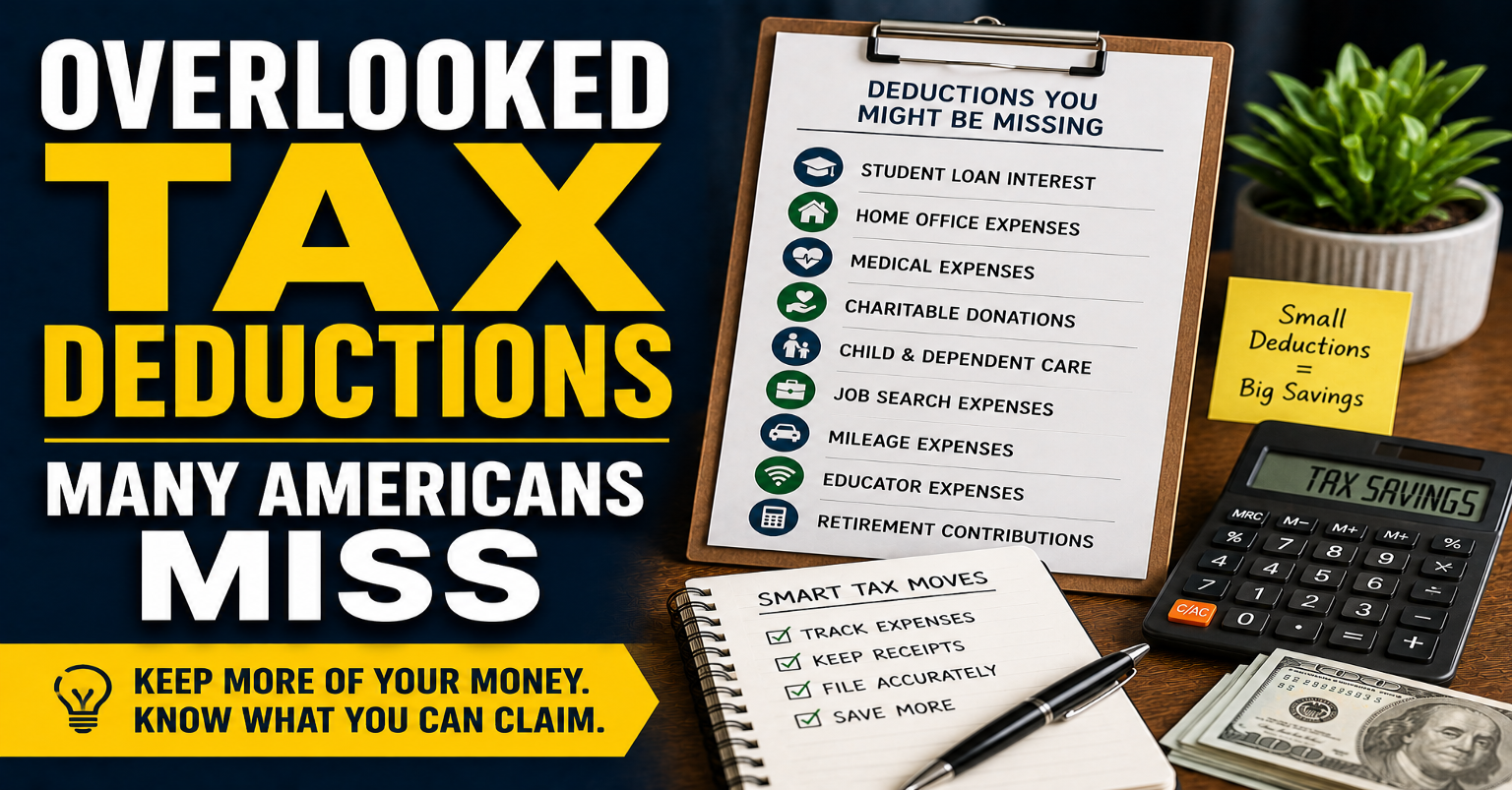
Every tax season, millions of Americans search for ways to reduce their tax bill. However, many taxpayers overlook valuable deductions simply because they don’t know they exist or assume they don’t qualify. As a result, they may end up paying more in taxes than necessary.
Fortunately, understanding common tax deductions can help you prepare more effectively before filing your return. While not every deduction applies to every taxpayer, knowing what’s available allows you to ask the right questions and keep better financial records throughout the year.
Moreover, tax laws can change over time. Therefore, it’s important to review current tax rules each year and determine whether itemizing deductions or claiming the standard deduction makes the most financial sense for your situation.
Whether you prepare your own taxes or work with a tax professional, learning about overlooked deductions can help you make more informed financial decisions.
Common Tax Filing Mistakes to Avoid
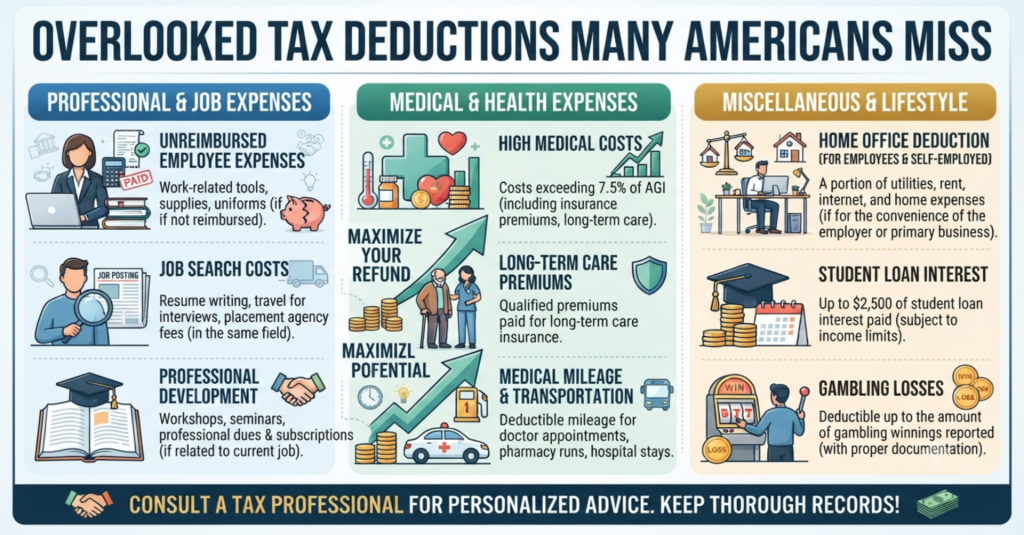
Let’s look at several tax deductions that many Americans often overlook.
1. Traditional IRA Contributions
Contributing to a Traditional Individual Retirement Account (IRA) may provide a valuable tax benefit for eligible taxpayers.
Depending on your income, filing status, and workplace retirement plan coverage, some or all of your contributions may be deductible.
Furthermore, contributing to retirement accounts can support both your current tax strategy and your long-term financial goals.
Review the annual contribution limits before making your contribution.
2. Health Savings Account (HSA) Contributions
If you’re enrolled in an eligible high-deductible health plan, contributions to a Health Savings Account (HSA) may qualify for a tax deduction.
HSAs offer several potential advantages:
- Tax-deductible contributions
- Tax-deferred growth
- Tax-free withdrawals for qualified medical expenses
Consequently, many taxpayers consider HSAs an important part of both healthcare and retirement planning.
3. Student Loan Interest
Some taxpayers may qualify to deduct eligible student loan interest paid during the year.
Although income limits apply, this deduction may reduce taxable income even if you don’t itemize deductions.
Keep records of the interest paid and review your eligibility before filing.
4. Self-Employed Health Insurance Premiums
Self-employed individuals may qualify to deduct eligible health insurance premiums.
Depending on your situation, this deduction may apply to coverage for:
- Yourself
- Your spouse
- Dependents
Therefore, if you’re self-employed, review the current IRS rules carefully to determine your eligibility.
5. Charitable Contributions
Charitable giving remains an important deduction for taxpayers who itemize.
Eligible donations may include:
- Cash contributions
- Clothing
- Household goods
- Certain appreciated assets
Furthermore, maintaining receipts and proper documentation is essential when claiming charitable deductions.
6. Home Office Deduction
Some self-employed individuals who regularly use part of their home exclusively for business purposes may qualify for the home office deduction.
Eligible expenses may include portions of:
- Rent or mortgage interest
- Utilities
- Home insurance
- Internet service
- Repairs
However, eligibility rules are specific, so review IRS requirements carefully before claiming this deduction.
7. Educator Expenses
Eligible teachers and certain educators may deduct qualified classroom expenses.
Examples include:
- Books
- Classroom supplies
- Educational materials
- Certain professional development costs
Although the deduction amount is limited, it can still provide meaningful tax savings for qualifying educators.
8. State and Local Taxes (SALT)
Taxpayers who itemize may deduct certain state and local taxes, subject to federal limitations.
These may include:
- State income taxes
- State sales taxes
- Property taxes
Because deduction limits apply, review current IRS rules to understand how they affect your tax return.
9. Mortgage Interest Deduction
For eligible homeowners, mortgage interest may be deductible if you itemize your deductions.
However, this deduction is subject to IRS rules and loan limitations.
Therefore, keep annual mortgage statements and review current eligibility requirements before filing your tax return.
Proper documentation can make the filing process much easier.
10. Medical and Dental Expenses
Some taxpayers may qualify to deduct certain unreimbursed medical and dental expenses.
Eligible costs may include:
- Doctor visits
- Hospital services
- Prescription medications
- Dental treatments
- Vision care
Nevertheless, these expenses are generally deductible only if they exceed specific IRS thresholds.
Consequently, keeping organized records throughout the year is essential.
11. Business Expenses for Self-Employed Individuals
If you’re self-employed, many ordinary and necessary business expenses may qualify as deductions.
Examples include:
- Office supplies
- Business software
- Professional memberships
- Business insurance
- Marketing costs
- Business travel
Furthermore, maintaining accurate financial records helps support these deductions if questions arise later.
12. Retirement Account Contributions
Beyond Traditional IRAs, certain self-employed retirement plans may also provide valuable tax benefits.
Depending on your circumstances, contributions to eligible retirement plans can reduce taxable income while helping you build long-term financial security.
Therefore, review available retirement savings options before the end of each tax year.
Keep Good Tax Records All Year
One of the easiest ways to avoid missing deductions is to stay organized.
Instead of searching for documents during tax season, create a system for storing financial records throughout the year.
Keep copies of:
- Receipts
- Donation records
- Mortgage statements
- Medical bills
- Education expenses
- Business records
- Retirement contribution confirmations
Moreover, digital copies can make documents easier to organize and access when preparing your return.
Common Tax Deduction Mistakes to Avoid
Even experienced taxpayers sometimes overlook important details.
Fortunately, avoiding these mistakes can make filing smoother and more accurate.
Assuming You Don’t Qualify
Many taxpayers never research available deductions because they assume they aren’t eligible.
Instead, review current IRS guidance or consult a qualified tax professional before filing.
Poor Recordkeeping
Without proper documentation, claiming deductions becomes much more difficult.
Therefore, save receipts, statements, and tax documents throughout the year.
Good organization reduces stress during tax season.
Forgetting Small Eligible Expenses
Small deductions may not seem significant individually.
However, several smaller deductions combined could meaningfully reduce your taxable income.
Review your financial records carefully before completing your return.
Ignoring Tax Law Changes
Federal tax rules can change from year to year.
Consequently, deductions, income limits, and filing requirements may also change.
Review current IRS guidance each tax season instead of relying on information from previous years.
Smart Habits That May Help During Tax Season
Developing good financial habits can make tax preparation much easier.
Consider these practices:
- Organize tax documents year-round.
- Save receipts for eligible expenses.
- Track charitable donations.
- Review retirement contributions annually.
- Keep business records updated.
- Store digital copies of important documents.
- Review tax law changes each year.
- File your return before the deadline.
- Double-check every entry before submitting.
- Consult a qualified tax professional when needed.
Although these habits require consistency, they can help reduce filing errors and make it easier to identify eligible deductions.
Frequently Asked Questions
Should everyone itemize deductions?
Not necessarily. Many taxpayers benefit more from claiming the standard deduction, while others may save more by itemizing. The better option depends on your individual financial situation and current tax laws.
Can I claim deductions without receipts?
Many deductions require documentation to support your claim. Therefore, keeping receipts and financial records is an important part of accurate tax filing.
Do tax deduction rules change?
Yes. Federal tax laws, deduction limits, and income thresholds can change over time. Review current IRS guidance each year before filing your return.
Are retirement contributions tax deductible?
Some retirement contributions may qualify for tax deductions if eligibility requirements are met. The available deduction depends on factors such as income, filing status, and retirement plan participation.
What’s the biggest mistake taxpayers make?
One common mistake is overlooking deductions because of poor recordkeeping or assuming they don’t qualify. Staying organized throughout the year can help reduce this risk.
Final Thoughts
Tax deductions can play an important role in lowering your taxable income and improving your overall financial plan. However, many Americans miss valuable opportunities simply because they aren’t aware of available deductions or fail to keep the necessary records. Therefore, learning about common deductions and staying organized throughout the year can make tax season much less stressful.
Moreover, tax planning shouldn’t begin only when it’s time to file your return. Tracking expenses, saving receipts, reviewing retirement contributions, and understanding current tax rules all contribute to better financial decisions. Consequently, preparing throughout the year may help you identify deductions that could otherwise be overlooked.
Above all, remember that every taxpayer’s situation is different. Before claiming any deduction, confirm that you meet the current IRS requirements or consult a qualified tax professional. Taking that extra step can help you file with greater confidence while avoiding unnecessary errors.