 MOHAMMAD ABUBAKR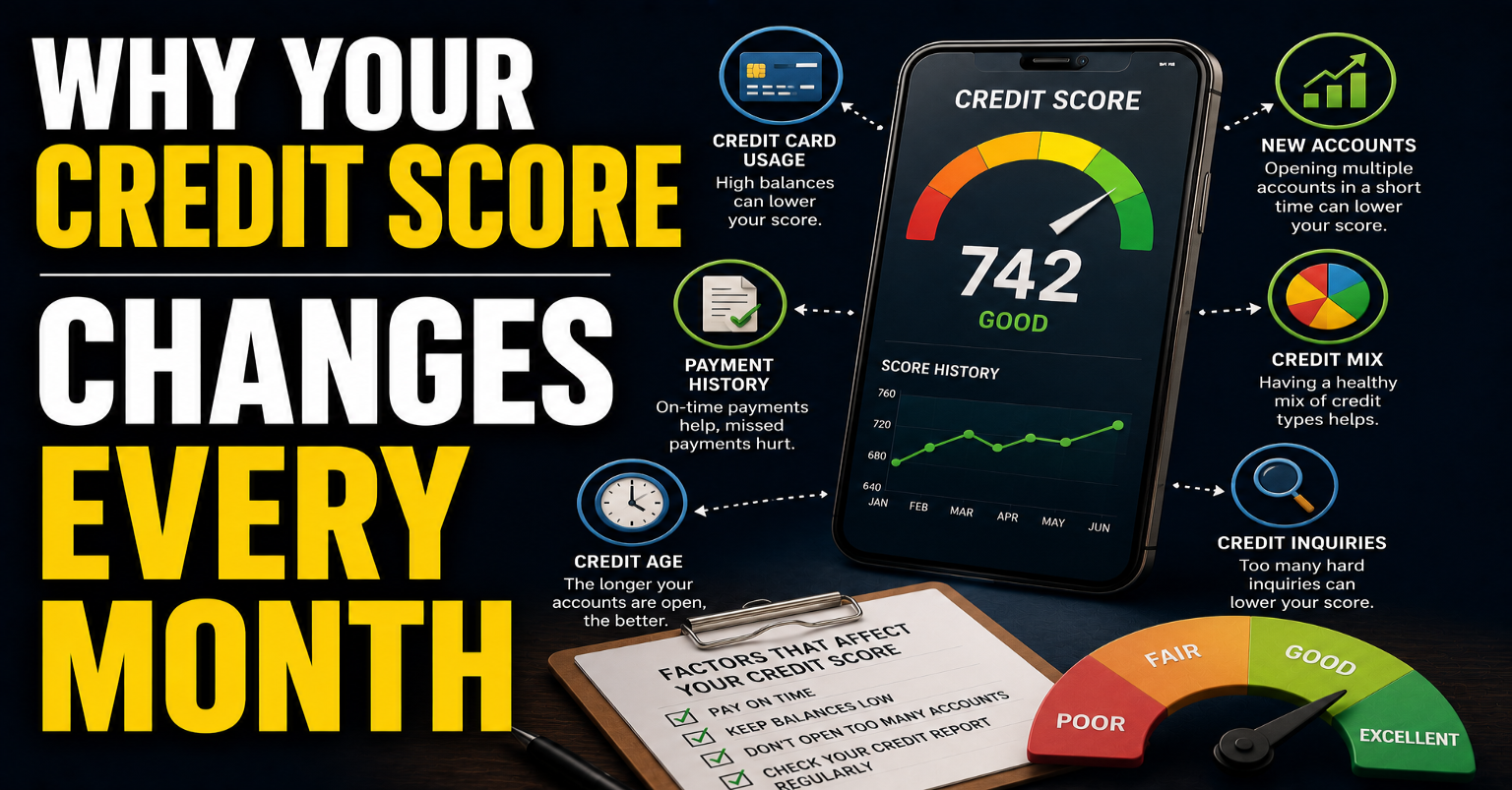
Introduction
Have you ever checked your credit score and noticed that it changed even though you didn’t apply for a new loan?
You’re not alone.
Many Americans see small changes in their credit scores from month to month and wonder what caused them.
In most cases, these changes are completely normal.
Your credit score is based on information in your credit report, and that information is updated regularly.
As balances change, payments are reported, and accounts age, your score can move up or down.
In this guide, you’ll learn why your credit score changes every month and what you can do to keep it healthy over time.
Why Credit Scores Change
Credit scores are designed to reflect your current credit behavior.
As new information is added to your credit report, your score may also change.
Common reasons include:
- New payment information
- Changes in credit card balances
- Recently opened accounts
- Credit inquiries
- Account age
- Updated credit report data
Understanding these factors can help you avoid unnecessary worry.
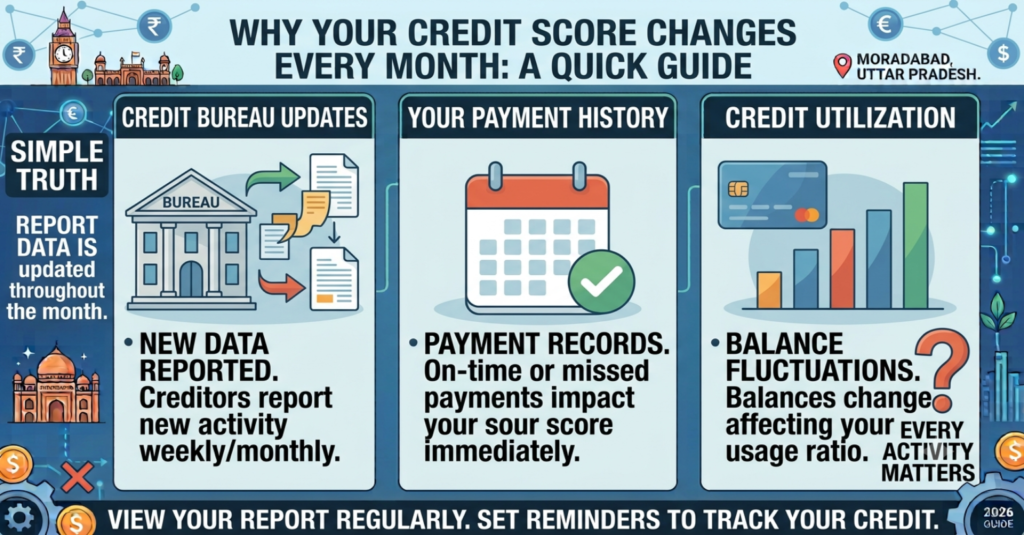
1. Your Credit Card Balance Changes
One of the most common reasons for monthly credit score changes is your credit card balance.
Even if you pay your card in full every month, your balance at the time your issuer reports to the credit bureaus may be different.
Higher reported balances can temporarily affect your score.
Keeping balances low relative to your available credit may help maintain a stronger credit profile.
2. Your Payment History Is Updated
Lenders regularly report payment activity to the credit bureaus.
Making payments on time helps strengthen your credit history.
On the other hand, late payments can negatively affect your score if they are reported.
Consistent, on-time payments remain one of the most important habits for maintaining good credit.
Payment history plays a major role in your credit score. Read our How One Missed Payment Can Affect Your Credit guide to understand how late payments can influence your credit profile and how to avoid them.
3. Your Credit Utilization Changes
Credit utilization measures how much of your available revolving credit you are using.
For example, if you have a $10,000 credit limit and a $2,000 balance, your utilization is 20%.
As balances increase or decrease throughout the month, your utilization changes.
Lower utilization is generally viewed more favorably by many credit scoring models.
4. New Accounts Affect Your Credit Profile
Opening a new credit card or loan changes your credit profile.
A new account may:
- Reduce the average age of your accounts.
- Add a credit inquiry.
- Increase your available credit over time.
The overall impact depends on your complete credit history and how you manage the new account.
5. Credit Reports Receive New Information
Credit reports are updated regularly.
Your lenders may report:
- New balances.
- Payments received.
- Closed accounts.
- Updated account status.
As this information changes, your credit score may also move slightly from month to month.
6. Older Accounts Continue to Age
The age of your credit accounts also influences your overall credit profile.
As accounts become older and remain in good standing, they may contribute positively to your credit history.
Maintaining long-standing accounts responsibly can strengthen your credit over time.
Small Changes Are Usually Normal
Monthly credit score fluctuations are common.
A small increase or decrease does not always indicate a problem.
Instead, focus on building consistent financial habits that support long-term credit health.
7. Hard Credit Inquiries May Affect Your Score
Applying for new credit can result in a hard inquiry on your credit report.
Hard inquiries may occur when you apply for:
- Credit cards
- Auto loans
- Personal loans
- Mortgages
A single hard inquiry usually has a limited impact for many people.
However, submitting several credit applications within a short period may affect your credit score more noticeably.
Apply for new credit only when it aligns with your financial needs.
8. Closing Accounts Can Influence Your Credit
Closing a credit card account may seem like a smart way to simplify your finances.
However, it can sometimes affect your credit profile by:
- Reducing your available credit.
- Increasing your credit utilization ratio.
- Shortening your active credit history over time.
Before closing an account, consider how it fits into your overall financial strategy.
9. Different Credit Scores Can Vary
Many people are surprised to see different credit scores on different websites.
This is normal.
Different lenders and financial platforms may use different credit scoring models or update information at different times.
Instead of focusing on small differences, watch for long-term trends in your credit health.
10. Good Financial Habits Improve Credit Over Time
The best way to maintain a healthy credit score is through consistency.
Focus on habits such as:
- Paying every bill on time.
- Keeping credit card balances low.
- Monitoring your credit reports regularly.
- Limiting unnecessary credit applications.
- Maintaining older accounts when appropriate.
Strong financial habits often produce better long-term results than trying to improve your score quickly.
How to Keep Your Credit Score Healthy
Building good credit is an ongoing process.
Simple steps can make a meaningful difference:
- Review your credit reports regularly.
- Set up automatic payments.
- Keep your spending within your budget.
- Pay your statement balances on time.
- Check your credit score periodically.
- Correct errors on your credit report if you find any.
Consistency is one of the most effective ways to build long-term credit strength.
The Consumer Financial Protection Bureau (CFPB) provides trusted information about credit reports, credit scores, payment history, and consumer rights. Reviewing these resources can help you better understand why your credit score changes and how to build strong credit over time.
Frequently Asked Questions
Is it normal for my credit score to change every month?
Yes.
Small monthly changes are common because lenders regularly update information such as payments, balances, and account activity.
Why did my credit score drop even though I paid my bills?
Your score can change for several reasons, including higher reported credit card balances, a new credit inquiry, or updates to your credit report.
A small drop does not always indicate a serious problem.
How often should I check my credit score?
Checking your credit score once a month is enough for many people.
Regular monitoring helps you identify changes and detect potential problems early.
Can I improve my credit score quickly?
Improving credit usually takes time.
Consistently making on-time payments and using credit responsibly are among the most effective long-term strategies.
Final Thoughts
Your credit score is not fixed.
It changes as your financial activity changes.
Most monthly fluctuations are completely normal.
Instead of worrying about every small increase or decrease, focus on responsible financial habits.
Pay your bills on time.
Keep balances manageable.
Monitor your credit reports regularly.
Over time, these habits can help you build and maintain a stronger credit profile.