
 MOHAMMAD ABUBAKR
Money problems rarely appear overnight. Instead, they grow over time. At first, the signs may seem small. However, ignoring them can lead to bigger financial challenges. Therefore, learning to recognize these warning signs early can help you stay in control.
Whether you are building savings, paying off debt, or planning for retirement, understanding these financial warning signs is essential. This guide explains the most common red flags and offers practical solutions for protecting your financial future.
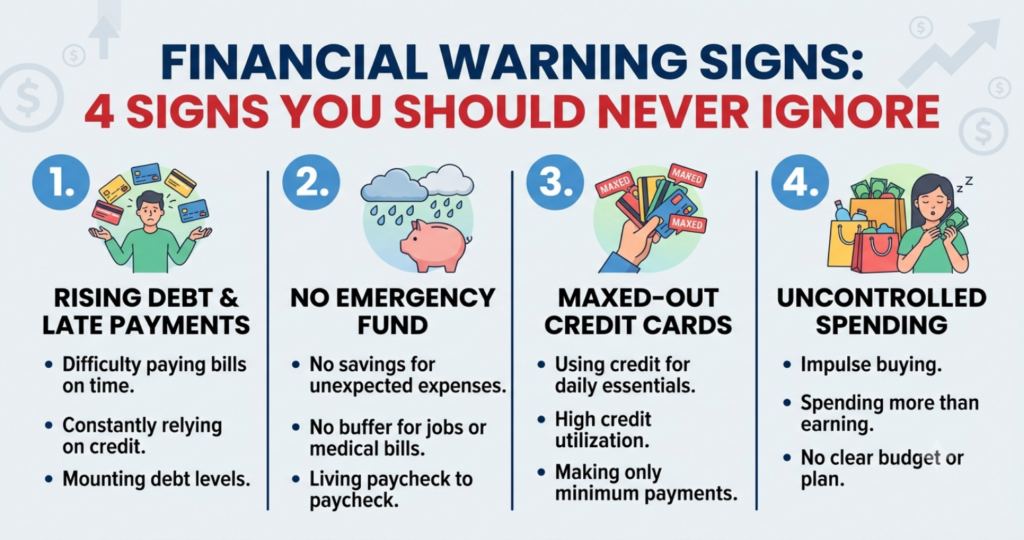
1. Living Paycheck to Paycheck
Many Americans rely on every paycheck to cover monthly expenses. Although this may seem normal, it is one of the biggest financial warning signs.
If an unexpected expense, such as a car repair or medical bill, causes stress, your budget may need improvement.
How to fix it
- Track every expense.
- Create a monthly budget.
- Reduce unnecessary spending.
- Save part of every paycheck.
Even saving a small amount each month can make a big difference over time.
2. Growing Credit Card Debt
Credit cards offer convenience. However, carrying large balances month after month can become expensive.
High-interest debt grows quickly. As a result, you may spend hundreds or even thousands of dollars on interest alone.
Warning signs include:
- Paying only the minimum payment.
- Using one credit card to pay another.
- Maxing out your credit limits.
What you should do
Focus on paying high-interest cards first. In addition, avoid adding new debt until existing balances are under control.
3. No Emergency Fund
Life is unpredictable. Cars break down. Jobs change. Medical emergencies happen.
Without emergency savings, you may depend on loans or credit cards during difficult times.
Financial experts often recommend saving three to six months of living expenses. However, starting with $500 or $1,000 is still a smart first step.
An emergency fund gives you peace of mind during unexpected situations. However, building savings can feel difficult when prices keep rising. That’s why learning Smart Ways to Save Money During Inflation can help you reduce unnecessary expenses and grow your emergency fund faster.
4. Missing Bill Payments
Late payments hurt more than your wallet.
They can:
- Lower your credit score.
- Increase interest rates.
- Add costly late fees.
- Make future borrowing more difficult.
Therefore, set up automatic payments or reminders to stay on schedule.
5. Spending More Than You Earn
This habit creates long-term financial stress.
If your monthly expenses consistently exceed your income, debt usually follows.
Instead of increasing spending, review your budget every month.
Ask yourself:
- Do I really need this purchase?
- Can I find a cheaper alternative?
- Can I delay buying it?
Small changes often create significant savings.
6. Having No Retirement Plan
Many people believe retirement is too far away to worry about today.
However, delaying retirement savings means losing valuable years of compound growth.
If your employer offers a retirement plan with matching contributions, try to contribute enough to receive the full match. Otherwise, you are leaving free money behind.
7. Ignoring Your Credit Score
Your credit score affects much more than loans.
It may influence:
- Mortgage approval
- Car loan interest rates
- Apartment applications
- Insurance costs
Therefore, review your credit report regularly. Correct any errors as soon as possible.
8. Depending on One Source of Income
A single income source creates financial risk.
If you suddenly lose your job, your finances can suffer immediately.
Instead, consider building additional income through:
- Freelancing
- Investing
- Rental property
- Online businesses
- Dividend-paying stocks
Multiple income streams improve financial stability.
9. No Monthly Budget
Without a budget, it’s easy to lose track of spending.
Many people underestimate how much they spend on dining out, subscriptions, and impulse purchases.
A simple monthly budget helps you:
- Control spending.
- Reach savings goals.
- Avoid unnecessary debt.
- Plan for future expenses.
Budgeting gives every dollar a purpose.
10. Constantly Borrowing Money
Occasionally borrowing money is understandable.
However, borrowing every month is a serious financial warning sign.
If friends, family, or lenders regularly help cover your expenses, it’s time to evaluate your financial habits.
Reducing expenses and increasing income should become top priorities.
11. Using Savings for Everyday Bills
Savings should protect you during emergencies.
If you regularly withdraw from savings to pay routine expenses, your income may not cover your lifestyle.
This pattern cannot continue forever.
Instead, review your monthly expenses and identify areas where you can reduce spending.
12. Ignoring Insurance Coverage
Insurance protects your finances from unexpected events.
Without enough coverage, one accident or illness could create enormous financial hardship.
Review your:
- Health insurance
- Auto insurance
- Homeowners or renters insurance
- Life insurance
Update coverage whenever your financial situation changes.
13. Making Emotional Purchases
Stress, excitement, and boredom often lead to impulse buying.
Although shopping may provide temporary happiness, it can quickly damage your finances.
Before making a large purchase:
- Wait 24 hours.
- Compare prices.
- Ask if the purchase supports your financial goals.
Often, the urge disappears.
14. Having No Financial Goals
People without financial goals often spend without direction.
Instead, create clear objectives such as:
- Saving for a house.
- Paying off debt.
- Building retirement savings.
- Starting a business.
- Creating a college fund.
Specific goals help you make smarter financial decisions every day.
15. Avoiding Financial Conversations
Many people avoid checking bank accounts because they fear bad news.
Unfortunately, ignoring financial problems rarely makes them disappear.
Instead:
- Review your accounts weekly.
- Monitor spending.
- Track investments.
- Update your budget monthly.
Small financial checkups prevent major financial problems.
How to Stay Financially Healthy
Building strong finances takes time. However, consistent habits create lasting results.
Here are a few smart practices:
- Spend less than you earn.
- Save regularly.
- Invest for the future.
- Pay bills on time.
- Reduce high-interest debt.
- Review your financial goals every few months.
Even small improvements today can create a stronger financial future tomorrow.
Managing your money becomes easier when you rely on trusted financial resources. The Consumer Financial Protection Bureau (CFPB) offers practical guidance on budgeting, debt management, credit scores, and financial planning. Reviewing these resources can help you make informed financial decisions and avoid costly mistakes.
Final Thoughts
Financial warning signs often appear long before serious money problems develop. Fortunately, recognizing these red flags early allows you to make smarter decisions and avoid unnecessary stress.
Whether it’s growing debt, missing payments, or living without savings, every warning sign offers an opportunity to improve your financial health. Start by making one positive financial change today. Then build on that success over time. As a result, you’ll be better prepared for unexpected challenges and more confident about your financial future.
By staying aware, creating a realistic budget, and saving consistently, you can strengthen your finances and achieve greater peace of mind. Remember, the best time to fix financial problems is before they become financial emergencies.