
 MOHAMMAD ABUBAKR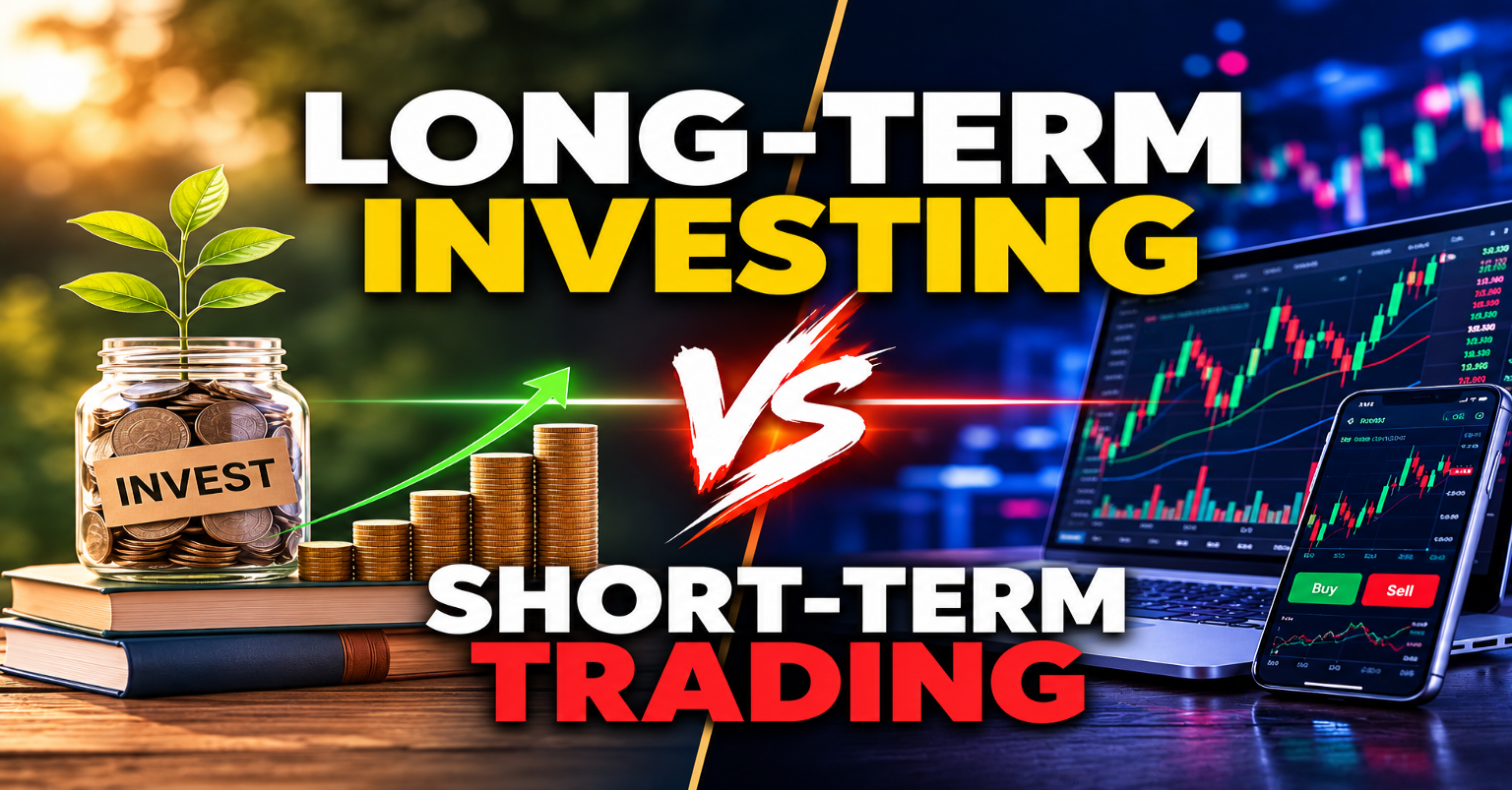
Introduction
Many people enter the stock market with the same goal—growing their money.
However, not everyone follows the same strategy.
Some investors buy quality investments and hold them for years.
Others actively buy and sell securities over short periods in an attempt to profit from price movements.
Both approaches have advantages and challenges.
Understanding the differences between long-term investing and short-term trading can help you choose the strategy that best matches your financial goals, risk tolerance, and available time.
In this guide, we’ll compare long-term investing vs short-term trading so you can make more informed financial decisions.
Understanding the Difference
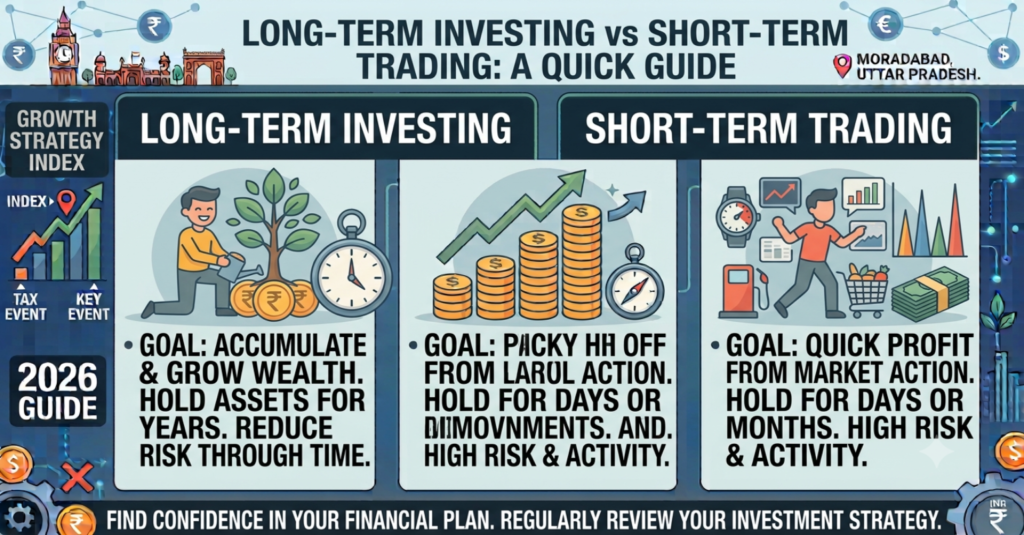
Although both involve buying financial assets, their objectives are different.
Long-term investing focuses on building wealth gradually over many years.
Short-term trading focuses on attempting to profit from short-term market price movements.
The right approach depends on your financial goals and investing style.
1. Time Horizon
The biggest difference is how long you plan to hold an investment.
Long-term investors may hold investments for:
- Several years.
- Ten years or longer.
- Multiple decades.
Short-term traders may hold positions for:
- A single day.
- Several days.
- A few weeks.
- Occasionally a few months.
Your investment timeline affects nearly every financial decision you make.
2. Investment Goals
Long-term investing is generally designed to help build wealth over time.
Common goals include:
- Retirement savings.
- Financial independence.
- College savings.
- Long-term wealth building.
Short-term trading often focuses on generating profits from shorter market movements rather than achieving long-term financial objectives.
Before choosing an investing style, read our Investing Lessons From the Last 20 Years guide to understand timeless principles that have helped investors navigate changing market conditions.
3. Risk Levels
Every investment involves risk.
However, the type of risk often differs.
Long-term investors may experience temporary market declines while waiting for investments to grow over time.
Short-term traders may face greater day-to-day price volatility because they rely on frequent market movements.
Understanding your personal risk tolerance is essential before choosing either strategy.
4. Time Commitment
Long-term investing generally requires less daily attention.
Many long-term investors review their portfolios periodically rather than monitoring prices every hour.
Short-term trading often requires:
- Frequent market research.
- Daily price monitoring.
- Technical analysis.
- Quick decision-making.
- Regular trade execution.
The amount of time you can dedicate may influence which approach is more suitable.
5. Emotional Discipline
Both investing and trading require emotional control.
Long-term investors often benefit from ignoring short-term market noise.
Short-term traders may need to make rapid decisions without allowing fear or excitement to influence their actions.
Developing discipline is important regardless of your strategy.
6. Costs Can Affect Returns
Buying and selling frequently may increase investment costs.
Examples include:
- Trading commissions (where applicable).
- Bid-ask spreads.
- Taxes on gains.
- Other transaction costs.
Long-term investors often trade less frequently, which may reduce some of these costs over time.
Choose a Strategy That Fits You
Neither long-term investing nor short-term trading is automatically better.
The right choice depends on your goals, experience, available time, and willingness to accept risk.
7. Research Requirements
Successful investing and trading both require research, but the focus is different.
Long-term investors often evaluate:
- Company fundamentals.
- Financial performance.
- Industry trends.
- Competitive advantages.
- Long-term growth potential.
Short-term traders may focus more on:
- Price movements.
- Trading volume.
- Technical indicators.
- Market momentum.
- Short-term news events.
Understanding your preferred research style can help you choose the approach that fits you best.
8. Diversification Matters
Diversification is a common strategy for managing investment risk.
Long-term investors often build diversified portfolios that include different sectors and asset types.
Short-term traders may concentrate on fewer positions because they actively manage individual trades.
Regardless of your strategy, avoiding excessive concentration in a single investment can help reduce overall risk.
9. Consistency Often Beats Chasing Trends
Many new investors switch strategies whenever markets change.
Constantly changing your approach can make it difficult to achieve long-term financial goals.
Instead:
- Develop a clear investment plan.
- Stay consistent.
- Review your progress regularly.
- Adjust only when your financial goals change.
Consistency is one of the most valuable habits in investing.
10. Your Financial Goals Should Guide Your Decision
There is no universal strategy that works for everyone.
Ask yourself:
- Am I investing for retirement?
- Do I have time to monitor markets daily?
- How much risk am I comfortable taking?
- What is my investment timeline?
Your answers will help determine whether long-term investing, short-term trading, or a combination of both is appropriate.
Common Mistakes to Avoid
Whether you choose investing or trading, avoid these common mistakes:
- Chasing market hype.
- Letting emotions drive decisions.
- Ignoring diversification.
- Investing without clear goals.
- Taking more risk than you can comfortably handle.
- Failing to continue learning.
Good financial decisions usually come from patience, planning, and discipline rather than reacting to short-term market movements.
Investor.gov, operated by the U.S. Securities and Exchange Commission (SEC), provides free educational resources on investing, diversification, investment risk, and long-term financial planning. It’s a reliable source for both new and experienced investors.
Frequently Asked Questions
Which is better: long-term investing or short-term trading?
Neither is universally better.
Long-term investing may suit people focused on building wealth gradually, while short-term trading may appeal to those who actively follow the markets and understand the additional risks involved.
Is long-term investing less risky?
No investment is risk-free.
However, long-term investing may reduce the impact of short-term market volatility compared with frequent trading.
Can beginners start with long-term investing?
Many beginners choose long-term investing because it typically requires less frequent trading and emphasizes consistent, long-term financial goals.
Do I need to monitor the market every day?
Long-term investors generally do not monitor market prices every day.
Short-term traders often spend much more time analyzing market movements and managing trades.
Final Thoughts
Long-term investing and short-term trading are two very different approaches to participating in the financial markets.
The right strategy depends on your goals, experience, available time, and comfort with risk.
If your objective is building wealth over many years, a disciplined long-term investing strategy may be the better fit.
If you enjoy active market analysis and understand the additional risks, short-term trading may better match your interests.
Whichever path you choose, focus on education, consistency, and making informed financial decisions rather than reacting to short-term market noise.