 MOHAMMAD ABUBAKR
Introduction
Many people believe that earning more money automatically solves financial problems.
However, income is only one part of the equation.
Daily spending habits often have an even greater impact on long-term financial health.
Small financial decisions repeated over months and years can either strengthen your finances or quietly keep you living paycheck to paycheck.
The good news is that improving a few spending habits can make a meaningful difference without requiring a dramatic lifestyle change.
In this guide, you’ll learn the spending habits that often keep Americans financially stressed and practical ways to build healthier money habits.
Why Spending Habits Matter
Every dollar you earn has a purpose.
How you choose to spend, save, or invest that money influences your financial future.
Healthy spending habits can help you:
- Build savings.
- Reduce debt.
- Invest consistently.
- Prepare for emergencies.
- Reach long-term financial goals.
Small improvements often create lasting financial results.
1. Spending Without a Budget
One of the most common financial mistakes is spending without a plan.
A monthly budget helps you:
- Track expenses.
- Control unnecessary spending.
- Prioritize savings.
- Reduce financial stress.
Without a budget, it’s easy to lose track of where your money goes.
A budget helps you take control of your money before it controls you. Read our The Hidden Cost of Living Without a Budget guide to learn why budgeting is essential for long-term financial success.
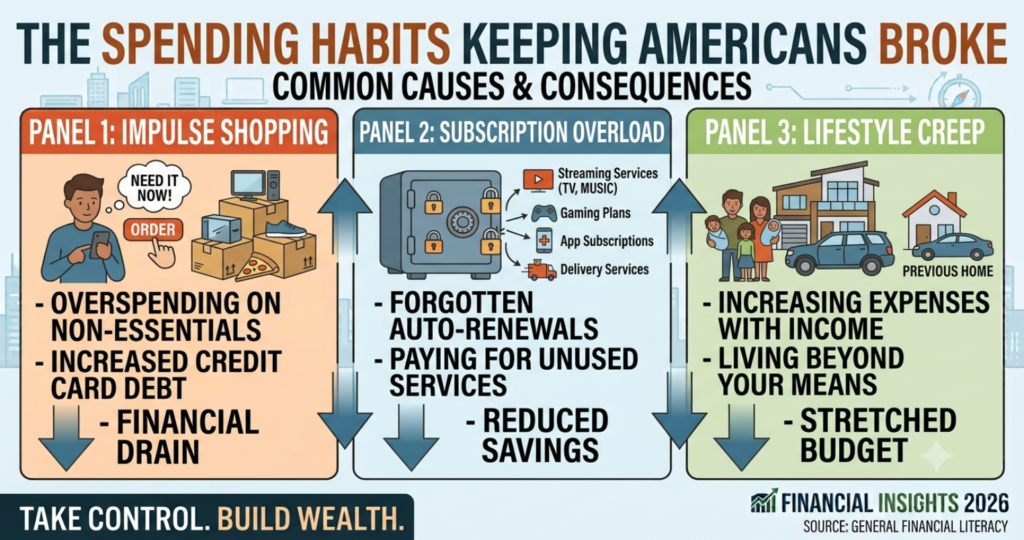
2. Buying on Impulse
Impulse purchases may seem harmless in the moment.
However, repeated unplanned spending can slowly reduce your ability to save and invest.
Waiting before making non-essential purchases often leads to better financial decisions.
3. Relying Too Much on Credit Cards
Credit cards can be useful financial tools when used responsibly.
Problems often arise when balances are carried from month to month.
Interest charges can increase the total cost of everyday purchases and make financial progress more difficult.
4. Ignoring Small Daily Expenses
Small purchases can accumulate quickly.
Examples include:
- Coffee.
- Food delivery.
- Convenience store snacks.
- Digital subscriptions.
- Impulse online shopping.
Reviewing these expenses regularly may reveal opportunities to improve your budget.
5. Increasing Spending After Every Raise
Many people spend more whenever their income increases.
This habit, often called lifestyle inflation, can make it difficult to build wealth even with a higher salary.
Instead of increasing every expense, consider directing part of each raise toward savings or investments.
6. Not Reviewing Monthly Bills
Many households continue paying the same recurring bills without checking for better options.
Regularly reviewing expenses such as:
- Insurance.
- Internet service.
- Mobile phone plans.
- Streaming subscriptions.
may help reduce monthly costs over time.
Better Spending Habits Lead to Better Financial Results
Financial success is usually built through consistent daily decisions rather than one major change.
Improving just a few spending habits can strengthen your financial future.
7. Shopping to Relieve Stress
Emotional spending can quietly damage your finances.
Many people shop when they feel:
- Stressed.
- Bored.
- Frustrated.
- Excited.
While an occasional treat isn’t necessarily a problem, making purchases to manage emotions can lead to unnecessary spending and make it harder to achieve long-term financial goals.
8. Not Saving Before Spending
Many households try to save whatever money remains at the end of the month.
Unfortunately, there often isn’t much left.
A better approach is to treat savings like a regular monthly expense by setting aside money before spending on non-essential items.
Automatic transfers can make this habit easier to maintain.
9. Ignoring Long-Term Financial Goals
Focusing only on today’s expenses can delay future financial success.
Regularly contributing toward goals such as:
- An emergency fund.
- Retirement savings.
- Investments.
- A home down payment.
- Education savings.
helps create long-term financial stability.
10. Comparing Your Lifestyle to Others
Social media and advertising can create pressure to spend more.
Comparing your income, home, vacations, or purchases with others often leads to unnecessary expenses.
Instead, focus on your own:
- Financial goals.
- Budget.
- Savings progress.
- Long-term priorities.
Building wealth is about making decisions that fit your situation—not someone else’s.
Common Spending Mistakes to Avoid
Many financial setbacks are caused by habits that seem small at first.
Avoid these common mistakes:
- Spending every paycheck.
- Ignoring a monthly budget.
- Carrying credit card balances unnecessarily.
- Buying things you didn’t plan for.
- Increasing expenses after every raise.
- Forgetting to review recurring subscriptions.
- Delaying emergency savings.
Replacing these habits with intentional spending can improve your financial future.
The Consumer Financial Protection Bureau (CFPB) offers free educational resources on budgeting, managing debt, saving money, and improving financial well-being. These practical tools can help you develop healthier spending habits and make informed financial decisions.
Frequently Asked Questions
Can small spending habits really make a difference?
Yes.
Small purchases repeated regularly can add up over time and significantly affect your ability to save, invest, and reduce debt.
Is budgeting the best way to improve spending habits?
For many people, yes.
A realistic budget helps track expenses, prioritize financial goals, and reduce unnecessary spending.
Should I stop buying things I enjoy?
Not necessarily.
The goal isn’t to eliminate every enjoyable purchase but to spend intentionally while staying within your financial plan.
How can I improve my spending habits?
Start by tracking expenses, creating a budget, reducing impulse purchases, reviewing monthly bills, and saving consistently before spending on non-essential items.
Final Thoughts
The spending habits keeping many Americans financially stressed are often small decisions repeated over time rather than one major mistake.
Creating a budget, avoiding impulse purchases, controlling lifestyle inflation, and saving before spending can strengthen your financial future.
Improving your finances doesn’t require perfection.
Consistent, intentional money habits can help you reduce financial stress, build long-term wealth, and move closer to lasting financial security.