
 MOHAMMAD ABUBAKR
Introduction
Saving money doesn’t always require giving up everything you enjoy.
In fact, many Americans are finding ways to improve their finances without making extreme lifestyle changes.
Instead of cutting every convenience or eliminating every small pleasure, they’re focusing on smarter spending, better budgeting, and more intentional financial decisions.
Small improvements made consistently can have a significant impact over time.
In this guide, you’ll learn how Americans are saving more without cutting everything and how you can apply these practical strategies to your own financial life.
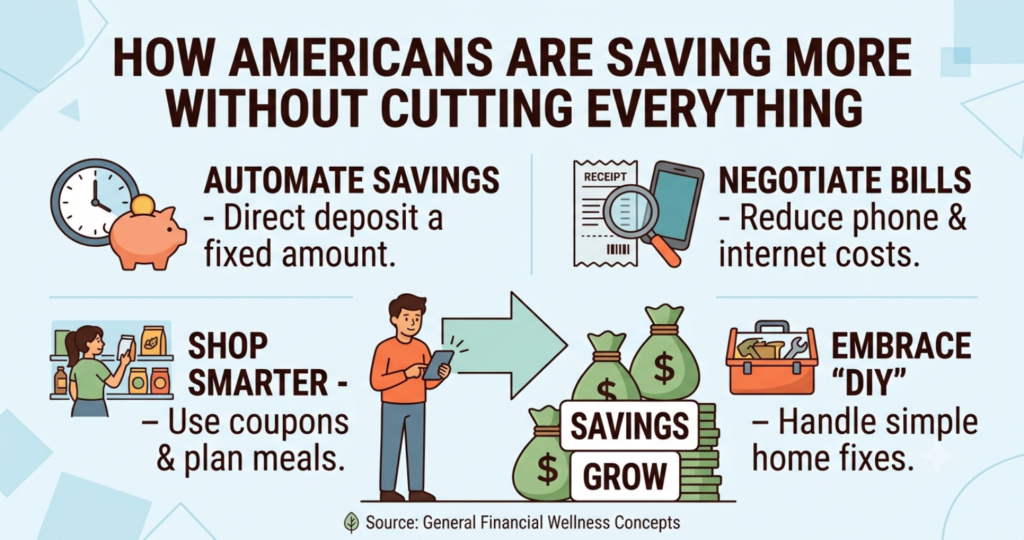
Why Extreme Budgeting Doesn’t Work for Everyone
Strict budgets often fail because they’re difficult to maintain over the long term.
When people feel deprived, they may eventually overspend and abandon their financial plan altogether.
A balanced approach is usually more sustainable because it allows room for both saving and enjoying life.
1. Tracking Spending Before Cutting Expenses
Many people begin by understanding where their money goes.
Tracking expenses for one month can reveal spending patterns that are easy to overlook.
Common categories include:
- Groceries.
- Dining out.
- Entertainment.
- Transportation.
- Online shopping.
Knowing where your money goes makes it easier to identify areas for improvement.
2. Reducing Waste Instead of Eliminating Enjoyment
Rather than cutting every expense, many households focus on reducing waste.
Examples include:
- Canceling unused subscriptions.
- Planning meals before grocery shopping.
- Reducing food waste.
- Shopping with a list.
- Comparing prices before buying.
These small adjustments often save money without reducing quality of life.
3. Automating Savings
Many Americans save more by making saving automatic.
Setting up automatic transfers to a savings account can:
- Build consistency.
- Reduce the temptation to spend.
- Support long-term financial goals.
- Grow emergency savings over time.
Automation removes much of the decision-making from saving.
Automatic transfers can make saving much easier. Read our How to Build an Emergency Fund Faster guide for additional strategies to grow your savings more consistently.
4. Shopping More Intentionally
Instead of making impulse purchases, many consumers now:
- Wait before buying.
- Compare prices.
- Look for discounts.
- Buy only when needed.
Intentional shopping helps reduce unnecessary spending while still allowing room for planned purchases.
5. Reviewing Monthly Bills
Many recurring expenses increase gradually over time.
Reviewing bills regularly may reveal opportunities to lower costs for:
- Internet service.
- Mobile phone plans.
- Streaming subscriptions.
- Insurance policies.
Even modest monthly savings can add up over the course of a year.
6. Focusing on Long-Term Financial Goals
Saving becomes easier when there’s a clear purpose.
Many people save for goals such as:
- Emergency funds.
- Home down payments.
- Retirement.
- Vacations.
- Education.
Specific goals provide motivation and help maintain financial discipline.
Small Changes Often Create Lasting Results
Building better financial habits doesn’t require perfection.
Consistent improvements are often more effective than dramatic lifestyle changes.
7. Making Small Lifestyle Changes
Many successful savers focus on improving everyday habits instead of making major sacrifices.
Simple adjustments can include:
- Brewing coffee at home more often.
- Planning errands to save fuel.
- Using energy more efficiently.
- Packing lunch a few days each week.
- Waiting for seasonal sales before making large purchases.
These changes may seem small individually, but together they can create meaningful annual savings.
8. Increasing Income Alongside Saving
Saving money is only one part of improving your financial situation.
Many Americans also look for ways to increase their income through:
- Freelancing.
- Side businesses.
- Career development.
- Overtime opportunities.
- Selling unused items.
Combining higher income with smart spending can accelerate financial progress.
9. Reviewing Financial Progress Regularly
Successful budgeting isn’t something you do once.
Review your finances every month by asking:
- Did I stay within my budget?
- Did I save what I planned?
- Which expenses surprised me?
- Where can I improve next month?
Regular reviews help keep your financial goals on track.
10. Building Habits That Last
The most successful financial plans are sustainable.
Instead of chasing short-term challenges or extreme budgeting methods, focus on habits you can maintain for years.
Examples include:
- Following a realistic budget.
- Saving automatically.
- Spending intentionally.
- Investing consistently.
- Reviewing financial goals regularly.
Long-term consistency often produces better results than short-term perfection.
Common Money-Saving Mistakes to Avoid
Many people unintentionally make saving harder than it needs to be.
Avoid these common mistakes:
- Trying to cut every enjoyable expense.
- Saving without a clear goal.
- Ignoring recurring subscriptions.
- Making impulse purchases.
- Not tracking monthly spending.
- Giving up after one difficult month.
Small setbacks are normal. Staying consistent is what matters most.
The Consumer Financial Protection Bureau (CFPB) provides practical guidance on budgeting, saving money, managing household expenses, and improving financial well-being. These educational resources can help you develop long-term money habits that support your financial goals.
Frequently Asked Questions
Can I save money without giving up everything I enjoy?
Yes.
Many people save successfully by reducing unnecessary spending rather than eliminating every discretionary purchase.
A balanced approach is often easier to maintain over time.
What is the easiest way to start saving more?
Tracking your spending, creating a simple budget, and setting up automatic transfers to a savings account are practical first steps.
How much should I save each month?
The right amount depends on your income, expenses, and financial goals.
Saving consistently is generally more important than reaching a specific number immediately.
Why do small savings matter?
Small savings repeated consistently over months and years can add up to significant financial progress.
Consistency often has a greater impact than occasional large savings efforts.
Final Thoughts
Saving more doesn’t have to mean giving up everything you enjoy.
Many Americans are improving their financial health by making thoughtful spending decisions, reducing waste, automating savings, and staying focused on long-term goals.
The key is finding a strategy that fits your lifestyle and that you can maintain over time.
With small, consistent improvements, you can build stronger financial habits, grow your savings, and create greater financial security without feeling deprived.