 MOHAMMAD ABUBAKR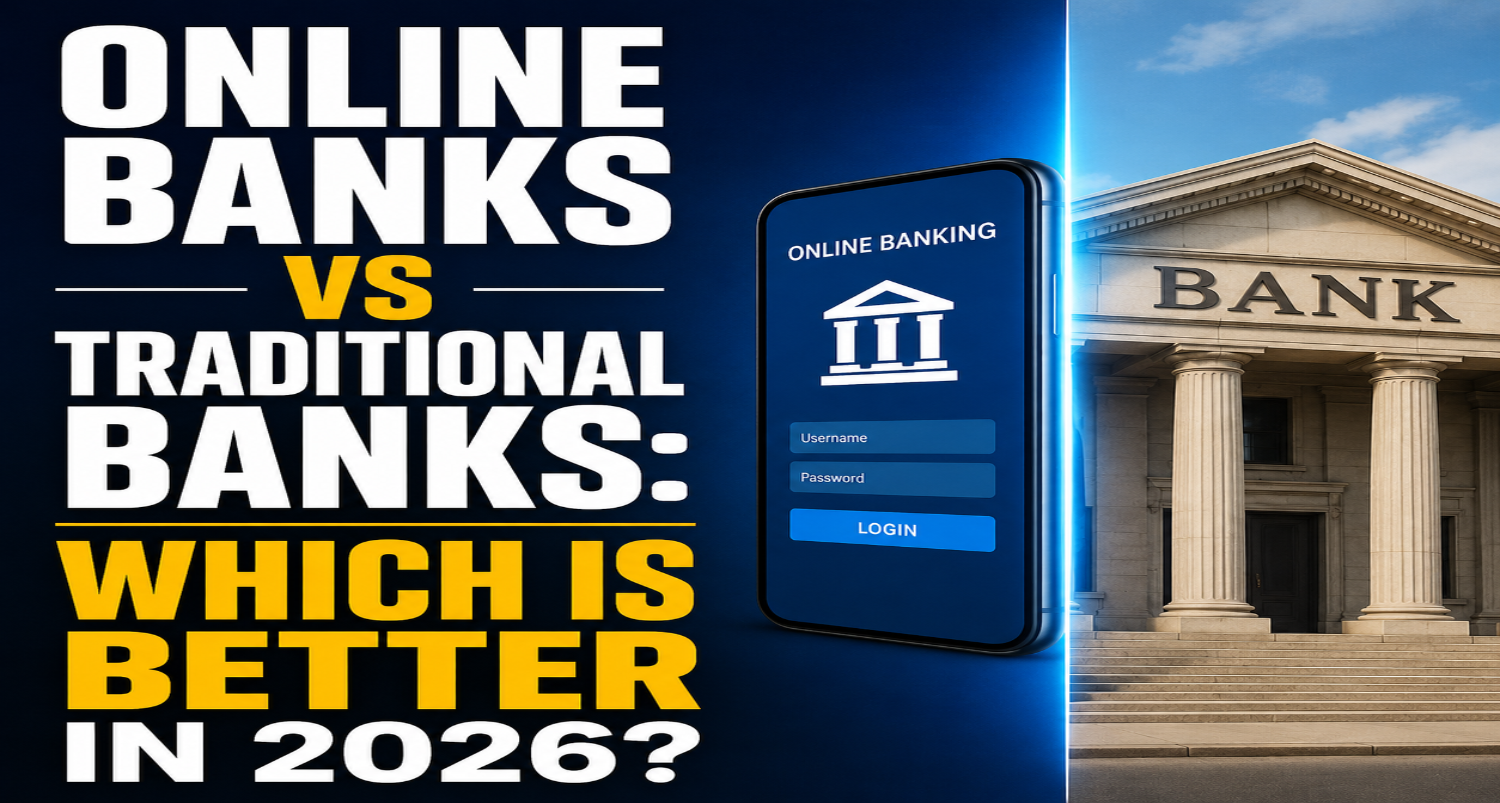
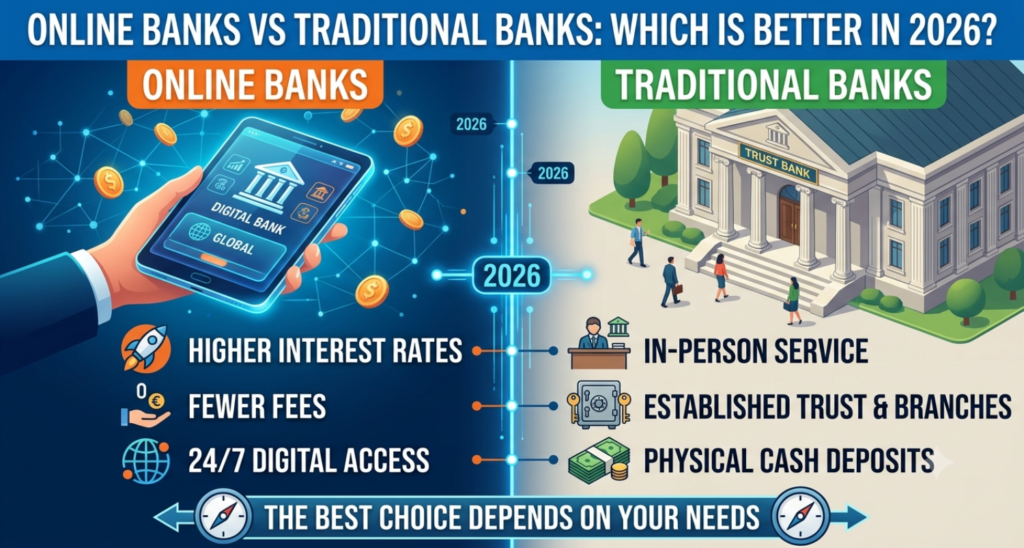
Choosing the right bank is one of the most important financial decisions you can make. In 2026, Americans have more options than ever before. While traditional banks continue to serve millions of customers through physical branches, online banks are gaining popularity with lower fees, higher interest rates, and convenient digital tools.
So, which option is better?
The answer depends on your financial habits and goals. Some people value face-to-face service, while others prefer managing their money from a smartphone. Understanding the differences can help you make the best choice.
This guide compares online banks vs traditional banks in 2026 by looking at fees, savings rates, customer service, security, and more.
What Is an Online Bank?
An online bank operates mainly through websites and mobile apps. Unlike traditional banks, online banks usually do not have physical branches.
Customers can:
- Open accounts online
- Deposit checks using a mobile app
- Transfer money electronically
- Pay bills online
- Monitor spending in real time
Because online banks have lower operating costs, they often pass those savings on to customers through higher interest rates and lower fees.The Biggest Banking Mistakes That Cost Americans Money
What Is a Traditional Bank?
A traditional bank has physical branches where customers can receive in-person assistance.
Services typically include:
- Checking accounts
- Savings accounts
- Loans
- Credit cards
- Mortgages
- Safe deposit boxes
- Financial advice
Many traditional banks also offer online banking and mobile apps, combining digital convenience with branch access.
Interest Rates: Online Banks Usually Win
One of the biggest advantages of online banks is higher interest rates on savings accounts.
Traditional banks often pay very low annual percentage yields (APYs), especially on basic savings accounts.
Online banks, however, frequently offer significantly higher APYs because they have fewer overhead costs.
If your goal is to grow your savings, an online bank may help your money earn more over time.
Fees: Online Banks Often Charge Less
Bank fees can reduce your savings over time.
Traditional banks may charge:
- Monthly maintenance fees
- Overdraft fees
- Minimum balance fees
- Paper statement fees
Many online banks eliminate these charges or keep them much lower.
Even small fee savings can add up over the course of a year.
Convenience: It Depends on Your Needs
Online banking offers 24/7 access from almost anywhere.
You can:
- Transfer funds instantly
- Deposit checks remotely
- Receive account alerts
- Freeze your debit card
- Track spending
However, traditional banks still have an advantage if you frequently:
- Deposit cash
- Need cashier’s checks
- Visit a banker for financial advice
- Handle business transactions
For people who rarely visit branches, online banks offer excellent convenience.
Customer Service
Traditional banks provide face-to-face support.
This can be valuable for:
- Mortgage applications
- Fraud disputes
- Complex financial questions
Online banks generally provide support through:
- Phone
- Live chat
- Secure messaging
Some online banks now offer customer service around the clock, making them competitive with traditional institutions.
Security: Both Are Safe
Many people worry that online banks are less secure.
In reality, reputable online banks use advanced security features such as:
- Multi-factor authentication
- Data encryption
- Fraud monitoring
- Biometric login
Traditional banks use similar technologies.
Most importantly, many online and traditional banks are insured by the Federal Deposit Insurance Corporation (FDIC), protecting eligible deposits up to legal limits.
Always confirm that your bank is FDIC-insured before opening an account.
ATM Access
Traditional banks usually operate their own ATM networks.
Online banks often partner with nationwide ATM networks, giving customers access to thousands of fee-free ATMs.
Before opening an account, check:
- ATM availability
- Out-of-network fees
- ATM reimbursement policies
Mobile Banking Features
In 2026, mobile banking has become one of the biggest deciding factors.
Many online banks include:
- Spending insights
- Savings goals
- Budget tracking
- Instant notifications
- Automatic savings tools
- Digital wallets
Traditional banks continue improving their mobile apps, but online banks often introduce new features more quickly.
Loans and Credit Products
Traditional banks generally offer a wider range of lending products.
These may include:
- Personal loans
- Auto loans
- Home equity loans
- Mortgages
- Business loans
Some online banks also provide loans, but their product selection may be more limited.
If you expect to borrow money in the future, a traditional bank could be more convenient.
Pros and Cons of Online Banks
Pros
- Higher savings interest rates
- Lower fees
- Easy account management
- Excellent mobile apps
- Fast online account opening
Cons
- No physical branches
- Limited cash deposit options
- Some services may take longer
Pros and Cons of Traditional Banks
Pros
- In-person customer service
- Branch access
- Wider loan selection
- Easier cash deposits
- Relationship banking
Cons
- Lower savings rates
- Higher fees
- More overhead costs
- Some branches have limited hours
Who Should Choose an Online Bank?
An online bank may be the right choice if you:
- Prefer digital banking
- Want higher interest rates
- Rarely deposit cash
- Want lower fees
- Use mobile banking frequently
Who Should Choose a Traditional Bank?
A traditional bank may be better if you:
- Deposit cash regularly
- Want face-to-face support
- Need multiple financial products
- Value local branch access
- Prefer personal relationships with bankers
Can You Use Both?
Yes—and many smart savers do.
For example:
- Use a traditional bank for checking and cash deposits.
- Keep your emergency fund in a high-yield online savings account.
- Use whichever institution offers the best rates for certificates of deposit (CDs).
This strategy combines the strengths of both types of banks.
Frequently Asked Questions
Are online banks safe?
Yes. If an online bank is FDIC-insured, eligible deposits receive the same federal protection as deposits at traditional banks.
Do online banks charge fewer fees?
Many online banks offer lower fees because they have fewer operating expenses.
Can I deposit cash into an online bank?
Some online banks allow cash deposits through partner retailers or ATM networks, but policies vary.
Which type of bank pays higher interest?
Online banks generally offer higher APYs on savings accounts than traditional banks.
Should I switch banks in 2026?
If you’re paying high fees or earning very little interest, comparing new banking options could help improve your finances.
FDIC Deposit Insurance Coverage
Final Thoughts
Both online banks and traditional banks offer valuable services in 2026. The best choice depends on how you manage your money. If you prioritize convenience, lower fees, and higher savings rates, an online bank may be the better fit. If you value in-person assistance, easy cash deposits, and a broader range of financial services, a traditional bank could be the smarter option.
Many Americans find that using both types of banks provides the greatest flexibility. A traditional checking account paired with an online high-yield savings account can help you enjoy the benefits of each while keeping your finances organized and secure.