 MOHAMMAD ABUBAKR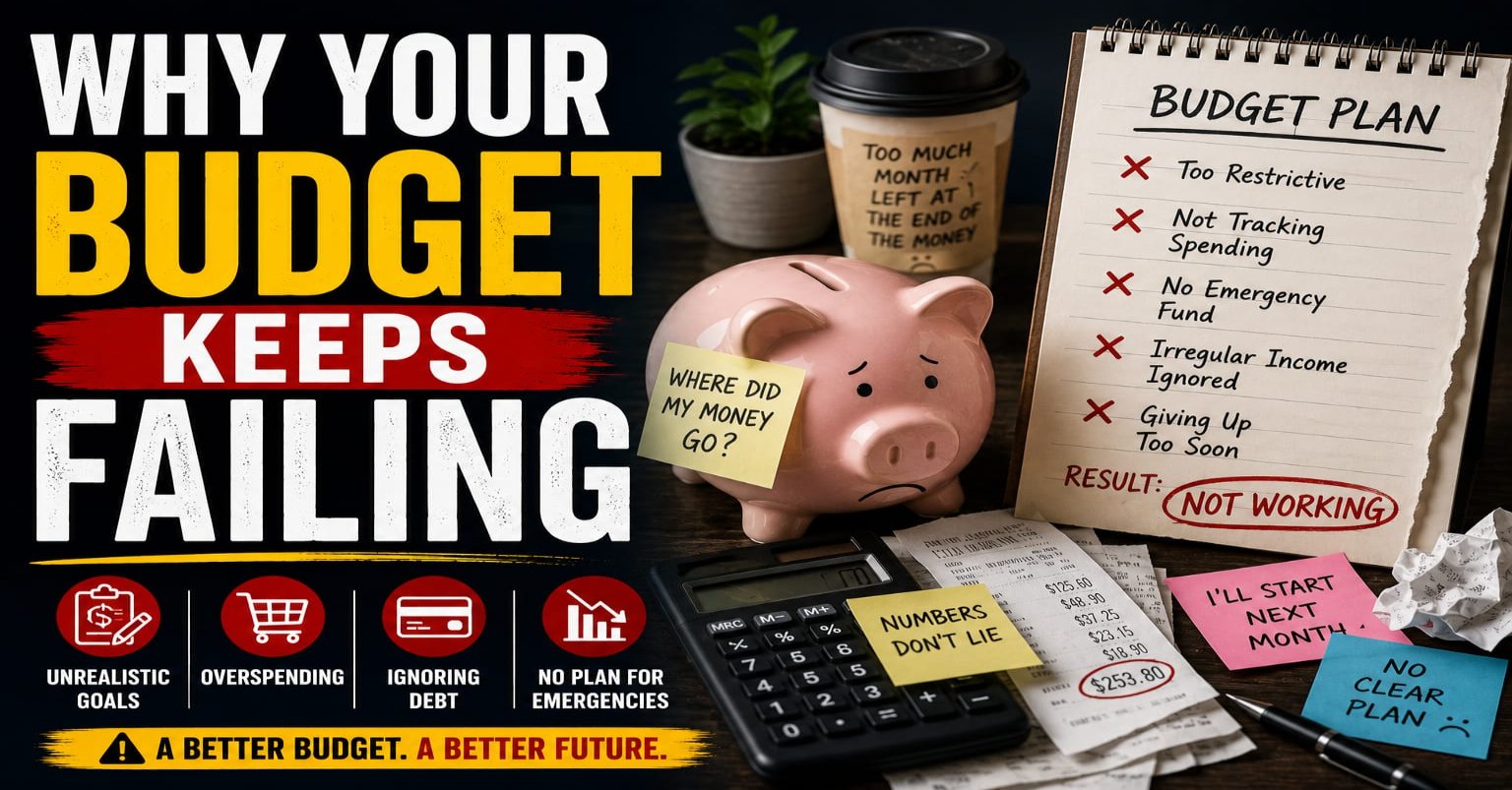
Introduction
Creating a budget sounds simple.
Sticking to it is often much harder.
Many Americans start budgeting with good intentions, only to abandon their plan after a few weeks or months.
The problem usually isn’t a lack of motivation.
Instead, many budgets fail because they don’t match real-life spending habits, changing expenses, or personal financial goals.
The good news is that most budgeting problems can be fixed with a few practical adjustments.
In this guide, you’ll learn why your budget keeps failing and how to build one that actually works.
Why Budgets Fail
A budget should help you manage your money—not make your life more stressful.
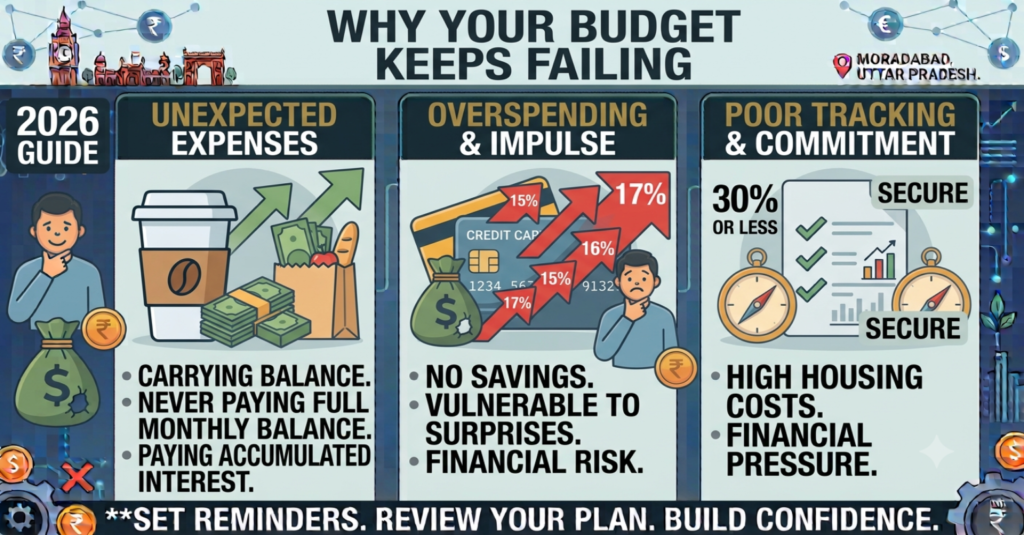
Common reasons budgets fail include:
- Unrealistic spending limits.
- Unexpected expenses.
- Inconsistent tracking.
- Lack of financial goals.
- Lifestyle inflation.
Understanding these challenges can help you create a budget you can maintain over the long term.
1. Your Budget Isn’t Based on Real Spending
Many people estimate their expenses instead of tracking them.
Before creating a budget, review several months of spending to understand where your money actually goes.
Include categories such as:
- Housing.
- Groceries.
- Transportation.
- Utilities.
- Entertainment.
Accurate information creates a stronger budget.
2. You’re Trying to Change Too Much at Once
Cutting every unnecessary expense immediately can make budgeting feel overwhelming.
Instead, improve one or two spending habits at a time.
Small changes are often easier to maintain than dramatic lifestyle adjustments.
3. You Forgot About Irregular Expenses
Not every bill arrives monthly.
Many budgets fail because they ignore expenses like:
- Car maintenance.
- Annual insurance premiums.
- Holiday shopping.
- Home repairs.
- Medical costs.
Planning for irregular expenses helps prevent surprises.
4. You Don’t Have Clear Financial Goals
Saving money becomes much easier when you know why you’re saving.
Examples of financial goals include:
- Building an emergency fund.
- Paying off debt.
- Buying a home.
- Saving for retirement.
- Taking a vacation.
Goals provide motivation during difficult months.
Financial goals become much easier to achieve when you follow a realistic spending plan. Read our The Hidden Cost of Living Without a Budget guide to learn why budgeting is essential for long-term financial success.
5. You Never Review Your Budget
Your financial situation changes over time.
Income, expenses, and priorities may all change.
Reviewing your budget every month allows you to make adjustments before problems grow larger.
6. Lifestyle Inflation Is Increasing Your Expenses
As income grows, spending often grows too.
Examples include:
- Upgrading electronics.
- Dining out more often.
- Choosing more expensive subscriptions.
- Buying a newer vehicle.
Keeping lifestyle inflation under control leaves more room for saving and investing.
A Budget Should Work for You
The best budget is one you can realistically follow.
Flexibility and consistency often matter more than creating a perfect financial plan.
7. You Don’t Budget for Fun
Many people think a successful budget means eliminating all entertainment.
That approach often leads to frustration and overspending later.
Instead, include a realistic amount for:
- Dining out.
- Entertainment.
- Hobbies.
- Family activities.
- Personal treats.
A balanced budget is easier to maintain over the long term.
8. You’re Not Automating Your Savings
Saving money becomes much easier when you remove the need to make the decision every month.
Consider setting up:
- Automatic transfers to savings.
- Automatic retirement contributions.
- Automatic bill payments.
Automation helps you stay consistent even during busy months.
9. You’re Comparing Your Budget to Someone Else’s
Every household has different:
- Income.
- Expenses.
- Financial goals.
- Family responsibilities.
- Lifestyle priorities.
Your budget should reflect your own financial situation—not someone else’s.
A personalized budget is far more likely to succeed.
10. You Give Up After One Bad Month
No budget is perfect.
Unexpected expenses and financial setbacks happen to everyone.
Instead of abandoning your budget after one difficult month:
- Review what happened.
- Adjust spending categories.
- Update your financial goals.
- Start fresh the following month.
Consistency matters much more than perfection.
Common Budgeting Mistakes to Avoid
Many people unknowingly make budgeting more difficult than it needs to be.
Avoid these common mistakes:
- Creating unrealistic spending limits.
- Ignoring irregular expenses.
- Forgetting to review your budget.
- Increasing spending after every raise.
- Trying to cut every expense immediately.
- Giving up after one setback.
- Budgeting without clear financial goals.
Small improvements can make your budget more effective over time.
The Consumer Financial Protection Bureau (CFPB) offers free tools and educational resources on budgeting, managing expenses, saving money, and improving financial well-being. These resources can help you create a realistic budget and build healthier money habits over time.
Frequently Asked Questions
Why do most budgets fail?
Many budgets fail because they aren’t based on actual spending habits, don’t include irregular expenses, or set unrealistic limits that are difficult to maintain.
How often should I review my budget?
Reviewing your budget at least once a month allows you to adjust for changing expenses, income, and financial priorities.
Should my budget change over time?
Yes.
Your budget should evolve as your income, family situation, and financial goals change.
A flexible budget is often more effective than a rigid one.
What’s the easiest way to stick to a budget?
Track your spending, automate your savings, set realistic goals, review your progress regularly, and allow room for occasional enjoyment without overspending.
Final Thoughts
If your budget keeps failing, it doesn’t mean you’re bad with money.
In many cases, the problem is simply that your budget doesn’t match your real life.
A successful budget should be flexible, realistic, and designed around your financial goals.
By tracking your spending, planning for unexpected expenses, automating savings, and reviewing your progress regularly, you can build a budgeting system that supports long-term financial success.
Remember, the goal isn’t a perfect budget—it’s a budget you can actually follow.